LUOYANG CAME ENERGY TECH CO, LTD

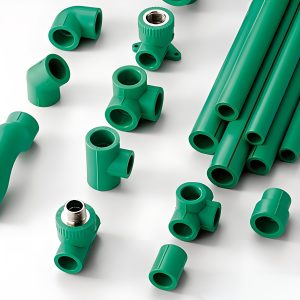
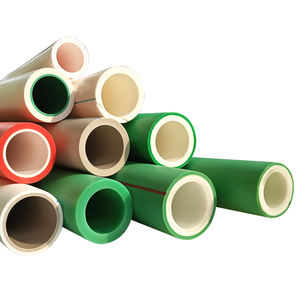
Polypropylene Random Copolymer PPR Pipes:House-Hold Water Supply System
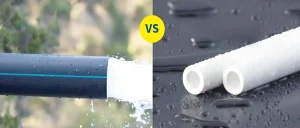
In home decoration, the choice of drinking water pipes is crucial. Common ones include PE pipes and Polypropylene Random Copolymer PPR Pipes. What exactly are the differences between these two types of pipes?
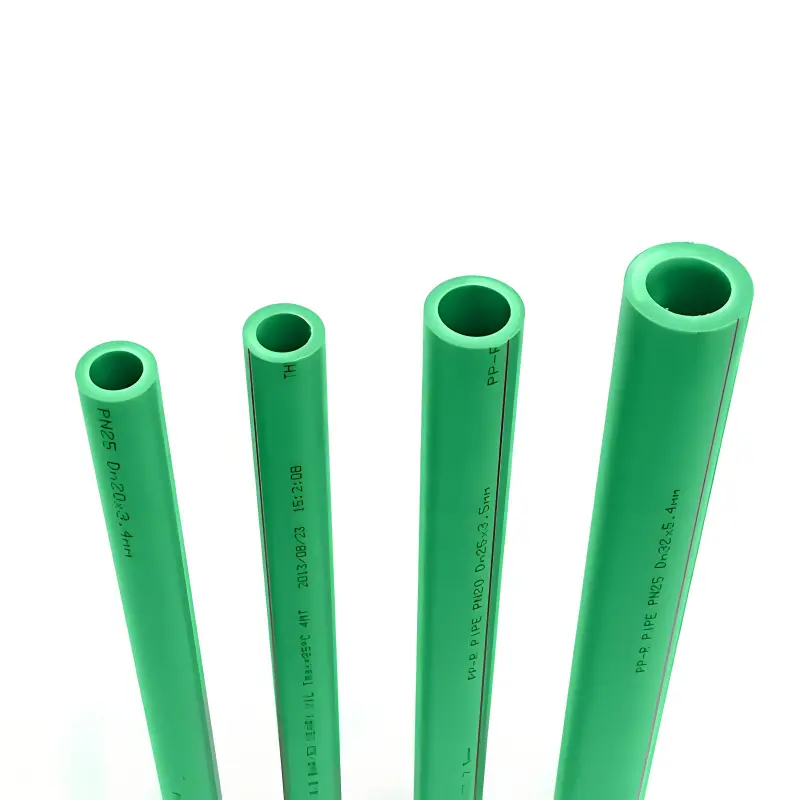
1. El Main Differences Between PE pipes and PPR pipes
1.1 Comparison of heat resistance performance
When discussing the differences between PPR pipes and PE pipes, we first focus on their heat resistance. This metric is directly related to the stability and durability of pipe materials in practical applications. A continuació, we’ll take a closer look at the specific performance of these two types of pipes in terms of temperature resistance.
PE water pipes show a stable temperature range under normal usage conditions. It can withstand a maximum temperature of 70 ° C and a minimum temperature of -30 °C. Within this temperature range, PE water pipes can maintain safe and stable performance for a long time.
The stable temperature range for PPR water pipes under normal usage conditions is equally clear. Specifically, it can withstand a maximum temperature of 70 ° C and a minimum temperature of -10 °C. Within this temperature range, PPR pipes can consistently demonstrate safe and stable performance. By comparison, we found that PE pipes and PPR pipes performed the same at high temperatures, but PE pipes performed better at low temperatures.
1.2 Differences in hygiene performance
When discussing the differences between PE pipes and PPR pipes, we inevitably need to focus on their hygiene performance. Both of these pipe materials show good hygiene performance under normal usage conditions, yet their performance may differ in certain specific application scenarios. This is mainly reflected in the tolerance to different environmental factors and the chemical stability of the material itself. A continuació, we will delve into the specific differences in hygiene performance between these two pipe materials.
PE pipes are mainly made of polyethylene, while PPR pipes are mainly made of propylene. There is no significant difference between the two materials in terms of hygiene and safety. The key lies in whether the raw materials used by the enterprise meet the standards, not the materials themselves. Therefore, the newspaper’s claim that PE pipes are more hygienic than PPR pipes is unfounded. All qualified PE and PPR pipes must undergo strict hygiene tests, which is a basic requirement to ensure product quality.
1.3 Elastic modulus comparison
There is a difference in elastic modulus between PE pipes and PPR pipes. While there is no significant difference between the two materials in terms of hygiene and safety, they are different in other physical properties such as elastic modulus. Therefore, when making a choice, in addition to considering hygiene and safety, other performance indicators should also be taken into account to select the pipe material that best suits one’s own needs.
The elastic modulus of PPR pipes is 850MPa. In contrast, the elastic modulus of PPR pipes is higher than that of PE pipes, showing better stiffness and better pipeline aesthetics. Tubs de PE, as medium-density polyethylene, have an elastic modulus of about 550MPa, showing good flexibility but slightly less stiffness. In the field of building water supply, PE pipes may be affected in terms of pipeline aesthetics due to poor straightness, easy bending and deformation. Additionally, in terms of thermal conductivity, PE pipes reach 0.42, nearly double that of PPR pipes.
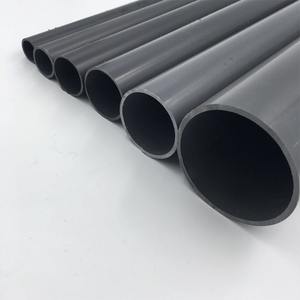
2. Performance Breakdown of PE canonades i canonades PPR
2.1 Welding performance
When considering the performance differences between PPR pipes and PE pipes, we also need to pay attention to their weldability. The two types of pipes are welded differently, so they will also show different characteristics in practical applications. A continuació, we’ll delve into their welding performance.
Although both PPR pipes and PE pipes support hot-melt welding, PPR pipes are more convenient to weld. The flanges of PPR pipes are rounded, while those of PE pipes are irregular, which may cause clogging problems. PPR pipes need to reach 260 ° C for welding, while PE pipes need 230 °C. It is worth noting that using a dedicated PPR pipe welding machine available on the market can lead to leakage due to over-welding. A més, since the PE pipe material is oxidizing, it is necessary to use a special tool to remove the oxide scale on the surface before welding to ensure that a truly integrated pipe can be formed and thus avoid leakage problems, but this also adds some complexity to the construction.
2.2 Resistance to low-temperature impact
PE pipes show their advantage in this regard. Although PPR pipes are stronger than PE pipes, PE pipes have better flexibility, which is determined by the inherent properties of the material. Due to the material’s properties, PE pipes have better impact resistance at low temperatures. However, overemphasizing the brittleness of PPR pipes at low temperatures is not substantial, as PPR pipes have been used in China for more than a decade.
2.3 Pipe size and application
When comparing PE pipes with PPR pipes, we also need to pay attention to the key factor of pipe size. Although the two materials have their own merits in performance, the choice of pipe size directly affects the actual outcome and cost of the project. Therefore, when making a choice, various factors must be considered comprehensively based on the specific application scenario and requirements to make the most appropriate choice.
PE pipes are often used for large drainage, while PPR pipes are mostly used for water supply. The maximum size of PE pipes can reach dn1000, while the maximum size of PPR pipes is dn160. Therefore, in practical applications, PE pipes are often used for drainage pipes, while PPR pipes are mostly used for water supply pipes.
Proveïdor
Luoyang Datang Energy Tech Co., Ltd. és un fabricant xinès líder especialitzat en canonades i accessoris de plàstic d'alta qualitat. Equipat amb línies de producció automatitzades d'última generació i recolzat per un equip de 200 professionals, oferim una àmplia línia de productes que inclou més 150 types of plastic pipes and fittings designed for water supply and drainage systems, transmissió de gas, i sistemes de calefacció per terra radiant. Els nostres productes principals inclouen tubs i accessoris de PVC, PE (HDPE) Tubs i accessoris, Tubs i accessoris PPR, i canonades de calefacció per terra PEX.
Should you have any inquiries regarding Dia12-1600mm HDPE pipe, si us plau, no dubteu a contactar amb nosaltres!
Tel.:0086-183 3790 0677
Wechat: 0086-183 3790 0677
Whatsapp: 0086-183 3790 0677
Correu electrònic: sales@pipesandfittings.net