LUOYANG CAME ENERGY TECH CO., LTD


PPR-Rohr und CPVC-Rohr: Was ist besser??
In the design of modern buildings and water supply and drainage systems, selecting suitable piping materials is one of the key factors to ensure the quality and service life of the project. Darunter, PPR (random copolymerized polypropylene) pipe and CPVC (chloriertes Polyvinylchlorid) pipe are highly favored for their unique performance advantages. Jedoch, when faced with these two seemingly similar yet distinctive pipe materials, many consumers and engineers are often confused: which is better for their project? This article will discuss the characteristics, Standards, and applications of PPR and CPVC pipes and help you make a wise choice through a detailed comparative analysis.
Teil 1, PPR Pipe Overview
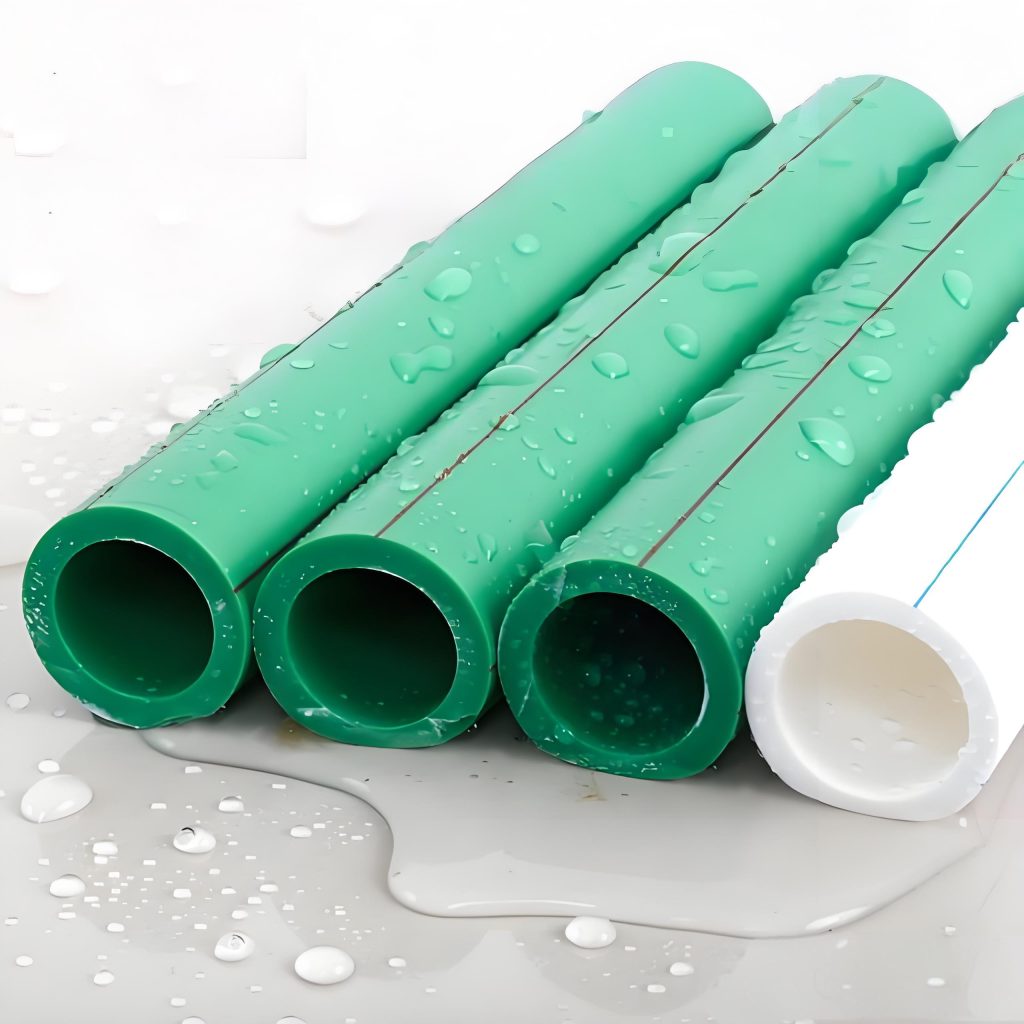
PPR (Statistisches Polypropylen-Copolymer), that is, random copolymerization polypropylene, is widely used in the construction of water supply and drainage systems of plastic piping materials. It is produced by the polymerization of propylene monomer and a small amount of ethylene monomer under the action of a catalyst. This material combines the advantages of polypropylene and polyethylene with good heat resistance, Schlagfestigkeit, and flexibility.
Characteristics of PPR pipe
1. High-temperature resistance: PPR pipe can operate stably at a long-term working temperature of 70℃ and can withstand temperatures up to 95℃ for a short period.
2. Good chemical stability: It is resistant to most acid and alkali salt solutions and is not easily corroded.
3. Health and safety: when used as a drinking water transportation pipeline, it will not release harmful substances to ensure the safety of water quality.
4. Easy to install and connect: Seamless connections are realized through heat fusion welding technology, which is easy to operate and provides good sealing.
PPR pipe standard
The leading domestic implementation standard on PPR pipe is GB/T 18742.2-2017. The standard specifies the basic requirements, physical and mechanical performance indicators, test methods, and other contents of PPR pipe. Zusätzlich, there are international ISO 15874 series standards, usw. Zusammen, these standards ensure the quality and reliability of PPR pipes.
PPR pipe fittings and their significance
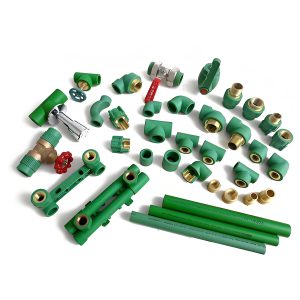
The market offers a wide range of PPR pipe fittings, like elbows, T-Shirts, crosses, reducer joints, valves, and the like, to meet the requirements of various complex working conditions. These fittings can not only change the direction of the water flow or the flow size, but also increase the adaptability and flexibility of the entire piping system. Choosing the right fittings is crucial for improving the quality of the project.
Teil 2, CPVC Pipe Introduction
CPVC Material Characteristics
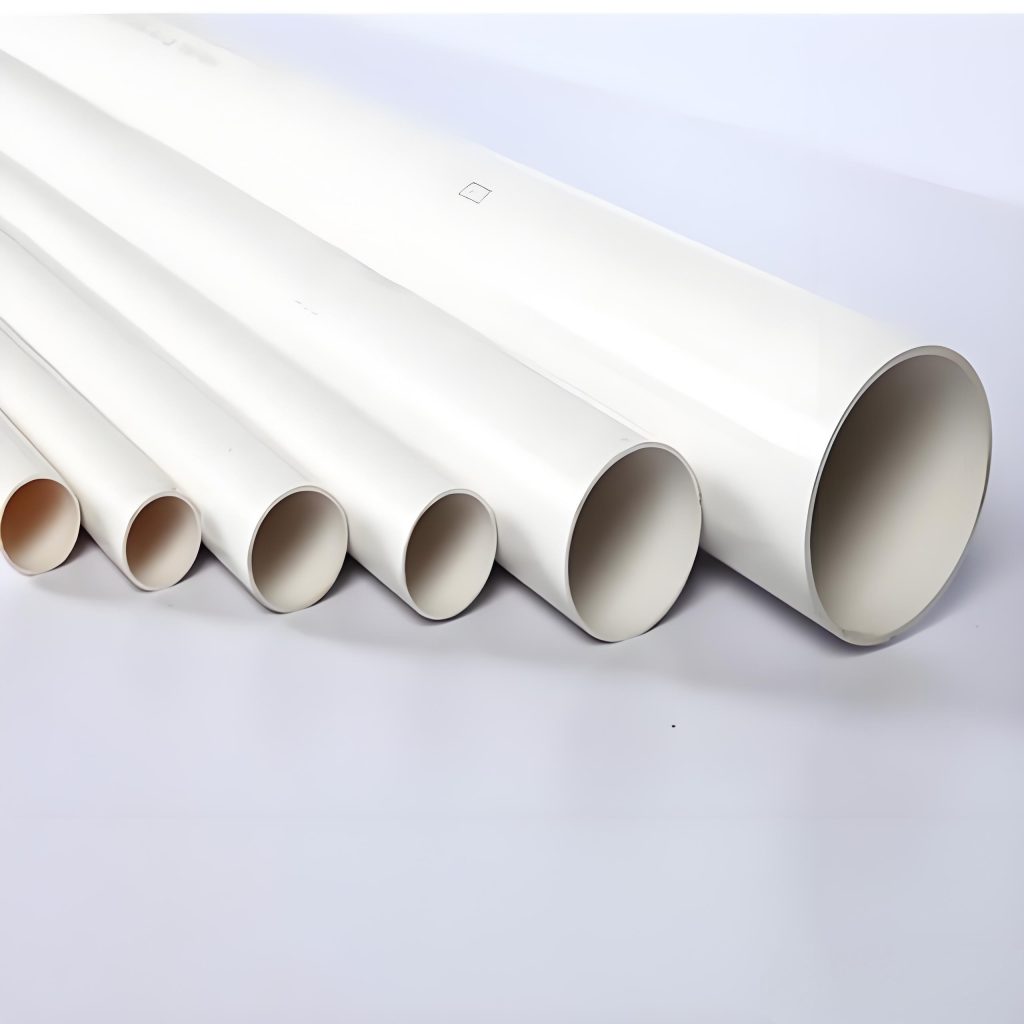
CPVC (Chloriertes Polyvinylchlorid) is a product of PVC resin modified by chlorination. Compared with ordinary PVC, CPVC has higher temperature resistance (bis zu 100 ℃ or more), excellent chemical resistance, and better flame retardant properties.
Application areas of CPVC pipe
Due to its excellent heat resistance, CPVC pipe is commonly used in industrial wastewater treatment, chemical fluid transportation, and other fields; in some special environments, it can also be used as hot and cold water supply piping in civil buildings.
Teil 3, PPR vs CPVC: who is better?
PPR pipe and CPVC pipe each have merits, the specific choice of which depends on the specific requirements of the actual application scenarios.
1, from the perspective of temperature resistance
Although both have a certain ability to withstand high temperatures, CPVC pipe has a slight advantage in this regard, being suitable for a higher-temperature working environment.
2, from the construction difficulty considerations
PPR pipe is connected by heat fusion; the operation is relatively simple and fast, while CPVC pipe is mainly connected by adhesive, which requires specific skills to ensure connection quality.
3, from the cost-effective analysis
Normalerweise, the price of PPR pipe is more affordable and cost-effective, while CPVC pipe is slightly more expensive due to the complexity of the production process and other factors.
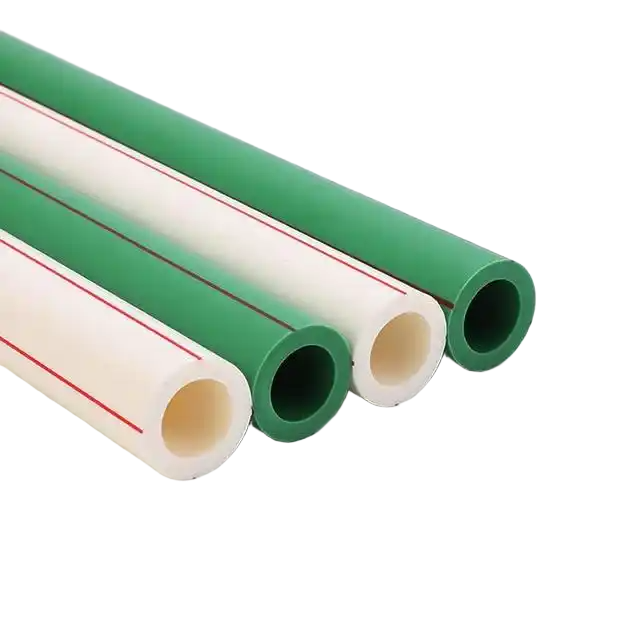
When choosing pipe materials, PPR (random copolymer polypropylene) pipes and CPVC (chloriertes Polyvinylchlorid) pipes are both top considerations. The final decision on which type of pipe to use depends on the specific project requirements, budget constraints, and professional piping advice. When the project emphasizes long-term durability, excellent heat resistance, low maintenance requirements, and health and safety standards, PPR pipes and their matching fittings are often the more ideal choice. This material is particularly suitable for applications where hygiene and safety during use are of high importance. In extreme conditions such as high temperatures and strong corrosive media, CPVC pipes should be given priority.
Anbieter
Luoyang Datang Energy Tech Co., Ltd. ist ein professioneller Hersteller und Lieferant von Rohren und Formstücken. Wir bieten PPR-Rohre an, PVC-Rohre, PE-Rohre, und Fußbodenheizungsrohre und Formstücke für alle Rohrarten, mit hoher Qualität und wettbewerbsfähigen Preisen. Wenn Sie Fragen zu Rohren und Formstücken haben, Bitte zögern Sie nicht, uns zu kontaktieren. Sie können auf das Produkt klicken, um mit uns in Kontakt zu treten.
VERWANDTE BEITRÄGE
Can Copper Water Supply Pipe Be Flushed Out
What Is The Best Pipe To Use For Underground Drainage?
Landwirtschaftliche Bewässerungsrohre: HDPE, PVC, or PPR – Which is the Best Choice for Your Farm?
HDPE-Rohre vs. PVC-Rohre für Trinkwasser