LUOYANG VINO ENERGÍA TECH CO., LTD


Hilos NPT frente a BSP: ¿Qué hilo debería elegir para accesorios de latón??
When you’re sourcing brass fittings, it’s easy to focus on the obvious specs — material, tamaño, clasificación de presión. But there’s one detail that’s quietly responsible for more project delays, leaky connections, and costly returns than almost anything else: thread compatibility.
Choose the wrong thread standard, and you’re looking at leaks, installation headaches, extra adapters, and project delays that eat into your budget. NPT and BSP are two of the most common thread standards used in brass fittings worldwide. They look similar at a glance — but they are not the same. Not even close.
This article will walk you through:
- What NPT and BSP threads are
- How they differ
- Which one you should choose for your specific application
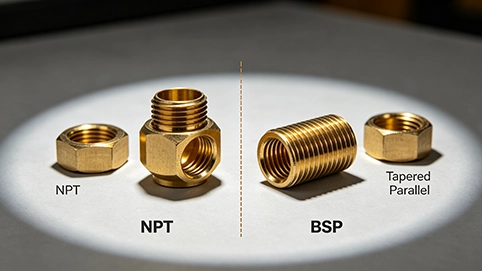
Hilos NPT frente a BSP
Understanding Thread Types in Brass Fittings
A thread is a helical structure that allows two components to be joined together. In brass fittings, threads are the primary method of connection — they allow pipes, valvulas, hoses, and equipment to be assembled and disassembled without welding or soldering.
Brass is a popular material for threaded fittings because it’s corrosion-resistant, machinable, y duradero. But the thread standard you choose determines whether your fitting will actually work in your system.
Here are the most common thread types used in brass fittings:
| Tipo de hilo | Nombre completo | Common Region | Solicitud |
|---|---|---|---|
| TNP | Rosca de tubería nacional | EE.UU, Canada | Industrial, plomería |
| BSP | Tubería estándar británica | Europa, Asia, Australia | Agua, gas, plomería |
| BSPT | British Standard Pipe Taper | Global industrial use | Pressure connection |
| BSP | British Standard Pipe Parallel | Hydraulic and plumbing | Sealing with gasket |

Thread Types in Brass Fittings
What Are NPT Threads?
NPT stands forRosca de tubería nacional. It’s the standard thread used in the United States and Canada, governed by ANSI/ASME standards.
Características de NPT Threads
- American standard — widely used across North America
- Tapered thread design — the thread narrows toward the end, creating a seal as it tightens
- Creates sealing through thread interference — the threads themselves deform slightly to form a seal
- Usually requires sealant — thread seal tape (cinta de teflón) or pipe dope is typically needed
| Característica | NPT Thread |
|---|---|
| Estándar | ANSI/ASME |
| Forma | Tapered |
| Main market | North America |
| Sealing method | Thread seal tape / sealant |
| Common fittings | Codos, adaptadores, connectors |
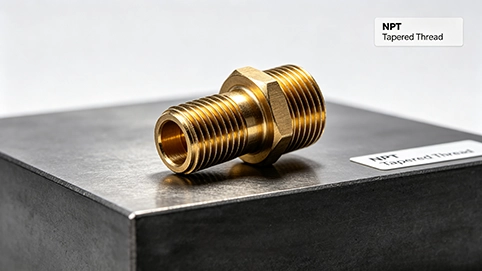
NPT Threads
What Are BSP Threads?
BSP stands forTubería estándar británica. It’s used extensively across Europe, Asia, Australia, and many other regions. BSP includes two sub-types: BSPT and BSPP.
BSPT vs BSPP: What Is the Difference?
This is where things get interesting — and where a lot of buyers get confused.
| Característica | BSPT | BSP |
|---|---|---|
| Thread shape | Tapered | Parallel |
| Sealing method | Thread sealant | Gasket / O-ring |
| Common use | Pipe connection | Equipment connection |
| Pressure application | Higher sealing demand | Flexible connection |
BSPT (British Standard Pipe Taper) works similarly to NPT — the taper creates a seal as the threads engage. It’s commonly used in pipe connections where a tight seal is critical.
BSP (British Standard Pipe Parallel) has straight, parallel threads. It relies on a gasket or O-ring to create the seal, not the threads themselves. This makes it ideal for equipment connections and hydraulic systems.
Hilos NPT frente a BSP: Key Differences Explained
This is the part that matters most when you’re choosing a thread standard.
| Comparación | TNP | BSP |
|---|---|---|
| Origin | EE.UU | Reino Unido |
| Thread angle | 60° | 55° |
| Thread profile | Sharp crest | Rounded crest |
| Thread type | Usually tapered | Tapered or parallel |
| Measurement system | Inch size | Inch size |
| Common market | North America | Europa, Asia |
| Compatibility | Not directly interchangeable | Not directly interchangeable |
The difference in thread angle — 60° vs 55° — might seem small, but it’s enough to prevent a proper seal. The crest shape also differs: NPT has sharper peaks, while BSP has rounded peaks.
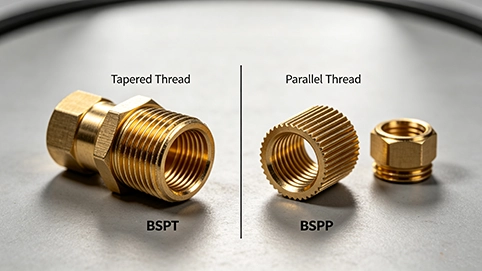
BSPT vs BSPP
Are NPT and BSP Threads Interchangeable?
Short answer: No.
You should never directly connect an NPT male thread to a BSP female thread (o viceversa). Here’s why:
- Different thread angles — 60° vs 55° means the threads won’t mesh properly
- Different thread profiles — sharp vs rounded crests create gaps
- Different sealing methods — even if they screw together, they won’t seal correctly
Ejemplo:
❌ Equivocado: NPT macho + BSP female
This can lead to:
- Leakage
- Damaged threads
- Poor sealing
- Safety hazards
✅ Right: Match NPT with NPT, and BSP with BSP.
How to Choose the Right Thread for Brass Fittings?
Paso 1: Check Your Market Standard
| Market | Recommended Thread |
|---|---|
| EE.UU | TNP |
| Canada | TNP |
| Europa | BSP |
| Reino Unido | BSP |
| Asia | BSP/NPT depending on project |
Paso 2: Confirm Existing Equipment
Check the thread on:
- Pipe thread
- Valve connection
- Hose connector
- Adapter
Paso 3: Consider Application
| Solicitud | Common Choice |
|---|---|
| fontanería residencial | BSP/TNP |
| Industrial piping | NPT/BSPT |
| Hydraulic systems | BSP |
| Fire hose connection | BSP or NPT depending on standard |
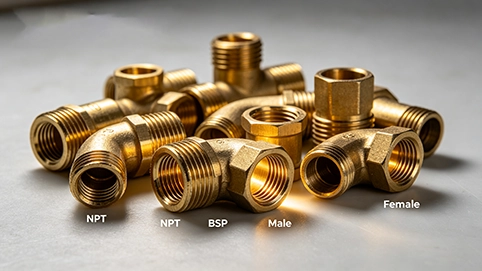
Brass Elbows Using NPT and BSP Threads
Common Accesorios de latón Using NPT and BSP Threads
| Producto | Solicitud |
|---|---|
| Brass Elbows | Direction change; Plumbing systems |
| Brass Hose Connectors | Water hose; Riego |
| Brass Couplings | Pipe extension |
| Brass Adapters | Thread conversion |
NPT vs BSP: Which One Is Better for Brass Fittings?
There’s no universal “mejor” — it depends on your system, your market, and your existing equipment.
| Situation | Better Choice |
|---|---|
| US projects | TNP |
| European projects | BSP |
| Existing BSP system | BSP |
| Existing NPT system | TNP |
| International projects | Confirm customer standard |
The core takeaway:
The best thread type depends on your piping system, market standard, and installation requirements.
How to Order Accesorios de latón with the Correct Thread?
Before ordering, confirm:
- ☑ Fitting type
- ☑ Size
- ☑ Thread standard
- ☑ Male/Female connection
- ☑ BSPT/BSPP/NPT requirement
- ☑ Application pressure
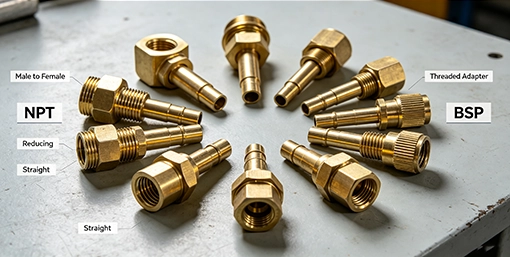
Brass Adapters Using NPT and BSP Threads
Preguntas frecuentes
Q1: Can NPT and BSP threads be connected together?
Generally no. The thread angles and profiles are different, which prevents a proper seal.
Q2: What is the difference between NPT and BSP threads?
NPT has a 60° thread angle and sharp crests; BSP has a 55° thread angle and rounded crests. NPT is common in North America, BSP in Europe and Asia.
Q3: Which thread is commonly used for brass fittings?
It depends on the market. NPT is standard in the US and Canada; BSP is standard in Europe, Asia, and Australia.
Q4: How do I identify BSP and NPT threads?
Check the thread angle (60° vs 55°), the crest shape (sharp vs rounded), and the standard markings on the fitting.
Q5: Do brass elbows use NPT or BSP threads?
Both are available. The choice depends on your piping system and market standard.
Need brass fittings with specific thread standards?
We supply brass elbows, hose connectors, acoplamientos, and customized fittings with NPT, BSP, BSPT, and BSPP options for different piping applications.
Contacto Luoyang Datang Energy Tech Co., Limitado for a quote or to discuss your thread requirements.
PUBLICACIONES RELACIONADAS
¿Cuáles son las ventajas de las tuberías PPR??
Aplicación de tubería PPR para sistemas industriales y de construcción
Recomendaciones sobre opciones de tuberías de PVC ecológicas
PPR frente a HDPE frente a PVC:Comparación de tuberías de suministro de agua industrial
Las cinco ventajas principales de las tuberías PPR