LUOYANG COME ENERGY TECH CO.,LTD

Paipu PPR vs Paipu Hao: Hoʻohālikelike a me ka ʻike
PPR paipu, me ko lākou ikaika kiʻekiʻe a me ka pale wela ma o ka ʻenehana copolymerization random, ua lilo i mea koho maikaʻi loa no ka lako wai home. ʻO kāna pilina hoʻohui wela e hōʻoia i ka leakage ʻole, is environmentally friendly and non-toxic for drinking water, is pressure-resistant and corrosion-resistant with a lifespan of up to 50 makahiki, and offers much better value for money than traditional cast iron pipes.
The superiority of PPR pipes
Material characteristics and technology
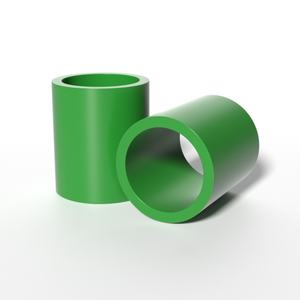
The PPR pipe uses random copolymerization technology, which has significantly improved the material strength and high-temperature resistance of the PPR pipe. These advantages of polypropylene have made it shine in the field of water supply pipes and gradually become the preferred material for home decoration projects.
Details of the advantages
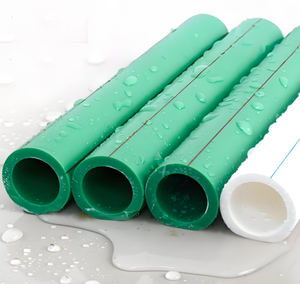
PPR paipu, with the application of random copolymerization technology, demonstrate many outstanding properties. Its advantages include hygiene, aloha kaiapuni, hot-melt connection technology, excellent heat and pressure resistance, kumu kūʻai, and an extremely long service life. Maikaʻi, polypropylene, as an environmentally friendly material, is highly suitable for the delivery of drinking water. It has the characteristics of large flow, non-toxic hygiene, a me ka pale ʻana i ka corrosion, making it a green channel. The joints of PPR pipes are made by heat fusion, ensuring a firm connection and achieving 100% leak-proof. He ʻokoʻa, other materials may use threaded connections, which are relatively less leak-proof and may have the toxicity of glue bonding. PPR pipes are not only heat-resistant but also have excellent pressure resistance and low transport resistance. It is lightweight, pressure-resistant, pale ʻino, has a low thermal conductivity, can be reused, and has a positive effect on environmental protection. PPR pipes are moderately priced and cost-effective, and when produced and used in accordance with the national standard GB/T18742, the service life of PPR pipes can reach 50 makahiki.
Economy and lifespan
PPR pipes are economical, moderately priced and offer good value for money. When produced and used in accordance with the national standard GB/T18742, it can last up to 50 makahiki. Such features make it more competitive among pipe materials.
Disadvantages of cast iron pipes
Obvious weaknesses of the material
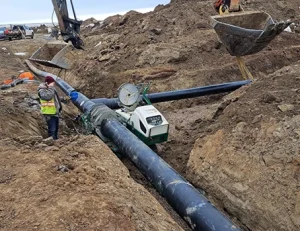
Cast iron pipes are pipes formed by casting cast iron and are commonly used in pipelines such as water supply, hoʻokahe wai, and gas transmission, including cast iron straight pipes and fittings. Because cast iron pipes are made from iron, they have significant disadvantages such as brittleness, heavy weight, and low strength. Cast iron pipes are brittle and have poor impact resistance. I ka manawa like, they are heavy and difficult to handle and install. Kahi mea hou aʻe, its strength is lower than that of other pipes and may not meet the requirements of some high-strength applications. Cast iron pipes are prone to corrosion, especially in certain corrosive environments, and their service life can be significantly shortened, typically with a maximum lifespan of only about 20 makahiki.
Construction and cost
Cast iron pipes are complex and costly to install. Cast iron pipes are usually connected by socket or clamp, both of which are relatively complex and not only increase the difficulty of construction but may also lead to higher costs. I ka manawa like, the material of cast iron pipes is relatively expensive, and the labor cost is also considerable. Because cast iron pipes are prone to corrosion and have poor sealing performance, their safety performance is relatively low. Kahi mea hou aʻe, their rough walls are prone to clogging, which further affects their safety in use.
Compared with traditional cast iron pipes, galvanized steel pipes, cement pipes, etc., PPR pipes have shown significant superiority. It not only saves energy and materials and is environmentally friendly, but also has the characteristics of being lightweight, strong and corrosion-resistant. Its inner wall is smooth and not prone to scaling, making the construction and maintenance process easy and convenient. Kahi mea hou aʻe, PPR pipes have a longer service life, further enhancing their advantages as a pipe material. Combining these features, PPR pipes are used much more frequently in practical applications than cast iron pipes. No laila, it is recommended that you choose PPR pipes that are environmentally friendly, durable and highly reliable.
Mea hoolako
ʻO Luoyang Datang Energy Tech Co., Ltd. ʻO ia ka mea hana Kina alakaʻi kūikawā i nā paipu plastik kiʻekiʻe a me nā mea pono. Hoʻolako ʻia me nā laina hana ʻenehana hou a kākoʻo ʻia e kahi hui o 200 ʻoihana, hāʻawi mākou i kahi laina huahana nui e pili ana ma luna 150 types of plastic pipes and fittings designed for water supply and drainage systems, lawe kinoea, a me nā ʻōnaehana hoʻomehana papahele. ʻO kā mākou huahana nui nā PVC Pipes a me nā mea pono, PE (HDPE) Paipu a me na lako, PPR Paipu a me na lako, a me na paipu wela o ka papahele PEX.
Inā he nīnau kāu e pili ana i nā paipu PPR, mai hoʻokaʻulua e hoʻokaʻaʻike mai iā mākou!
Tel.:0086-183 3790 0677
Wechat: 0086-183 3790 0677
Whatsapp: 0086-183 3790 0677
leka uila: sales@pipesandfittings.net
NA PONO PILI
No ke aha e poino ai na paipu keleawe ma waho?
ʻO wai nā paipu ʻoi aku ka maikaʻi no ka lako wai
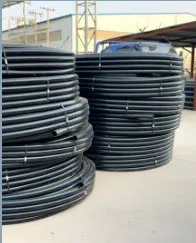
Dia12-1600mm HDPE paipu - High Density Polyethylene Pipe
He aha ka Paipu Wai ʻEleʻele