LUOYANG CAME ENERGY TECH CO., LTD


Jaki typ rury jest używany do podziemnego zaopatrzenia w wodę pitną
Zastanawiałeś się kiedyś, jak czysta woda pojawia się w Twoim kranie?? Wszystko zaczyna się od ukrytej sieci pod Twoimi stopami. Ukryty głęboko pod ziemią, unique pipelines carry drinking water from treatment plants to your home. But not just any type of pipe can manage this crucial work. So what kind of pipes keep our water safe underground?
The answer matters more than you might think. The wrong pipe can leach chemicals into the water, crack under soil pressure, or corrode from aggressive groundwater. That’s why engineers don’t guess — they specify. And the choice usually comes down to a handful of proven materials, each with its own strengths and trade‑offs.

(Jaki typ rury jest używany do podziemnego zaopatrzenia w wodę pitną)
Think of it. These pipelines deal with consistent stress. They fight dirt, rocks, and even tree origins. They manage freezing temperatures and scorching warm. Most significantly, they need to protect the water inside. The water you consume, prepare with, and bathe in needs to remain pure. That eliminates many typical pipeline materials.
For years, hard materials have done this work. Ductile iron pipes are exceptionally solid. They withstand squashing pressures underground. Their thick walls handle high stress easily. Concrete pipes lined with special finishings are one more old favorite. They use resilience and rust resistance. These materials developed the backbone of numerous city water supply. They are the workhorses under our streets.
Ductile iron has been the industry standard for decades. According to ISO 2531:2009, ductile iron pipes are specifically designed to convey water for human consumption, whether operated with or without pressure and installed below or above ground. Modern ductile iron pipes also feature internal linings like Ductan, which are inert when in contact with drinking water, and protective exterior coatings designed to be exceptionally durable in underground conditions. Products intended for contact with potable water must be certified to NSF/ANSI 61 wymagania. Compared to HDPE, ductile iron has more than 24 times the tensile strength — which is why it remains the go‑to choice for high‑pressure trunk mains and areas with extreme soil loads.
Yet times adjustment. Plastic pipelines are currently super stars for below ground water. Polyethylene pipelines, specifically the high-density kind (HDPE), are leading options. Dlaczego? They are extremely adaptable. This allows them bend around obstacles without damaging. They are additionally exceptionally tough versus cracks. Icing up ground? HDPE simply shrugs it off. Korozja? Plastic does not rust or wear away like steel. Oznacza to czystszą wodę na dłużej. And also, signing up with these pipelines is often quicker and less complex. Workers fuse the ends along with warm, producing a smooth, połączenie szczelne. No weak joints.
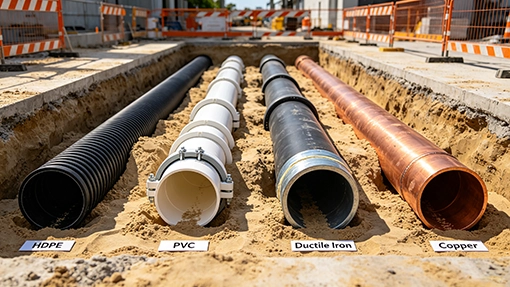
HDPE PVC ductile iron copper potable water underground pipe comparison
Rury i kształtki HDPE are considered lead‑free per the U.S. Safe Drinking Water Act when certified to NSF/ANSI/CAN 61, NSF/ANSI/CAN 372, or NSF/ANSI 14 for potable water end use. The material is manufactured and designed with high‑performance PE4710 per the updated AWWA C901, C906, and M55 standardy. In fact, A 2025 study that assessed five common pipe materials — steel, żeliwo sferoidalne, reinforced concrete, HDPE, and UPVC — identified HDPE as the most suitable material for municipal water supply, followed by UPVC and reinforced concrete. And here’s a detail most people overlook: HDPE’s fused joints don’t just prevent leaks — they eliminate the need for mechanical couplings, which are often the weakest point in a buried pipeline. Fewer joints, fewer problems.
Another plastic challenger is PVC pipeline. It’s inflexible and very economical. PVC is likewise corrosion-proof and has a smooth inside. This level of smoothness aids water flow openly, reducing rubbing loss. It’s a prominent choice for lots of municipal water lines. You may locate it feeding neighborhoods or linking to homes.
Rura PCV for potable water is manufactured to AWWA C900, which covers PVC pressure pipe and fabricated fittings from 4 inches through 60 cale in diameter. Unlike rigid materials like cast iron, PVC has sufficient flexibility to accommodate ground movement caused by frost heave or from clay soils expanding and contracting with moisture changes. Its smooth interior also means less friction loss over time — and because PVC doesn’t corrode, that smoothness stays intact for decades. For many municipalities, the combination of low cost, odporność na korozję, and proven performance makes PVC a reliable workhorse for distribution lines.
Copper pipelines are occasionally utilized below ground as well. They are champions for indoor pipes. Burying copper requires extra treatment. It requires unique defense to avoid corrosion from specific dirts. Due to this, and the cost, copper is much less typical for lengthy primary supply lines underground than plastic or iron. It radiates even more inside your wall surfaces.
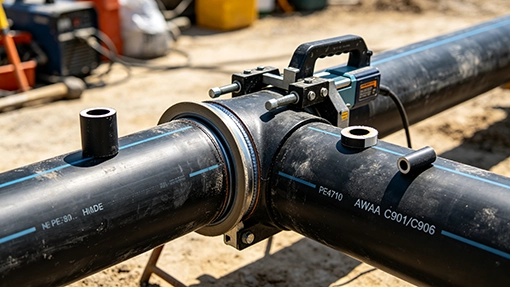
HDPE potable water pipe PE4710 butt fusion joint
That said, copper’s reputation for corrosion resistance is well‑earned in most environments. Copper is highly corrosion‑resistant to potable water that meets international drinking water quality standards. Studies of 10‑ to 70‑year‑old underground copper water service lines have shown that copper has excellent resistance to indigenous soils and water. The exceptions occur in soils with high concentrations of chlorides or sulfates, or in acidic conditions. That’s why proper soil testing before burial is non‑negotiable. For most underground main lines, however, the higher material cost and installation complexity make copper less competitive than plastic or iron.
Choosing the ideal pipe is major company. Designers and water departments concentrate concerning it. They consider the soil type. Is it rocky, sandy, or full of clay? They consider the water pressure needed. How deep will the pipeline be buried? What’s the regional climate like? Price and long-lasting upkeep issue as well. The goal is constantly the same: provide safe, tidy water accurately for years. The pipe needs to be a quiet, reputable guardian.
According to AWWA guidance, pipe selection criteria typically include wytrzymałość, wskaźniki ciśnienia, service conditions, odporność na korozję, economics, and smoothness. Water quality also matters — factors like pH and residual disinfectant levels can affect how different materials perform over time. And for HDPE in particular, potable water applications require the use of PE compounds classified as CC2 or CC3 per ANSI/AWWA C901. These aren’t academic details — they’re the difference between a system that lasts 50 years and one that fails in 10.

(Jaki typ rury jest używany do podziemnego zaopatrzenia w wodę pitną)
Following time you turn on the tap, photo those concealed blood vessels below the city. Whether it’s sturdy ductile iron, versatile HDPE plastic, cost-effective PVC, or thoroughly secured copper, these pipes are the unrecognized heroes. They work day and night, unseen, making contemporary life possible. Their task is basic yet vital: maintain the good water moving.
One more thing: whatever material you choose, make sure it’s NSF/ANSI/CAN 61 atestowany. This standard evaluates the chemical contaminants that can leach out of products into drinking water, and it’s required by most states and provinces in the United States and Canada. It’s not just a badge — it’s your guarantee that the pipe touching your drinking water won’t compromise your health. Next time you’re specifying pipe for a project, ask for the certification. Your customers — and their families — will thank you.
Next time you turn on the tap, picture those hidden blood vessels beneath the city. Whether it’s sturdy ductile iron, flexible HDPE, cost-effective PVC, or carefully protected copper, these pipes are the unsung heroes — working day and night, unseen, making modern life possible. Their job is simple yet vital: keep the good water flowing.

Copper underground water pipe corrosion protection
But here’s the real question: are you building with the right material for your specific project?
Every site is different. Soil composition, water chemistry, wymagania ciśnieniowe, and budget all play a role. Getting it wrong means costly repairs, service disruptions, and compromised water quality.
Na Luoyang Datang Energy Tech Co., z oo. , we don’t just sell pipes — we help you engineer the right solution. Our team can guide you through material selection, wskaźniki ciśnienia, and installation best practices for HDPE, PCV, and other potable water systems.
📩Reach out to our team today and tell us:
- Your project type (komunalny / residential / przemysłowy)
- Required pipe diameter and length
- Operating pressure and soil conditions
- Installation method (trench / directional drilling / others)
We’ll respond within24 hours z:
✅ Material recommendations tailored to your site
✅ Certified product specifications (NSF/ANSI 61, AWWA C900, C901, C906)
✅ Transparent pricing and delivery options
✅ Free technical consultation
Don’t leave your water quality to chance. Contact us now and build with confidence.
POWIĄZANE POSTY
Które rury są naprawdę najlepsze do zaopatrzenia w wodę?
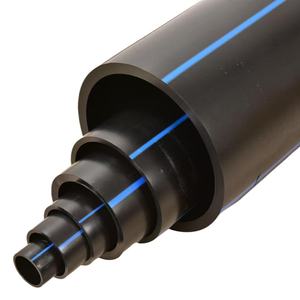
Analiza złączek hydraulicznych i typów rurociągów
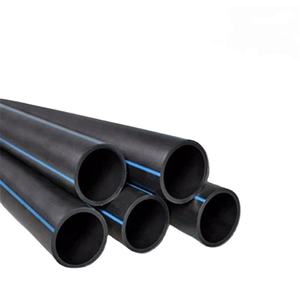
Wysokiej jakości PE100 & Rura z polietylenu o dużej gęstości PE80 w systemie zaopatrzenia w wodę i odprowadzania wody
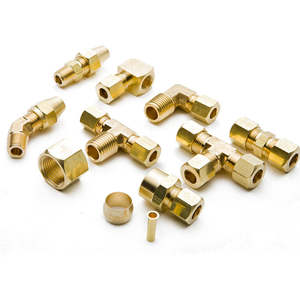
Mosiężne okucia: Wytrzymały, Bezpieczne i niezawodne rozwiązania rurowe