LUOYANG CAME ENERXÍA TECH CO, LTD

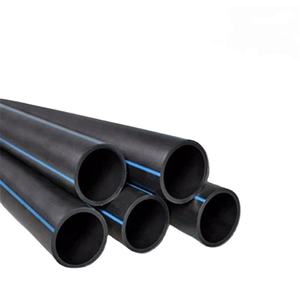
As diferenzas entre tubos de PE e tubos de HDPE
PE pipespolyethylene-pipe are made of polyethylene plastic. As the most basic type of plastic, Polyethylene has excellent resistance to most household and industrial chemicals. Common items like plastic bags and cling film are made of PE.
Polyethylene pipes can be generally classified into three types: low-density polyethylene pipes (LDPE pipes), medium-density polyethylene pipes (MDPE pipes), and high-density polyethylene pipes (Tubos de HDPE).
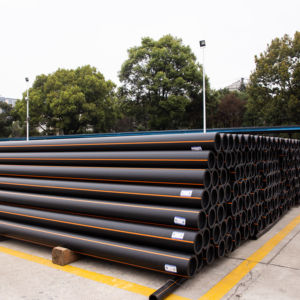
eu. Low-Density Polyethylene (LDPE for short)
Low-density polyethylene is usually produced by high-pressure polymerization, with a density of 0.910-0.925g/cm³. The molecular structure of LDPE is a linear macromolecule with many side chains. The varying lengths of these side chains on the main chain affect the regularity of macromolecular arrangement, making the packing loose and hindering the crystallization of polyethylene. Therefore, its crystallinity is only 55% – 65%. LDPE has a low melting point and is soft. The long side chains give it low viscosity at high shear rates during processing and high melt strength during stretching, making it very suitable for blow molding processes. It is mainly used in the production of agricultural films and heavy packaging films.
II. Medium-Density Polyethylene (MDPE for short)
Medium-density polyethylene is produced using efficient catalysts under medium and low pressure through copolymerization with α-olefins to control its density (0.926-0.940g/cm³), with a crystallinity of 70%-80%. Due to its numerous and long side chains, the density and crystallinity decrease, giving MDPE better flexibility and low-temperature properties. However, its tensile strength, hardness, and heat resistance are inferior to those of high-density polyethylene. The copolymerization of olefins increases the interlamellar connection chains in the MDPE crystal, significantly improving its resistance to slow crack growth and long-term mechanical strength retention compared to LDPE. MDPE can be used in the production of pressure pipes, delivery pipes, various containers, and packaging films.
III. Polietileno de alta densidade (HDPE for short)
High-density polyethylene (HDPE) is produced by low-pressure polymerization, presenting a linear structure with a density of 0.94-0.965g/cm³ and a crystallinity of 80%-95%, appearing as white powder or granules.
Compared to low-density polyethylene, HDPE has fewer side chains and is nearly linear in structure, with regular molecular arrangement and tight packing. Therefore, it has a high crystallinity and density, with a relative molecular weight of hundreds of thousands to millions, and a narrow range of melt flow rates. HDPE has high rigidity and toughness, excellent mechanical strength and heat resistance, as well as good resistance to deep agents and steam permeability. Among all types of polyethylene, HDPE has the lowest permeability and the strongest corrosion resistance, and also has good stiffness. It is mainly used in the production of various pressure pipes and injection-molded products.
Therefore, HDPE pipes are a type of PE pipe, but compared to ordinary PE pipes, HDPE pipes have superior performance, which can be summarized as follows:
- Different pressure-bearing capacity: HDPE pipes must withstand certain pressure, and usually require PE resins with high molecular weight and good mechanical properties, such as HDPE resins, which have a strength nine times that of ordinary polyethylene pipes (PE pipes).
- Different wear resistance: Among all engineering plastics, HDPE has the best wear resistance. The higher the molecular weight, the more wear-resistant the material becomes, even surpassing many metal materials (such as carbon steel, stainless steel, bronze, etc.). The wear resistance of ordinary PE is only one-tenth that of HDPE.
- Different applications: General PE pipes (medium-density polyethylene pipes) are suitable for transporting gaseous artificial gas, natural gas, and liquefied petroleum gas, while low-density polyethylene pipes are used as soft pipes. Tubos de HDPE (high-density polyethylene pipes) are mainly used for transporting natural gas, municipal water supply systems, indoor water supply systems in buildings, outdoor buried water supply systems, and buried water supply systems in residential areas and factories, as well as for the repair of old pipelines, water treatment pipeline systems, and industrial water pipes in gardens, rego, and other fields. HDPE pipes can be used as the successor to traditional steel pipes and polyvinyl chloride drinking water pipes, but ordinary PE pipes cannot.
Provedor
Luoyang Datang Energy Tech Co.Ltd é un fabricante chinés líder especializado en tubos e accesorios de plástico de alta calidade. Equipado con liñas de produción automatizadas de última xeración e apoiado por un equipo de 200 profesionais, ofrecemos unha ampla liña de produtos que comprende máis 150 tipos de tubos e accesorios de plástico deseñados para sistemas de abastecemento e drenaxe de auga, transmisión de gas, e sistemas de calefacción por chan radiante. Os nosos principais produtos inclúen tubos e accesorios de PVC, PE (HDPE) Tubos e accesorios, Tubos e accesorios PPR, e tubos de calefacción por chan PEX.
PUBLICACIÓNS RELACIONADAS
How To Clean Water Supply Pipes At Home
PE Pipe Vs PVC Pipe in Agricultural Irrigation: Comparative Analysis
HDPE Pipe and Fittings:An Innovative Solution for Drainage & Sewage System
Which Is More Suitable For Drinking Water Pipe:PPR vs PE?

Understanding Brass Valves: Types, Features, and Applications