


LUOYANG CAME ENERGY TECH CO.,LTD

Kua ta mihó?Tubonan di HDPE vs Tubonan di PE.
In the field of pipe engineering, polietileno (PE) pipe has become an ideal alternative to traditional metal pipe due to its characteristics such as light weight, corrosion resistance and long life. Pero, many users are often confused about the difference between “Tubo di HDPE” i “Tubo di PE” when choosing and purchasing. In fact, HDPE (polietileno di densidat haltu) is an important branch of PE, and the two have both commonalities and differences.
HDPE vs PE: Quick Answer
HDPE is not a separate material from PE. It is a type of PE. The useful comparison is HDPE vs ordinary PE, such as LDPE and MDPE.
- Choose HDPE for high pressure, buried water mains, liñanan di gas, tuberianan industrial, mineria, and long-life projects.
- Choose ordinary PE for low-pressure irrigation, cable protection, and budget jobs where pressure and temperature are not demanding.
If pressure, forsa, and service life matter, HDPE is usually the better choice. If the job is low-pressure and cost-sensitive, ordinary PE can be enough.
| Karakterístika | HDPE | Ordinary PE (LDPE/MDPE) |
|---|---|---|
| Densidat | 0.941–0.965 g/cm³ | 0.910–0.940 g/cm³ |
| Pressure grade | PN10–PN25 | PN6–PN16 |
| Working temperature | -60°C to 60°C, short-term 80°C | Usually up to 40°C |
| Stress cracking resistance | Ekselente | Moderá |
| Design life | 50+ añanan | About 30 añanan |
| Uso típiko | Water mains, gas, industrial, mineria | Irigashon, cable protection, low-pressure water |
| Upfront cost | Mas haltu | Mas abou |
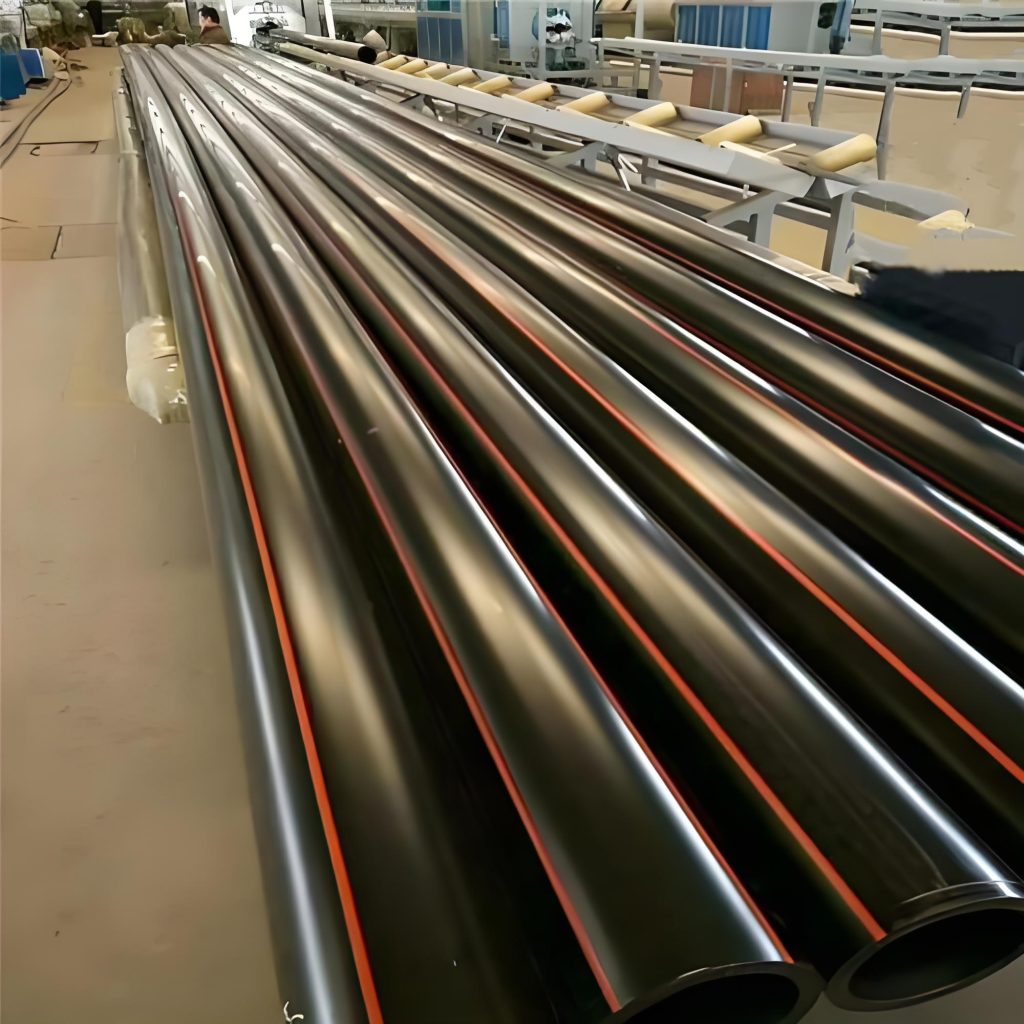
Prome, HDPE and PE: the material nature of the difference
1. Family classification of polyethylene (PE)
Polietileno (PE) is a thermoplastic polymerized from ethylene, which is mainly divided into three categories according to the density and molecular chain structure:
- Polietileno di densidat abou (LDPE) : strong flexibility, but weak pressure resistance, more used in packaging films.
- Medium density polyethylene (MDPE) : balances flexibility and rigidity, and is often used in gas pipelines.
- Polietileno di densidat haltu (HDPE) : Compact molecular chain structure, high density, with excellent compression and chemical resistance properties.
2. The particularity of HDPE pipe and fitting
HDPE pipeline belongs to the high-end category of PE pipeline. Through special polymerization process and additive technology, it is significantly better than ordinary PE pipeline in strength, temperature resistance and environmental stress cracking resistance. In short, HDPE is an upgraded version of PE, designed for harsh working conditions.
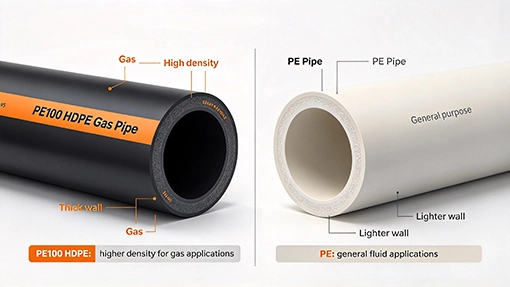
PE100 HDPE gas pipe and PE pipe comparison
PE80 vs PE100: Kiko Ta e Diferensia?
PE80 and PE100 are grades of polyethylene resin. PE100 has higher minimum required strength and better resistance to slow crack growth. Most HDPE water and gas pipes today use PE100 resin. PE80 is older and still used in some low-pressure or repair applications.
When a supplier says “PE100 HDPE pipe,” it means the pipe is made from high-density polyethylene using PE100 grade material. It is not a different type of plastic from HDPE.
Segundo, performance comparison: the core difference between HDPE and ordinary PE pipes
1. Compressive strength and impact resistance
- Tubo di HDPE: density up to 0.941-0.965 g/cm3, molecular chain high crystallization, compressive strength can reach more than 2 times of ordinary PE, por wanta preshon mas haltu (common pressure grade PN10-PN25).
- Ordinary PE pipes (such as MDPE) : lower density (0.926-0.940 g/cm3), weak compressive strength, usually used in low-pressure scenarios (such as PN6-PN16).
2. Resistensia na temperatura
- HDPE pipeline: wide operating temperature range (-60 ° C pa 60 ° C), short-term can withstand 80 ° C high temperature, suitable for areas with large temperature difference.
- Ordinary PE pipe: the upper limit of temperature resistance is low (usually not more than 40 ° C), and long-term high temperature is easy to cause deformation.
3. Chemical corrosion resistance
Both of them have bon resistensia na koroshon to acid, alkali, salt and other media, but the molecular structure of HDPE is denser, can resist the erosion of strong oxidants (such as concentrated sulfuric acid) and organic solvents, suitable for chemical industry, sewage treatment and other corrosive environment.
4. Resistance to environmental stress cracking (SKIRBI)
HDPE by optimizing the molecular chain arrangement and adding anti-cracking agents, its ESCR performance is far superior to ordinary PE, and it is more difficult to break when buried for a long time or squeezed by external force.
5. Life and maintenance cost
Tubo di HDPE design life can reach mas ku 50 añanan, i no anti-corrosion coating;
The life of tubonan di PE komun is tokante 30 añanan, and regular maintenance is required in high pressure or corrosive environments.
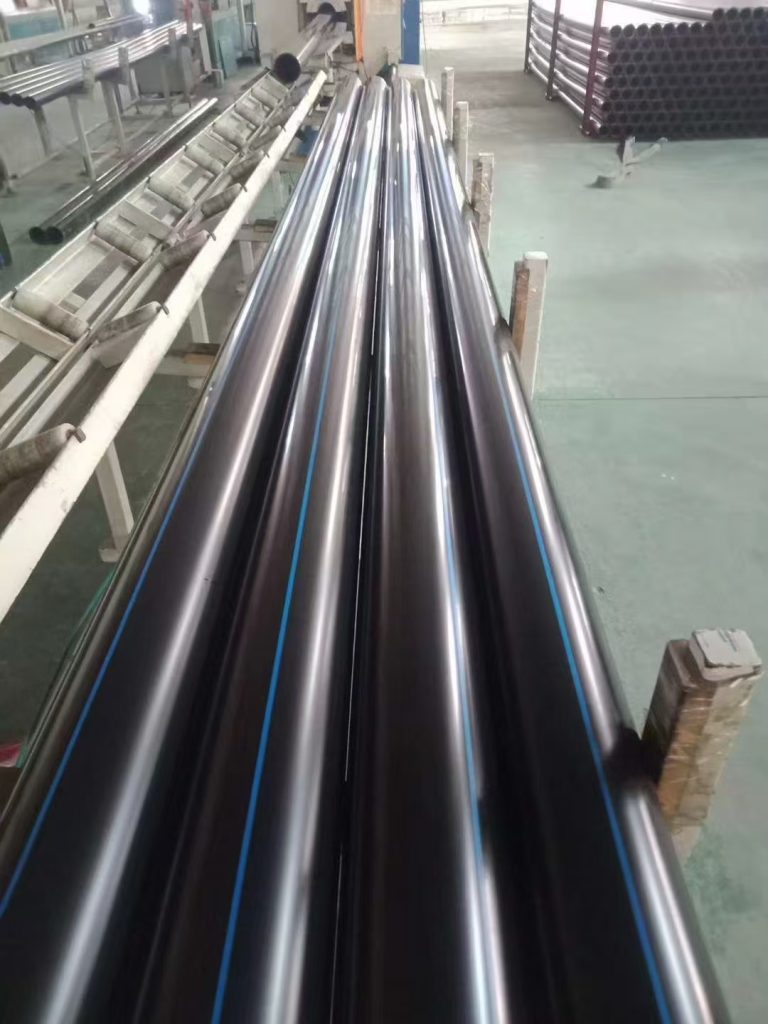
Di tres, Senario di aplikashon: HDPE pipe and PE pipe application field
1. The core advantage scenario of HDPE pipe and fitting
- Municipal water supply and drainage system: resistant to high pressure and ground settlement, suitable for long-distance water transmission.
- Industrial pipeline: plantanan kímiko, sewage treatment plants for corrosive media transport.
- Transmishon di gas: high-density structure effectively prevents gas penetration, higher safety.
- Marine engineering: resistant to salt spray corrosion, used in seawater desalination or submarine pipelines.
2. Economic application scenario of ordinary PE pipe and fitting
- Irigashon agrikultural: low-pressure water transmission, low cost and easy to install.
- Suministro di awa doméstiko: hot and cold water pipes (need to choose a temperature resistant model).
- Cable protection sleeve: good flexibility, suitable for non-pressurized environment.
Di kuater, installation and construction: the difference point of two kinds of pipelines
1. Método di konekshon
- HDPE pipeline: The use of hot melt butt or electric fusion connection, the interface strength can reach more than 90% of the pipe body, to ensure zero leakage.
- Ordinary PE pipeline: some low-pressure models can be mechanically connected, but the sealing is slightly worse than the hot melt process.
2. Flexibility and laying efficiency
- Tubo di HDPE: high stiffness, long distance laying needs more support, but can be adapted to trenchless construction (such as pipe jacking).
- Ordinary PE pipe: better flexibility, suitable for difficult terrain areas, but limited pressure resistance.
Di sinku, cost analysis: one-time investment vs long-term value
- Initial cost: HDPE pipe price is 20%-30% higher than ordinary PE, mainly from raw materials and production process costs.
- Long-term benefits: HDPE has a long life, low maintenance costs and higher comprehensive cost efficiency. Based on a 50-year cycle, the total cost of HDPE is more than 40% lower than that of PE.
Di seis,Comparison of environmental protection
Both are recyclable materials, but the recycling rate of HDPE is higher (te ku 95%), and the carbon emission in the production process is 50% lower than that of metal pipes, in line with the green building trend.
Seven, how to choose? Key decision factors
- 1. Working condition requirements: preshon haltu, high temperature or strong corrosion environment must choose HDPE;
- 2. Budget constraints: short-term projects or low-voltage scenarios can consider ordinary PE;
- 3. Ekspektativa di bida: long cycle projects prioritize HDPE to reduce the total cost.
HDPE and ordinary PE pipes have their own advantages, and the core of choice is to accurately match the engineering needs. As a professional pipe manufacturer, nos ta ofresé a full range of PE/HDPE pipe solutions.
Common Buying Mistakes
- Treating HDPE and PE as two completely different materials. HDPE is a type of PE.
- Choosing by price only. Check pressure rating, SDR, and application first.
- Using ordinary PE for high-pressure water mains.
- Ignoring the resin grade. PE100 is not the same as PE80.
- Confusing SDR with pressure class. Lower SDR means thicker wall and higher pressure.
- Forgetting that wall thickness changes the inside diameter.
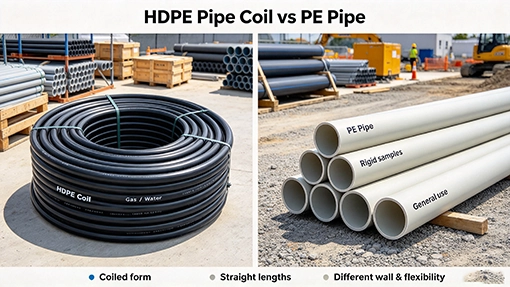
HDPE pipe and PE pipe comparison for water supply and gas transmission.
HDPE vs PE Pipe FAQ
P: Is HDPE the same as PE?
HDPE is a type of PE. PE also includes LDPE and MDPE. HDPE has a denser molecular structure, higher strength, and better pressure resistance.
P: Kua ta mihó, HDPE or PE pipe?
It depends on the job. HDPE is better for high pressure, gas, water mains, industrial use, i bida di servisio largu. Ordinary PE is often enough for low-pressure irrigation and cable protection.
P: What is the difference between PE80 and PE100?
PE100 is a higher-grade polyethylene resin. It offers higher strength and better resistance to slow crack growth than PE80. Most modern HDPE water and gas pipes use PE100.
P: Can HDPE pipe be used for drinking water?
Si. HDPE pipe is non-toxic, resistente na koroshon, and widely used for potable water. Confirm that the pipe meets the drinking water standard required in your market.
P: How do I choose between HDPE and ordinary PE pipe?
Check four things: working pressure, temperatura, chemical exposure, and project life. If any of them is demanding, choose HDPE. If the job is low-pressure and short-term, ordinary PE may be enough.
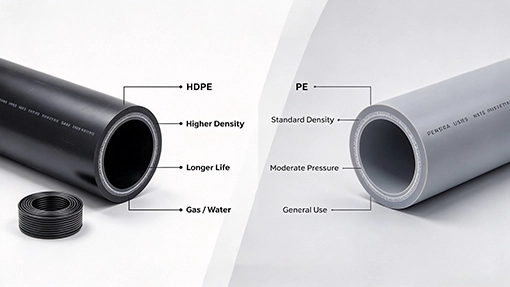
HDPE vs PE
Proveedó
Luoyang Datang Energy Tech Co., Ltd. ta un fabricante y proveedor profesional di pipa y fittings. Nos ta ofresé tubonan PPR, Tubonan di PVC, Tubonan di PE, i tubonan di keintamentu di vloer i fittingnan pa tur tipo di tubo, ku kalidat haltu i preisnan kompetitivo. Si bo tin kualke pregunta tokante pipa i fittingnan, por fabor no duda pa tuma kontakto ku nos. You can click on the product to get in touch with us.
POSTNAN RELASHONÁ
Bo Por Spaar Tubonan Dor di Apagá e Suministro di Awa Prinsipal
Skohe e Tubo di HDPE Korekto: Tubo di DWC, Tubo di ondulashon, Splikashon di Tubo di Kulvert i Kondukto Eléktriko
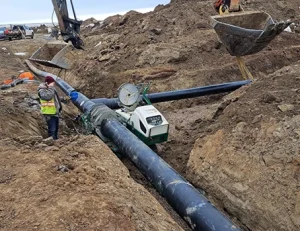
Kon pa Instalá Tubonan di HDPE Bou di Tera: Pasonan Klave, Métodonan, i Mihó Práktikanan
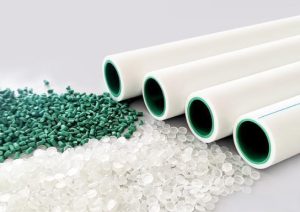
7 Bentahanan Revolushonario di e Tuberia di PPR den Suministro di Awa Moderno & Sistema di Drenahe
PE, Tubonan di PVC i PPR den Sistemanan di Drenahe i Riool (DWV)
