LUOYANG VEIO ENERGY TECH CO., LTD


Erros de seleção de tubos HDPE: 7 Fatores que os engenheiros devem verificar antes de comprar
Selecionando o certo Tubo HDPE is a critical decision for any pipeline project. Embora o PEAD (Polietileno de alta densidade) tubos são amplamente reconhecidos por sua resistência à corrosão, flexibilidade, e longa vida útil, the actual performance of a pipeline system depends heavily on whether the pipe is correctly selected according to project requirements.
Many pipeline failures are not caused by poor HDPE material quality. Em vez de, they often result from incorrect selection decisions, such as choosing the wrong pressure rating, unsuitable SDR classification, improper diameter, or an HDPE
pipe grade that does not match the working environment. For engineers, empreiteiros, and procurement teams, HDPE pipe selection should be based on multiple technical factors rather than simply comparing product prices or pipe dimensions. The most common mistakes include ignoring operating pressure, selecting the wrong PE material grade, misunderstanding SDR ratings, and overlooking installation conditions. These mistakes may increase maintenance costs, reduce service life, and affect the reliability of the entire pipeline system.
This article explains the seven key HDPE pipe selection mistakes engineers should avoid before purchasing, helping you choose the most suitable HDPE pipe solution for water supply, irrigação, industrial, e aplicações de mineração.
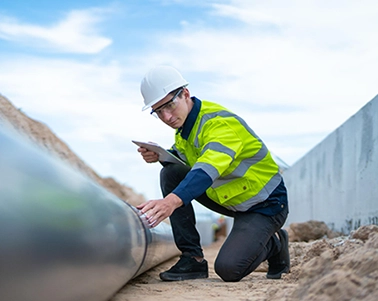
HDPE pipe selection for water supply engineering project
Erro 1: Choosing HDPE Pipes Without Considering Pressure Requirements
One of the most common mistakes in HDPE pipe selection is focusing only on pipe diameter while ignoring pressure requirements. A pipeline system is designed to operate under specific pressure conditions. Selecting an HDPE pipe with insufficient pressure capacity may result in deformation, vazamento, or premature failure during operation.
Before selecting an HDPE pipe, engineers should evaluate:
- Pressão de trabalho
- Maximum allowable pressure
- Pressure surge caused by pumps or valves
- Safety margin
Understanding HDPE Pipe Pressure Rating
HDPE pipe pressure capability is usually related to:
- Grau do material
- Espessura da parede
- SDR rating
A lower SDR number means a thicker pipe wall and generally higher pressure resistance.
| HDPE Pipe Class | Typical Pressure Range | Aplicativos comuns |
| PN6 | Low pressure systems | Irrigação agrícola, drenagem |
| PN10 | Medium pressure systems | Abastecimento municipal de água |
| PN16 | Higher pressure systems | Tubulações de água industriais |
| PN20+ | High pressure applications | Special industrial systems |
Choosing the correct pressure rating ensures that the HDPE pipe can withstand normal operating conditions and unexpected pressure fluctuations throughout its service life. Por exemplo, a municipal water supply pipeline may require PN10 or PN16 HDPE pipes depending on the system design, while a low-pressure irrigation system may use a different pressure class.

HDPE pipe pressure rating PN6 PN10 PN16 comparison
Erro 2: Ignoring PE Material Grade (PE80 versus PE100)
Not all HDPE is created equal. The material grade—PE80 or PE100—directly affects the pipe’s pressure capability, crack resistance, e vida útil. Yet many specifiers treat them as interchangeable. They are not.
PE grades are defined by theirForça Mínima Requerida (SENHORA) —the predicted long-term hydrostatic strength at 20°C after 50 anos de serviço.
- PE80 has an MRS of 8.0 MPa
- PE100 has an MRS of 10.0 MPa
PE80 vs PE100 Comparison
| Recurso | PE80 | PE100 |
|---|---|---|
| SENHORA (Força Mínima Requerida) | 8.0 MPa | 10.0 MPa |
| Design Stress (ISO 4427) | 6.3 MPa | 8.0 MPa |
| Capacidade de pressão | Mais baixo | Mais alto |
| Crack Resistance | Padrão | Superior |
| Aplicações Típicas | Smaller-diameter gas mains, legacy systems | Modern water supply, industrial, large-diameter |
PE100’s advantages are not marginal—they are significant. Higher design stress allows operation at higher pressures or, alternatively, thinner walls for the same pressure rating. PE100 also offers greater fracture resistance, which is particularly important for large-diameter pipes. PE80, while still available, is increasingly considered a second-tier choice limited to specific applications like smaller-diameter gas mains and legacy system replacements.
Conclusão importante: For any new water supply, industrial, or municipal project, specifyPE100 as the minimum grade. The marginal cost increase is negligible compared to the performance and longevity gains.
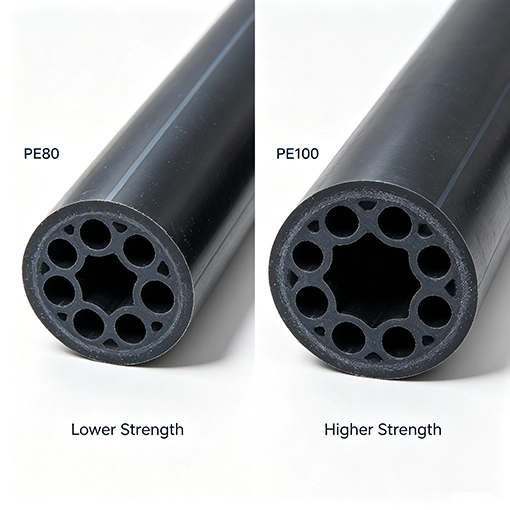
PE100 HDPE pipe vs PE80 material grade comparison
Erro 3: Selecting the Wrong SDR Class for Your HDPE Pipe Application
One of the most technical but frequently misunderstood aspects of HDPE pipe selection is the SDR rating. Many buyers know that SDR numbers are related to pipe strength, but they may not fully understand how SDR affects wall thickness, pressure capacity, e adequação da aplicação. Choosing an incorrect SDR class can lead to either insufficient pressure performance or unnecessary material costs.
What Does SDR Mean in HDPE Pipes?
SDR stands for Proporção de dimensão padrão, which represents the relationship between the outside diameter of the pipe and its wall thickness. A lower SDR value means a thicker pipe wall and generally allows the pipe to withstand higher internal pressure.
Por exemplo:
- SDR11 HDPE pipe has a thicker wall and higher pressure capability.
- SDR17 HDPE pipe has a thinner wall and is suitable for lower pressure applications.
SDR11 vs SDR13.6 vs SDR17 HDPE Pipe Comparison
| SDR Class | Espessura da Parede | Capacidade de pressão | Aplicações Típicas |
| SDR11 | Thick wall | Alta pressão | Dutos industriais, pressure water systems |
| SDR13.6 | Medium wall | Medium-high pressure | Abastecimento municipal de água, general pressure applications |
| SDR17 | Thin wall | Lower pressure | Irrigação, drenagem, low pressure systems |
How Engineers Should Select the Correct SDR Rating
The correct SDR selection depends on several project conditions:
1. Operating Pressure
Higher pressure systems require HDPE pipes with thicker walls and lower SDR values.
Por exemplo:
- Industrial water pipelines may require SDR11 HDPE pipes.
- Agricultural irrigation systems may use SDR17 depending on pressure requirements.
2. Safety Requirements
Pipeline systems operating continuously for decades should include sufficient safety margins. Municipal water supply projects, por exemplo, usually prioritize reliability and long service life rather than selecting the lowest initial cost option.
3. Ambiente de instalação
Underground pipelines may experience:
- Soil pressure
- External loads
- Temperature changes
Portanto, SDR selection should consider not only internal pressure but also installation conditions.
Common SDR Selection Mistakes
| Erro | Potential Problem |
| Selecting SDR only based on price | Reduced service life |
| Choosing thicker pipes unnecessarily | Maior custo de material |
| Ignoring pressure fluctuation | Unexpected pipeline failure |
| Using the same SDR for all applications | Poor system performance |
A professional HDPE pipe supplier should help customers select the appropriate SDR class according to pressure requirements, pipe diameter, grau de material, and application conditions.

SDR11,SDR13.6 and SDR17 HDPE pipe wall thickness comparison
Erro 4: Focusing Only on Initial Pipe Cost Instead of Total Project Value
Price is always an important factor in pipeline procurement, but selecting HDPE pipes based only on the lowest purchase price can create long-term problems. A cheaper pipe may reduce initial investment, but it may not provide the required durability, desempenho de pressão, or installation efficiency. For engineering projects, the real cost of a pipeline system includes much more than the pipe itself.
Factors Affecting Total HDPE Pipeline Cost
| Cost Factor | Descrição |
| Pipe purchase cost | Material investment |
| Custo de instalação | Labor and equipment requirements |
| Custo de manutenção | Repairs and replacement |
| Vida útil | Long-term operational value |
Why HDPE Pipes Often Provide Better Lifecycle Value
HDPE pipes are widely used because they offer:
- Excelente resistência à corrosão:Ao contrário dos tubos de metal, HDPE does not rust or corrode easily, making it suitable for underground and harsh environments.
- Lower Maintenance Requirements:The flexible structure and reliable fusion connections of HDPE systems reduce leakage risks.
- Longa vida útil:Properly selected HDPE pipes can provide decades of reliable operation.
Exemplo: Low-Cost vs Properly Selected HDPE Pipe
| Selection Approach | Short-Term Result | Long-Term Result |
| Lowest price only | Lower initial cost | Higher replacement risk |
| Correct pressure and SDR selection | Slightly higher investment | Lower maintenance cost |
For professional projects, the goal should not be purchasing the cheapest HDPE pipe, but selecting the most cost-effective solution that matches the application requirements.
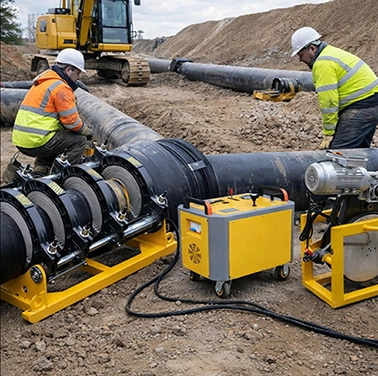
HDPE pipe butt fusion and electrofusion installation methods
Erro 5: Ignoring Installation Method and Connection Requirements
Even when the correct HDPE pipe is selected, improper installation methods can affect pipeline performance. Unlike traditional rigid piping systems, HDPE pipes require suitable fusion techniques to achieve reliable and leak-free connections.
Common HDPE Pipe Connection Methods
| Método de conexão | Vantagens | Aplicações Típicas |
| Fusão de bunda | Forte, seamless connection | Large diameter pipelines |
| Eletrofusão | Flexible installation | Repair and complex systems |
Soldagem por fusão de topo
Butt fusion is commonly used for large diameter HDPE pipes. The pipe ends are heated and pressed together to form a strong molecular bond.
As vantagens incluem:
- High connection strength
- Excellent leakage resistance
- Suitable for long-distance pipelines
Electrofusion Connection
Electrofusion fittings use embedded heating elements to create a secure connection between pipes and fittings.
They are often preferred for:
- Pipeline repairs
- Limited working spaces
- Complex installation conditions
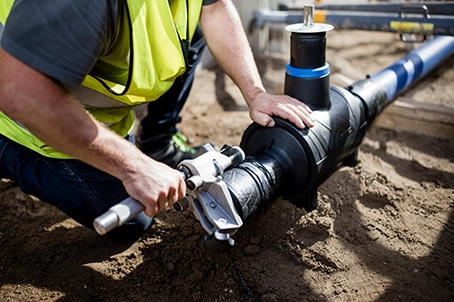
HDPE pipe butt fusion and electrofusion installation methods
Erro 6: Choosing the Incorrect HDPE Pipe Diameter
Selecting the correct pipe diameter is one of the most important steps in HDPE pipe selection, but it is also an area where many engineering projects make mistakes. Some buyers choose pipe diameter based only on existing pipeline size or initial cost considerations, without fully evaluating flow requirements, pressure loss, and future expansion needs.
An incorrectly sized HDPE pipe can negatively affect system performance. A pipe that is too small may cause:
- Excessive pressure loss
- Reduced flow capacity
- Higher pumping energy consumption
A pipe that is unnecessarily oversized may result in:
- Maior custo de material
- More difficult installation
- Inefficient project investment
Key Factors for HDPE Pipe Diameter Selection
Engineers should evaluate the following parameters before determining the pipe diameter:
| Fator de seleção | Por que é importante |
| Taxa de fluxo necessária | Determines water transportation capacity |
| Pressão operacional | Affects pipe performance |
| Pipeline length | Influences pressure loss |
| Pump capacity | Determines system compatibility |
| Future expansion | Prevents costly upgrades |
Small Diameter vs Large Diameter HDPE Pipes
HDPE pipes are available in a wide range of diameters, from small distribution pipelines to large infrastructure projects.
| Pipe Diameter Range | Aplicações Típicas |
| Small diameter HDPE pipes | Abastecimento de água residencial, small irrigation systems |
| Medium diameter HDPE pipes | Municipal networks, agricultural projects |
| Large diameter HDPE pipes | Sistemas de água industriais, mineração, major infrastructure |
Consider Future Demand, Not Only Current Requirements
A common mistake is selecting a pipe size that only meets current demand. For long-term projects, engineers should consider whether the pipeline may need to support:
- Increased water consumption
- Additional users
- Expanded production capacity
Choosing a slightly larger HDPE pipe during initial construction may reduce future replacement costs and improve system flexibility.
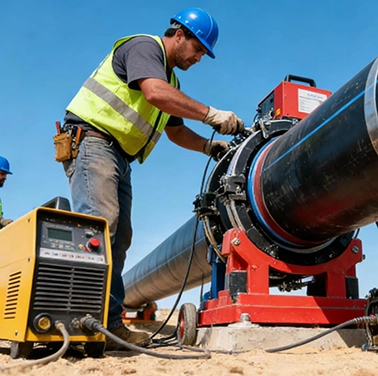
HDPE pipe butt fusion and electrofusion installation methods
Erro 7: Ignoring the Application Environment
HDPE pipes are widely used in many industries, but different applications have different requirements. A pipe suitable for agricultural irrigation may not necessarily be the best choice for industrial or mining applications.
The correct HDPE pipe selection should consider:
- Medium being transported
- Environmental conditions
- Requisitos de pressão
- Chemical exposure
- Mechanical stress
HDPE Pipe Selection for Different Applications
1. HDPE Pipe for Water Supply Systems
Municipal and commercial water supply projects usually prioritize reliability, segurança, e longa vida útil.
Important selection factors include:
- PE100 material grade
- Appropriate pressure rating
- Stable fusion connection
- Compliance with drinking water requirements
For pressure water supply systems, engineers usually select HDPE pipes according to operating pressure, pipeline length, and hydraulic requirements.
2. HDPE Pipe for Agricultural Irrigation
Agricultural irrigation systems require pipes that can provide efficient water distribution while maintaining cost effectiveness.
Important considerations include:
- Large coverage area
- Outdoor installation conditions
- Flexibilidade
- Fácil instalação
HDPE pipes are commonly preferred in irrigation projects because they are lightweight, resistente à corrosão, and suitable for underground installation.
3. HDPE Pipe for Industrial Applications
Industrial pipeline systems often require higher durability due to complex operating conditions.
Applications include:
- Process water systems
- Chemical transportation
- Cooling water pipelines
- Wastewater treatment systems
Engineers should carefully evaluate chemical compatibility and pressure requirements before selecting HDPE pipes.
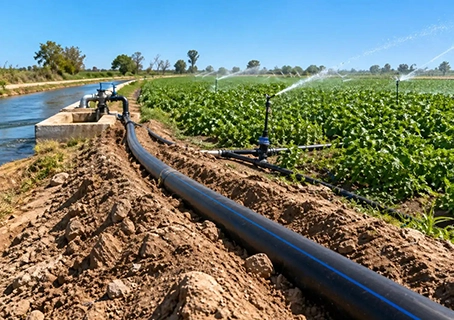
HDPE pipe applications in irrigation systems
4. HDPE Pipe for Mining and Slurry Applications
Mining applications create some of the most demanding conditions for pipeline systems.
HDPE pipes are often selected because of:
- Excellent abrasion resistance
- High impact resistance
- Flexible installation capability
For slurry transportation, engineers must consider pipe wall thickness, classificação de pressão, and abrasion conditions.
HDPE Pipe Selection Checklist Before Purchase
Before placing an order, engineers and buyers should confirm the following points:
| Checklist Item | Key Question |
| Grau do material | Is PE100 required for this application? |
| Classificação de pressão | Can the pipe handle operating pressure and surge pressure? |
| SDR selection | Is the wall thickness suitable? |
| Diâmetro do tubo | Does the size meet current and future flow requirements? |
| Método de instalação | Is butt fusion or electrofusion more suitable? |
| Application environment | Is the pipe suitable for water, irrigação, industrial, or mining use? |
A professional HDPE pipe supplier should provide technical support during the selection process, helping customers choose the most suitable specification instead of simply supplying standard products.
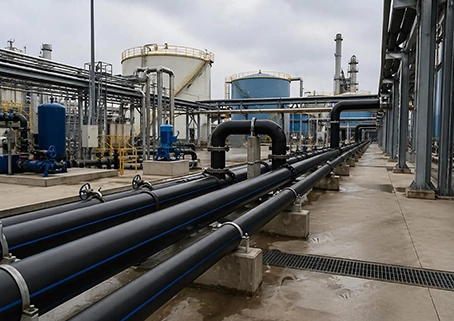
HDPE pipe applications in industrial systems
Conclusão
Choosing the right HDPE pipe is not simply a matter of selecting a pipe size or comparing prices. A successful pipeline project requires careful evaluation of pressure requirements, grau de material, SDR classification, diâmetro, installation method, and application environment.
The most common HDPE pipe selection mistakes happen when buyers focus on only one factor while ignoring the complete system requirements. Por exemplo, selecting a lower-cost pipe without considering pressure performance may lead to higher maintenance expenses in the future. Choosing the wrong SDR class may affect pipeline reliability, while ignoring installation requirements may increase leakage risks.
A professional HDPE pipe selection process should always focus on long-term performance, segurança, and total project value. By avoiding these seven common mistakes, engineers and project managers can select HDPE pipe solutions that provide reliable performance for decades in water supply, irrigação, industrial, e aplicações de mineração.
Work With a Reliable HDPE Pipe Manufacturer
Selecting the right pipe is only part of a successful pipeline project. Working with an experienced HDPE pipe manufacturer ensures that customers receive consistent product quality, accurate technical specifications, and professional support during the selection process. A reliable supplier should be able to provide:
Complete HDPE Pipe Specifications
Including:
- Pipe diameter options
- SDR classifications
- Pressure ratings
- PE100 material solutions
Application-Based Recommendations
Different projects require different HDPE pipe solutions. A professional manufacturer can help customers select suitable products for:
- Municipal water supply systems
- Redes de irrigação agrícola
- Dutos industriais
- Mining slurry transportation
Quality Control and Manufacturing Reliability
High-quality HDPE pipes should be manufactured under strict quality control procedures to ensure:
- Stable mechanical performance
- Consistent dimensions
- Reliable pressure resistance
- Longa vida útil
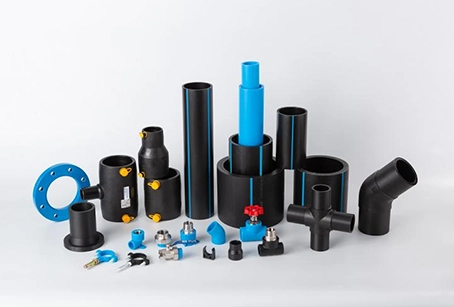
HDPE pipe manufacturer providing customized pipeline solutions
Choose the Right HDPE Pipe Solution for Your Project
Whether you are developing a municipal water project, agricultural irrigation system, industrial pipeline, or mining application, selecting the correct HDPE pipe specification is essential for long-term success.
Luoyang Datang Energia Tech Co., Ltda can help evaluate your project requirements and recommend suitable HDPE pipe solutions based on:
- Pressão de trabalho
- Diâmetro do tubo
- SDR requirements
- Application conditions
- Método de instalação
Contate-nos hoje to discuss your HDPE pipe requirements and receive a professional solution for your pipeline project.
POSTS RELACIONADOS
Quais são os métodos para conectar tubos PPR?
Tubos HDPE & Tubos de PVC em sistema de injeção e agilização
A aplicação de tubos e conexões PPR em sistemas internos de abastecimento de água
Por que as conexões para mangueiras de latão ainda são uma escolha preferida para aplicações industriais?