லுயோயாங் எனர்ஜி டெக் கோ., லிமிடெட் வந்தது


தொழில்துறை ஓட்டக் கட்டுப்பாட்டு அமைப்புகளுக்கு உயர் அழுத்த கார்பன் ஸ்டீல் ஹைட்ராலிக் பால் வால்வை எவ்வாறு தேர்வு செய்வது
தொழில்துறை ஓட்ட கட்டுப்பாட்டு அமைப்புகளில், தி உயர் அழுத்த கார்பன் எஃகு ஹைட்ராலிக் பந்து வால்வு மிக முக்கியமான கூறுகளில் ஒன்றாகும். இது உங்கள் ஹைட்ராலிக் திரவத்தின் கேட் கீப்பராக செயல்படுகிறது - ஓட்டத்தை கட்டுப்படுத்துகிறது, தனிமைப்படுத்தும் உபகரணங்கள், மற்றும் தீவிர அழுத்தங்களின் கீழ் கணினி பாதுகாப்பை உறுதி செய்தல். தவறான வால்வைத் தேர்ந்தெடுப்பது கணினி தோல்விகளுக்கு வழிவகுக்கும், தேவையற்ற வேலையில்லா நேரம், விலையுயர்ந்த பழுது, மற்றும் பாதுகாப்பு அபாயங்கள் கூட.
ஆனால் எண்ணற்ற விருப்பங்கள் உள்ளன - 2 வழி பந்து வால்வு எதிராக 3 வழி பந்து வால்வு, வெவ்வேறு அழுத்த மதிப்பீடுகள், இறுதி இணைப்புகள், மற்றும் செயல்படுத்தும் முறைகள் — சரியானதை எப்படி தேர்வு செய்வது? இந்த விரிவான வழிகாட்டி இலட்சியத்தைத் தேர்ந்தெடுப்பதற்கான ஒவ்வொரு படியிலும் உங்களை அழைத்துச் செல்லும் கார்பன் எஃகு பந்து வால்வு உங்கள் தொழில்துறை ஹைட்ராலிக் பயன்பாட்டிற்கு.
நீங்கள் தேய்ந்து போன வால்வை மாற்றுகிறீர்களா அல்லது புத்தம் புதிய நிறுவலுக்கான கூறுகளைக் குறிப்பிடுகிறீர்களா, வலது பந்து வால்வை அணைக்கவும் கணினி செயல்திறனில் அனைத்து வித்தியாசங்களையும் ஏற்படுத்துகிறது, நம்பகத்தன்மை, மற்றும் மொத்த உரிமைச் செலவு.
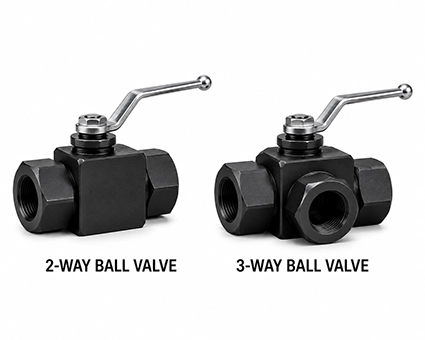
உயர் அழுத்த கார்பன் எஃகு 2 வழி மற்றும் 3 தொழில்துறை ஓட்டக் கட்டுப்பாட்டிற்கான வழி ஹைட்ராலிக் பந்து வால்வு
உயர் அழுத்த கார்பன் ஸ்டீல் ஹைட்ராலிக் பால் வால்வு என்றால் என்ன?
ஏ உயர் அழுத்த பந்து வால்வு அழுத்தம் உள்ள குழாய் அமைப்புகளில் பயன்படுத்தப்படும் கால்-டர்ன் shutoff வால்வு ஆகும், வெப்பநிலை, ஊடக இணக்கம், மற்றும் இயக்க முறுக்கு நிலையான குறைந்த அழுத்த பயன்பாடுகளை விட கவனமாக மதிப்பாய்வு செய்யப்பட வேண்டும். இது ஒரு கோளப் பந்தைப் பயன்படுத்துகிறது, அது மையத்தின் வழியாக ஒரு துளையுடன் இருக்கும் - துளை பைப்லைனுடன் சீரமைக்கும்போது, ஓட்டம் கடந்து செல்கிறது; பந்து சுழலும் போது 90 பட்டங்கள், திடமான பக்கம் ஓட்டத்தைத் தடுக்கிறது.
கார்பன் எஃகு உயர் அழுத்த ஹைட்ராலிக் பந்து வால்வுகளுக்கான மிகவும் பொதுவான பொருட்களில் ஒன்றாகும். உயர்தர கார்பன் எஃகு பந்து வால்வுகள் அழுத்த மதிப்பீடுகளைக் கையாள முடியும் வரை 41 MPa (6,000 psi) , அளவைப் பொறுத்து. கார்பன் எஃகு பொதுவாக துருப்பிடிக்காத எஃகு விட வலுவானதாகவும் கடினமானதாகவும் கருதப்படுகிறது, குறிப்பாக உயர் அழுத்த அமைப்புகளுக்கு வரும்போது. இது சோர்வு தோல்வி மற்றும் உடையக்கூடிய தன்மைக்கு அதிக எதிர்ப்புத் திறன் கொண்டது, அதாவது விரிசல் அல்லது சிதைவு இல்லாமல் கடுமையான உடல் நிலைகளைத் தாங்கும்.
தேர்ந்தெடுக்கும் போது ஒரு கார்பன் எஃகு பந்து வால்வு, வால்வுடன் எதிர்மறையான எதிர்வினை ஏற்படாது என்பதை உறுதிப்படுத்த திரவத்தின் வகையை உறுதிப்படுத்துவது அவசியம். கார்பன் எஃகு வால்வுகள் பொதுவாக 99 டிகிரி செல்சியஸ் வெப்பநிலையைக் கையாளும் (210°F). வால்வு எதிர்பார்த்தபடி செயல்படும் என்பதை உறுதிப்படுத்த பயன்பாட்டின் வெப்பநிலை கண்காணிக்கப்பட வேண்டும்.
படிப்படியான தேர்வு வழிகாட்டி
சரியானதைத் தேர்ந்தெடுப்பது உயர் அழுத்த கார்பன் எஃகு ஹைட்ராலிக் பந்து வால்வு பல காரணிகளை கவனமாக மதிப்பீடு செய்ய வேண்டும். தகவலறிந்த முடிவை எடுக்க இந்த படிகளைப் பின்பற்றவும்.
படி 1: Evaluate Pressure and Temperature Ratings
Pressure rating is the most important factor when selecting any உயர் அழுத்த பந்து வால்வு. Choose a valve that’s rated to handle the maximum pressure and flow rate of your system. Underspecifying here can lead to premature wear or even dangerous system failure.
Key considerations:
Understand WOG vs. PTR: A valve might be stamped “800 WOG” (தண்ணீர், எண்ணெய், Gas at 800 பி.எஸ்.ஐ), but this is only its cold working pressure rating.
Consult the PTR chart: As temperature increases, the maximum allowable pressure decreases. You must consult the manufacturer’s Pressure-Temperature Rating (PTR) chart to find the safe working pressure for your specific operating temperature. A Class 600 ball valve rated for 1,480 psi at 100°F might only handle 1,200 psi at 400°F because heat causes material expansion and slight weakening of the valve body and seat materials.
Never assume the WOG rating applies at high temperatures.
Size matters: Pressure ratings vary by size — a 7000 PSI rating for 1/4″ 3/8 வரை″ may drop to 4600 PSI for 3/4″ மற்றும் மேலே.

Pressure temperature rating chart for carbon steel ball valve
படி 2: Choose the Right Valve Configuration – 2 Way vs 3 வழி
2-way ball valves control flow in a single pipeline with simple on/off functionality. They are the most common type of ball valve and the lowest-cost option. They are ideal for:
3-way ball valves manage flow between three separate ports, allowing for diversion or mixing of fluids. They feature either an L-port or T-port bore design. They are ideal for:
Selection tip: Due to their simpler design, 2-way ball valves are often rated for higher pressures than their 3-way counterparts. If your application requires both high pressure and multi-port functionality, ensure the 3-way valve’s pressure rating meets your system requirements.
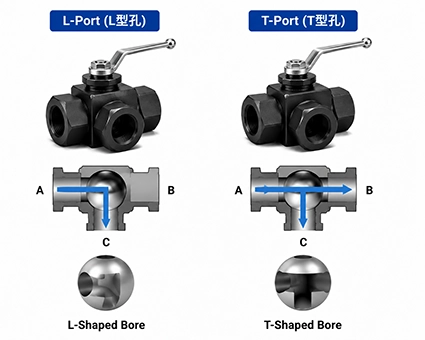
2 way vs 3 way ball valve flow pattern L port and T port
படி 3: Select the Right Valve Construction
Ball valves come in three primary constructions:
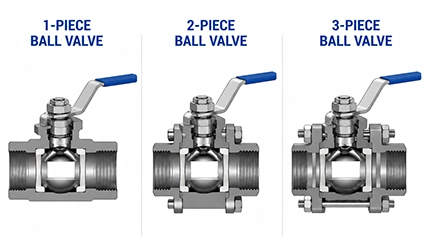
One piece two piece and three piece ball valve construction comparison
படி 4: Choose the Right End Connections
The end connections must be compatible with your existing piping system to guarantee a seamless installation.

NPT SAE BSPP and flanged end connections for hydraulic ball valve
படி 5: Determine Actuation Method
The method of actuation depends on how you intend to operate the valve.
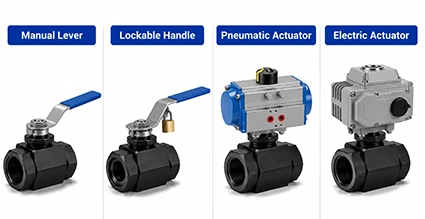
Manual lever lockable handle pneumatic actuator electric actuator for ball valve
படி 6: Evaluate Seal Compatibility
Seals must be compatible with your hydraulic fluid and operating temperature.
| முத்திரை பொருள் | சிறந்தது | வெப்பநிலை வரம்பு |
| NBR (ஹாய்-என்) | Petroleum-based oils, water-glycol fluids | -20°C முதல் +100°C வரை |
| FPM (விட்டான்) | High temperatures, aggressive chemicals | -20°C முதல் +200°C வரை |
| PTFE | Low friction, இரசாயன எதிர்ப்பு | -40°C to +230°C |
| POM | Low friction, dimensional stability | -40°C முதல் +100°C வரை |
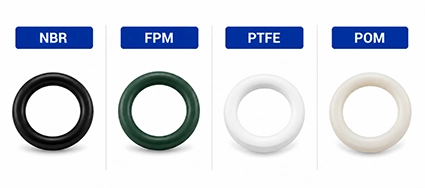
NBR FPM PTFE POM ball valve seal material comparison
Why Choose Carbon Steel for High Pressure Hydraulic Ball Valves?
Carbon steel offers several distinct advantages for high-pressure hydraulic applications:
1. Superior Strength and Toughness
Carbon steel is generally considered to be stronger and tougher than stainless steel, குறிப்பாக உயர் அழுத்த அமைப்புகளுக்கு வரும்போது. இது சோர்வு தோல்வி மற்றும் உடையக்கூடிய தன்மைக்கு அதிக எதிர்ப்புத் திறன் கொண்டது, making it an excellent choice for applications that involve extreme pressure and stress cycling.
2. High Pressure Rating
High-quality carbon steel ball valves can handle pressure ratings of up to 41 MPa (6,000 psi), அளவைப் பொறுத்து. This makes them ideal for demanding hydraulic systems, power generation, and process industries.
3. Cost-Effectiveness
Compared to stainless steel or alloy valves, carbon steel provides an excellent balance of performance and cost for non-corrosive applications. Carbon steel ball valves offer a superior cost-to-performance ratio for general industrial hydraulics.
4. Wide Availability
Carbon steel ball valves are widely available and standardized, making them easy to source and replace.
Important limitation: Carbon steel is susceptible to corrosion when exposed to water, moisture, or corrosive chemicals. Its use is primarily reserved for non-corrosive media like oil, வாயு, and air, or in systems where corrosion inhibitors are used. Protective coatings (எ.கா., painting or galvanizing) are often required to protect against rust.

Carbon steel vs stainless steel ball valve performance comparison
Applications of High Pressure Carbon Steel Ball Valves
High pressure carbon steel hydraulic ball valves are essential components across numerous industries:
1. Oil and Gas Industry
These valves regulate the flow of crude oil and natural gas throughout the extraction, refining, and distribution stages.
2. Hydraulic Systems
High-pressure ball valves control fluid flow in high-pressure hydraulic applications, ensuring precise regulation and reliable performance. They are essential in construction equipment, manufacturing machinery, and mobile hydraulics.
3. இரசாயன செயலாக்கம்
In chemical processing, these valves manage the flow of hazardous chemicals, ensuring safe and efficient operations.
4. Power Generation
High-pressure ball valves control steam and water flow in boilers and turbines for efficient and safe power generation.
5. Industrial Machinery
Carbon steel ball valves are used in injection molding machines, presses, machine tools, and other manufacturing equipment that depend on hydraulic power.
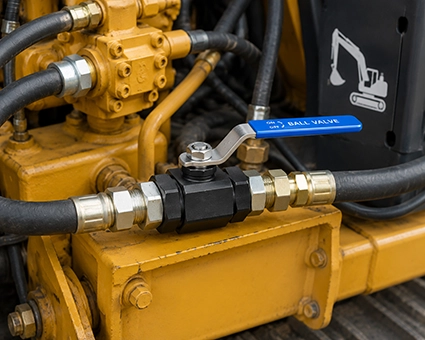
Carbon steel hydraulic ball valve installed on construction machinery excavator
Installation and Maintenance Tips
Ball valves are only designed for fully open or fully closed positions. They are not designed to throttle the flow of a fluid. Using a ball valve for throttling will result in premature failure of components and cause the system to leak or render it unable to be isolated.
Key maintenance practices:
- Regular visual inspection for leaks and damage
- Check for smooth operation of the handle or actuator
- Ensure seals remain intact and functional
- In corrosive environments, inspect protective coatings regularly
- For lockable handle valves, ensure the locking mechanism functions properly

Technician inspecting high pressure ball valve during maintenance
Why Choose Our High Pressure Carbon Steel Ball Valves?
மணிக்கு Luoyang Datang எனர்ஜி டெக் கோ., லிமிடெட். , we understand the critical role that high pressure ball valves play in your hydraulic systems. எங்கள் high pressure carbon steel 2/3 way shut-off hydraulic ball valves are engineered to deliver:
✅Superior Strength – Premium carbon steel construction with corrosion-resistant plating
✅High Pressure Capability – Rated up to 7,000+ PSI for demanding applications
✅Versatile Configurations – Available in 2-way and 3-way (L-port and T-port) designs
✅Multiple Connection Options – NPT, SAE, பி.எஸ்.பி.பி, and flanged ends to suit your system
✅Reliable Sealing – High-quality seals compatible with a wide range of hydraulic fluids
✅100% Tested – Every valve is pressure-tested in both open and closed positions before shipping
✅ஐஎஸ்ஓ 9001 Certified – Manufactured under strict quality control
✅Blow-Out Proof Stem – Prevents stem ejection under extreme pressure
எங்களை தொடர்பு கொள்ளவும்
Ready to upgrade your industrial flow control system with high-quality high pressure carbon steel ball valves? தொடர்பு கொள்ளவும் Luoyang Datang Energy Tech Co.,Ltd today for expert advice, product specifications, and competitive pricing.
டெல் / வாட்ஸ்அப் / WeChat: +86 183 3790 0677
மின்னஞ்சல்: sales@pipesandfittings.net
தொடர்புடைய இடுகைகள்
நீர் விநியோகத்திற்கு எந்த குழாய் சிறந்தது
HDPE குழாய் மற்றும் பொருத்துதல்கள்:வடிகால் ஒரு புதுமையான தீர்வு & கழிவுநீர் அமைப்பு
நிலத்தடி வடிகால் பயன்படுத்த சிறந்த குழாய் எது?
உயர் அடர்த்தி பாலிஎதிலீன் குழாய்:வகைகள், சிறப்பியல்புகள் & பல பயன்பாடுகள்
வீட்டு குழாய்களில் பாலிஎதிலீன் சீரற்ற குழாய்களின் நன்மைகள் மற்றும் பயன்பாடுகள்