U-LUOYANG WAFIKA ENERGY TECH CO., LTD


Ungakucacisa Kanjani Ukufakwa Kwepayipi Lethusi ku-oda Lokuthenga
“Please quote 1/2-inch brass hose fittings, 2,000 pcs.”
It sounds like a complete request. It isn’t.
A supplier reading that line has no idea whether 1/2 intshi refers to hose ID, barb OD, or thread size. They don’t know if it’s NPT or BSP, male or female. They don’t know the brass grade, the surface finish, the working pressure, or the media. And they have no way of knowing whether 2,000 pieces should be packed individually or in bulk.
A good PO specification should remove assumptions. Every dimension, every standard, every requirement — written down, not implied.
This article gives you a practical framework for specifying brass hose fittings on a purchase order, so the first sample matches the final production run.
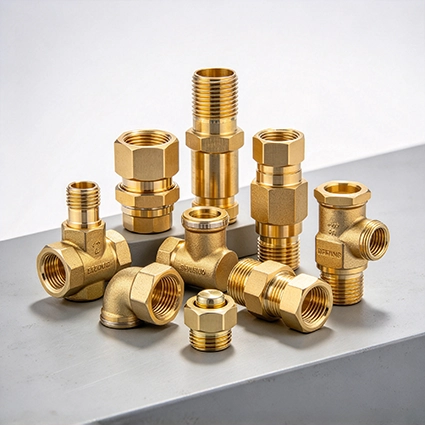
1/2-inch brass hose fittings
Why Specifications Matter on a I-Brass Hose Fitting PO
A vague PO creates a chain reaction of problems:
| What the PO Says | The Problem |
|---|---|
| 1/2″ brass fitting | Which dimension is 1/2″? |
| 1/2″ hose barb | Is that hose ID or barb OD? |
| 1/2″ thread | NPT or BSP? Male or female? |
| Brass fitting | Which brass grade? Lead-free required? |
| 1,000 pcs | What packaging? Individual or bulk? |
| Standard fitting | Iyiphi indinganiso? Which tolerance? |
Every ambiguity creates a decision point where the supplier must guess. And when suppliers guess, the result is often a sample that doesn’t match the drawing, a production delay, a rework request, or a return shipment.
The goal of a complete PO specification is not to be complicated. It’s to be unambiguous.
I 10 Specifications to Include in a Brass Hose Fitting PO
A complete brass hose fitting specification covers ten areas:
- Product type — hose barb, i-adaptha, isixhumi, ukuhlanganisa
- Hose connection size — hose ID
- Barb size — nominal and actual OD
- Uhlobo lochungechunge - I-NPT, I-BSP, I-GHT, metric
- Usayizi womucu — nominal designation
- Gender — male or female
- Okubalulekile — brass grade, lead-free requirement
- Surface finish — natural, nickel-plated, chrome-plated
- Ukusebenza — pressure, izinga lokushisa, media
- Ezohwebo — quantity, ukupakisha, labeling, drawing
Not every PO needs all ten. But the more you specify, the fewer surprises you’ll get.

ukufakwa kwe-hose yethusi
1. Specify the Fitting Type First
“Ukufakwa kwe-hose yethusi” is a category, not a product. The supplier needs to know what form the fitting takes.
| Product Type | Example Description |
|---|---|
| Straight hose barb | Brass straight barb, 1/2″ barb |
| Elbow hose barb | 90° brass hose barb |
| Tee hose barb | Brass tee barb |
| Barb adapter | Barb × male thread |
| Isixhumi se-Barb | Barb × female thread |
| Bulkhead barb | Panel/bulkhead connection |
For a deeper look at how connector, i-adaptha, and coupling differ, see: Izingxenye Ezintathu Ezivamile Zokuxhuma I-Brass Hose: Isixhumi, I-adaptha nokuhlanganisa.
2. Specify Hose Size and Hose ID Clearly
Do not write “1/2-inch hose fitting” and assume the supplier knows what you mean.
Specify the hose ID — the inner diameter of the hose the fitting is designed to fit.
| Ukucaciswa | Isibonelo |
|---|---|
| Hose ID | 1/2 phakathi / 12.7 mm |
| Hose OD | 18 mm (if relevant) |
| Barb size | 1/2 phakathi (nominal) |
| Barb OD | Per manufacturer drawing |
| Hose material | I-PVC / irabha / i-silicone / kuqiniswe |
Hose ID and thread size are two completely different parameters. A fitting can have a 1/2″ barb on one end and a 1/2″ NPT thread on the other — the two “1/2 amayintshi” mean different things.
For a complete guide to matching barb size to hose ID, see: Amasayizi Ebhabhu Yethusi Iyachazwa: Indlela yokufanisa usayizi weBarb ne-Hose ID.

ukufakwa kwe-hose yethusi
3. Specify the Thread Standard, Not Just Thread Size
This is where most POs fail.
Do not write: 1/2″ thread
Write: 1/2″ NPT male noma G1/2 female (BSPP).
NPT vs. I-BSP: A Quick Reference
| Ukucaciswa | Isibonelo |
|---|---|
| NPT owesilisa | 1/2″ NPT male |
| NPT female | 1/2″ NPT female |
| BSPP female | G1/2 female |
| BSPT male | R1/2 male |
NPT is a 60° tapered thread form used primarily in North America. BSP is a 55° Whitworth thread form used in the UK, EYurophu, and many other markets. At 1/2″ size, both have 14 threads per inch — so a BSP male will start into an NPT female. But the thread forms are different, and the joint will not seal properly.
Always specify the thread standard. Uma ungaqiniseki, bona umhlahlandlela wethu: NPT vs. BSP Threads: Iyiphi Intambo Okufanele Uyikhethe Yokufakwa Kwethusi?
4. Specify Male or Female Connection
“1/2 I-NPT” is not enough. The supplier needs to know whether the thread is owesilisa (external) noma owesifazane (internal).
| Ukuxhumana | Isibonelo |
|---|---|
| Male thread | 1/2″ NPT male |
| Female thread | 1/2″ NPT female |
| Barb × male | 1/2″ barb × 1/2″ NPT male |
| Barb × female | 1/2″ barb × 1/2″ NPT female |
This seems obvious. But it’s one of the most common causes of wrong-part shipments.
5. Specify Brass Material When It Matters
For some purchases, “zethusi” is sufficient. For others, the grade matters.
| Material Information | Isibonelo |
|---|---|
| Basic material | Ithusi |
| Alloy grade | CW617N or CW614N |
| Lead-free requirement | Lead-free brass (Pb < 0.25%) |
| Manufacturing method | Forged / machined |
| Material certificate | Required / Akudingeki |
CW617N (CuZn40Pb2) is a standard hot forging brass. CW614N (CuZn39Pb3) is a standard free-cutting brass used for machined parts. Both offer a balance of corrosion resistance, amandla mechanical, kanye nokusebenziseka.
Do not write CW617N on every PO. Specify the grade only when your application, imakethe, or customer requirement calls for it.
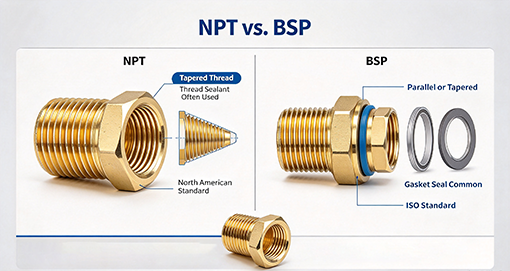
NPT vs. I-BSP
6. Specify Surface Finish and Plating
| Finish | When It May Be Specified |
|---|---|
| Natural brass | Standard applications |
| Nickel plated | Appearance or surface requirements |
| Chrome plated | Specific appearance or application needs |
| Custom finish | Customer specification |
If no finish is specified, most suppliers will default to natural brass. If you need plating, say so.
7. Specify Working Pressure and Temperature
This moves the PO from “what to buy” ku “will this product work in my system?”
| Imfuneko | Isibonelo |
|---|---|
| Imidiya | Amanzi |
| Ingcindezi yokusebenza | XX bar |
| Working temperature | XX °C |
| Peak temperature | If applicable |
| Pressure test | If required |
Do not assume a universal pressure rating for “brass hose fittings.” A small hose barb may be rated at 150 psi. A heavy-duty industrial fitting may be rated much higher. The manufacturer’s specification for the specific product is the only reliable number.
8. Specify the Media or Application
“Ukufakwa kwe-hose yethusi” alone does not define media compatibility. Specify:
- Amanzi
- Compressed air
- Okokhelekayo
- Amafutha
- Igesi
- Amakhemikhali
For a deeper look at water, umoya, and fuel compatibility, see: Ingabe Izinsiza Zethusi Ze-Hose Zisingatha Amanzi, Umoya kanye Nezibaseli?

Brass hose fitting in Chemicals
9. Specify Dimensions or Attach a Drawing
If the fitting is a standard catalog item, the manufacturer’s part number may be sufficient. If it’s custom or critical, attach a drawing.
Dimensions worth specifying:
| Dimension | Isibonelo |
|---|---|
| Overall length | Per drawing |
| Barb length | Per drawing |
| Thread length | Per drawing |
| Hex size | Per drawing |
| Body diameter | Per drawing |
| Ukubekezelelana | ± specified value |
“See attached drawing” is a valid and highly effective PO specification. It removes ambiguity and gives the supplier a single reference point.
10. Specify Quantity, MOQ, and Packaging
This is where the PO becomes a commercial document.
| Into | Isibonelo |
|---|---|
| Quantity | 2,000 pcs |
| Unit | pcs |
| MOQ | Per supplier agreement |
| Ukupakisha | 100 pcs/carton |
| Individual bag | Required / Akudingeki |
| Label | Customer SKU |
| Carton mark | Customer requirement |
Typical MOQ for brass hose barbs is around 1,000 izingcezu. Packaging is commonly plastic bag → inner box → carton → pallet. If you need individual bagging, custom labels, or specific carton marks, specify them on the PO.
A Complete Brass Hose Fitting PO Specification Example
Here’s what a well-specified PO line item looks like:
| Into | Ukucaciswa |
|---|---|
| Umkhiqizo | Brass Hose Barb Adapter, Qondile |
| Hose ID | 1/2 phakathi |
| UBarb | 1/2 in nominal |
| Uchungechunge | 1/2 in NPT male |
| Okubalulekile | Ithusi, CW617N |
| Finish | Natural brass |
| Imidiya | Amanzi |
| Ingcindezi Yokusebenza | Per approved specification |
| Izinga lokushisa | Per approved specification |
| Quantity | 2,000 pcs |
| Ukupakisha | Bulk packed, 100 pcs/carton |
| Drawing | Customer drawing attached |
Bad PO vs. Complete PO
| PO Description | Information Level |
|---|---|
1/2″ brass fitting | Too vague |
1/2″ brass hose barb | Okungcono, but incomplete |
1/2″ barb × 1/2″ NPT male | Much clearer |
| Full specification + drawing | Most complete |
The difference between the first and last rows is the difference between a supplier asking five clarifying questions and a supplier sending you a quote the same day.
PO Checklist Before You Send the Order
Umkhiqizo
☐ Fitting type
☐ Connection configuration
Usayizi
☐ Hose ID
☐ Barb size
☐ Thread size
Uchungechunge
☐ NPT / I-BSP / I-GHT / metric
☐ Male / Female
Okubalulekile
☐ Brass grade
☐ Lead-free requirement
Ukusebenza
☐ Media
☐ Pressure
☐ Temperature
Ezohwebo
☐ Quantity
☐ Packaging
☐ Labeling
Technical
☐ Drawing
☐ Tolerance
☐ Inspection requirements
Common Mistakes When Writing a Brass Hose Fitting PO
Iphutha 1: Only writing “1/2 inch.”
Which 1/2 intshi? Hose ID? Barb OD? Usayizi womucu?
Iphutha 2: Not specifying hose ID.
The barb size depends on the hose ID — not the other way around.
Iphutha 3: Not specifying NPT or BSP.
Both can be marked “1/2 inch.” They are not the same.
Iphutha 4: Forgetting male/female.
A male thread and a female thread are not interchangeable.
Iphutha 5: Not specifying material requirements.
“Ithusi” may be enough for some applications. Okwamanzi aphuzwayo, lead-free brass may be required.
Iphutha 6: Ignoring media.
Amanzi, umoya, amafutha, and oil have different compatibility requirements.
Iphutha 7: No drawing for custom dimensions.
If it’s not a catalog item, attach a drawing.
Iphutha 8: Not confirming packaging and labeling.
Your warehouse needs to receive and identify the parts. Specify how.

Brass hose fitting in Water
FAQ
Q1: What information should I include when ordering brass hose fittings?
Product type, hose ID, barb size, thread type and size, gender, Ibanga lezinto ezibonakalayo, surface finish, working pressure, izinga lokushisa, media, ubuningi, ukupakisha, and a drawing if the fitting is custom.
Q2: How do I specify a brass hose barb on a purchase order?
Start with the product type (straight barb, elbow barb, njll.), then specify hose ID, barb size, intambo ejwayelekile, thread size, and gender. Add material, qeda, kanye nezidingo zokusebenza.
Q3: Should I specify hose ID or barb size?
Specify both. Hose ID is the primary reference — the fitting is designed for a specific hose ID. Barb size (nominal) and barb OD (actual) are also important.
Q4: Do I need to specify NPT or BSP?
Yebo. NPT and BSP are different thread standards. Both can be marked “1/2 intshi,” but they are not interchangeable.
Q5: Should I specify the brass alloy grade?
Only when your application, imakethe, or customer specification requires it. For general-purpose fittings, “zethusi” may be sufficient. For potable water or specific standards, specify lead-free brass or a specific grade like CW617N.
Q6: What dimensions should be included in a hose fitting drawing?
Overall length, barb length, thread length, hex size, body diameter, and tolerances. The drawing should be the single reference point for all dimensional requirements.
Q7: How do I avoid receiving the wrong brass hose fitting?
Remove assumptions. Specify every critical dimension: hose ID, barb size, intambo ejwayelekile, thread size, gender, impahla, qeda, ingcindezi, izinga lokushisa, and media. Attach a drawing for custom items.
Q8: Can I use a product drawing instead of listing every dimension on the PO?
Yebo. “See attached drawing” is a valid specification and often the most effective approach for custom or critical fittings.
Need Help Preparing a Brass Hose Fitting Specification?
The right PO specification is the one that leaves nothing to interpretation.
Send us your requirements and we’ll help you build a complete specification:
- Hose ID
- Fitting type
- Uchungechunge olujwayelekile
- Okubalulekile
- Isicelo
- Quantity
- Drawing or photo
Inkampani Luoyang Datang Energy Tech Co., Ltd. will confirm the appropriate configuration and provide a quote with the details you need.
IZITHUBA EZIHLOBANE
I-Eco-Friendly PPR Amapayipi: Umhlahlandlela Wochwepheshe Wokugwema Izinto Ezishibhile & Ukwehluleka
Amapayipi we-PPR: Izixazululo Ezintsha Zezinhlelo Zanamuhla Zokufaka Amapayipi
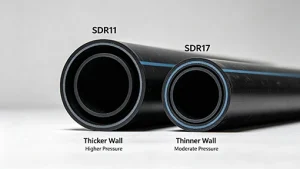
Ipayipi le-SDR11 vs SDR17 HDPE: Yisiphi Isilinganiso Sokucindezela Okufanele Usikhethe?
Kungani i-PPR Pipe iyisinqumo sokuqala sezindlu zanamuhla?
Ukuthuthukisa Amasistimu Amanzi Okupholisa Asezimbonini Ngokudizayina Kwepayipi Ephumelelayo