U-LUOYANG WAFIKA ENERGY TECH CO., LTD

Izinto zepayipi zokuvikela umlilo: Ukukhetha & Izinhlelo zokusebenza
A reliable fire protection system depends on high-quality piping materials that can deliver water quickly and safely when emergencies occur. The selection of suitable fire protection pipe materials directly affects system performance, ukuqina, izidingo zokunakekela, and long-term operating costs.
Fire protection pipes must withstand continuous pressure, sudden pressure changes, environmental exposure, and years of service without failure. Ngakho-ke, factors such as water flow efficiency, pressure performance, ukumelana nokugqwala, impilo yesevisi, and maintenance requirements should be carefully considered before selecting a pipe material.
Different applications require different pipe materials. Carbon steel pipes are widely used in industrial and commercial fire protection systems due to their strength and cost efficiency. Stainless steel pipes provide superior corrosion resistance for demanding environments. Ezinye izinto zingase futhi zikhethelwe izinhlelo zokusebenza ezithile ezingaphansi komhlaba noma ezingasindi.
Lo mhlahlandlela uchaza izinto ezivame kakhulu zamapayipi okuvikela umlilo, izinzuzo zabo, ukulinganiselwa, kanye nezicelo ezifanele zokusiza onjiniyela, osonkontileka, futhi abathengi benza izinqumo ezingcono.
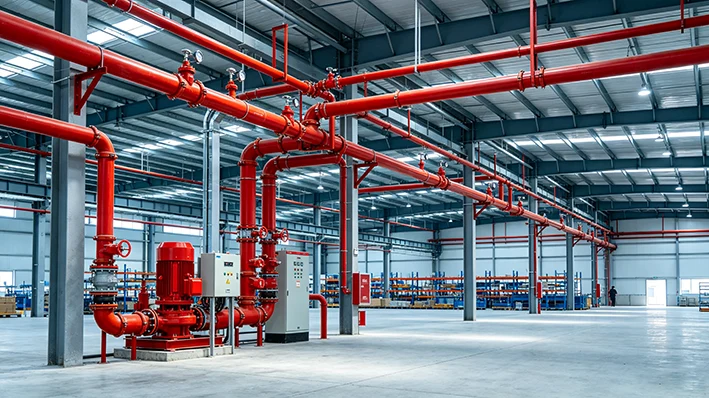
Uhlelo lwamapayipi okuvikela umlilo olufakwe esakhiweni sezimboni ngamapayipi okufafaza
Ayini Amapayipi Okuvikela Umlilo?
Amapayipi okuvikela umlilo | Amapayipi Okulwa Nomlilo | Amapayipi okushisa umlilo
Amapayipi okuvikela umlilo amapayipi amapayipi aklanyelwe ukuthutha amanzi noma imidiya yokucisha phakathi:
- Amasistimu wokufafaza umlilo - Ukucima umlilo okuzenzakalelayo ezakhiweni
- Amasistimu we-fire hydrant – Ukuhlinzekwa kwamanzi okucima umlilo ngaphandle nangaphakathi
- Izinhlelo zokucisha umlilo - Amasistimu akhethekile ezingozi zezimboni
Lawa mapayipi afakwe ezindaweni eziningi ezahlukene:
| Uhlobo Lohlelo Lokusebenza | Izibonelo |
| Izakhiwo Zokuhweba | Izakhiwo zamahhovisi, izikhungo zokuthenga, amahhotela, izibhedlela |
| Izinsiza zezimboni | Izimboni, izindawo zokugcina izimpahla, izimboni zokukhiqiza |
| Amaphrojekthi Wengqalasizinda | Izikhumulo zezindiza, izinsiza ezingaphansi komhlaba, izakhiwo zomphakathi ezinkulu |
Isihloko Esihlobene:
Gcwalisa Umhlahlandlela Wohlelo Lokuvikeleka Komlilo: Amapayipi, Amavalvu & I-Grooved Fittings

Umdwebo wesistimu yamapayipi okuvikela umlilo obonisa amapayipi okufafaza namapayipi amanzi
Izinto Ezibalulekile Zokukhetha Izinto Zepayipi Lokuvikela Umlilo
Ngaphambi kokuqhathanisa izinto ezithile, kubalulekile ukuqonda izici ezibalulekile ochwepheshe bokuthenga, onjiniyela, futhi abathengi bephrojekthi bacabangela lapho bekhetha izinto zamapayipi okuvikela umlilo.
Isilinganiso Sokucindezela kanye namandla Mechanical
Izinhlelo zokuvikela umlilo kufanele zimelane kokubili ukucindezela kokusebenza okuzinzile kanye noshintsho olusheshayo phakathi nokusebenza. Impahla yepayipi kufanele ibe neyanele:
- Umthamo wengcindezi yokusebenza - Amandla okugcina ubuqotho ngaphansi kwezimo ezijwayelekile zokusebenza
- Ukumelana nomthelela – Ukuvikelwa ekulimaleni kwemishini ngesikhathi sokufakwa kanye nesevisi
- Ukwethembeka kwesikhathi eside - Ukusebenza okungaguquki ngaphezu kwempilo yesevisi elindelwe yesistimu
Amapayipi ensimbi ekhabhoni, Ngokwesibonelo, acaciswe ngaphansi kwe-ASTM A795 ukuze kusetshenziswe ukuvikela umlilo ngosayizi ukusuka ku-NPS ½ iyintshi ukuya ku-NPS 10 intshi (DN 15 kwe DN 250), ngokuqina kwezindonga ezinikeza amandla adingekayo ezidingweni zengcindezi ehlukahlukene.
Ukumelana Nokugqwala
Amapayipi okuvikela umlilo afakwe ezindaweni ezihlukene kakhulu, ngayinye yethula izinselele zokugqwala eziyingqayizivele:
- Izindawo ezomile zasendlini - Ingozi ephansi yokugqwala kodwa isangaphansi komswakama
- Izindawo zangaphandle – Ukuchayeka esimeni sezulu, ukushintsha kwezinga lokushisa, kanye nemisebe ye-UV
- Ukufakwa ngaphansi komhlaba – Izimo zomhlabathi, umswakama, kanye nemisinga kagesi elahlekile
- Izindawo zamakhemikhali – Izikhungo zezimboni ezinesimo sezulu esibi
The material’s corrosion resistance directly impacts maintenance intervals and overall system longevity. Factors such as dissolved oxygen, pH levels, and ion concentrations—including chlorides—contribute to the corrosive environment in piping. High chloride levels can cause pitting corrosion, leading to small but critical failures.
Indawo Yokufaka
Different installation environments demand different material considerations:
| Environment | Recommended Consideration |
| Izakhiwo zezentengiselwano | Cost-effectiveness and reliability |
| Industrial plants | Strength and durability |
| Marine/coastal areas | Superior corrosion resistance |
| Underground systems | Protection against external corrosion and soil conditions |
NFPA standards provide guidance on material selection for different applications. Ngokwesibonelo, NFPA 24 addresses suction pipe materials and specifies the use of certain types of iron, insimbi, ukhonkolo, ipulasitiki, and copper for underground fire piping.
Maintenance Cost and Service Life
Initial material cost is only one piece of the puzzle. A comprehensive evaluation must consider:
- Replacement frequency – How often will the system need to be replaced?
- Maintenance requirements – What ongoing inspection and upkeep are needed?
- Total lifecycle cost – The sum of initial cost, ukufakwa, ukunakekela, and replacement over the system’s life
Steel pipe, for instance, needs to be internally inspected every five years under NFPA 25: Standard for the Inspection, Testing and Maintenance of Water-Based Fire Protection Systems. Materials with superior corrosion resistance may reduce or eliminate this requirement.
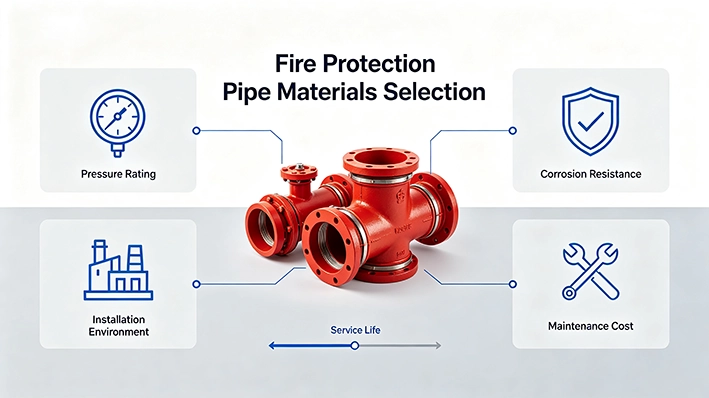
Key factors for selecting fire protection pipe materials infographic
Carbon Steel Pipes for Fire Protection Systems
Amapayipi ensimbi ekhabhoni are one of the most commonly used materials in fire protection piping systems due to their excellent mechanical strength, ukuqina, and cost efficiency.
For decades, carbon steel fire pipes have been widely installed in commercial buildings, izinsiza zezimboni, izindawo zokugcina izimpahla, and large infrastructure projects where reliable water transportation is required.
Their ability to withstand high pressure and provide stable performance makes them a preferred choice for many fire sprinkler and fire hydrant systems.
Advantages of Carbon Steel Fire Pipes
High Mechanical Strength
Carbon steel pipe provides excellent mechanical strength, making it suitable for:
- High-pressure fire protection systems
- Amapayipi amakhulu amakhulu
- Systems requiring threaded or grooved connections
- ASTM A795 pipe is suitable for joining by rolled groove, ukushisela, ukuthunga, and fittings for plain end pipe.
Cost-Effectiveness
Compared to stainless steel, carbon steel offers:
- Izindleko zempahla ephansi
- Wide availability from multiple suppliers
- Established supply chains and manufacturing capacity
Wide Industrial Application
Carbon steel fire pipes are the standard choice for:
- Factories and industrial facilities
- Warehouses and distribution centers
- Commercial buildings and offices
- Fire hydrant and standpipe systems
Limitations of Carbon Steel Pipes
While carbon steel is highly versatile, it has limitations that must be addressed:
- Corrosion vulnerability – Black steel pipe has little to no protective coating and will rust from the inside in wet systems
- Coating requirements – Galvanizing or other protective coatings are often necessary
- Maintenance in humid environments – Regular inspection and corrosion management are required
For wet pipe systems, NFPA 13 requires galvanized pipe. The pipe may be bent, but it is not intended for bending where the inside diameter of the bend is less than twelve times the outside diameter.
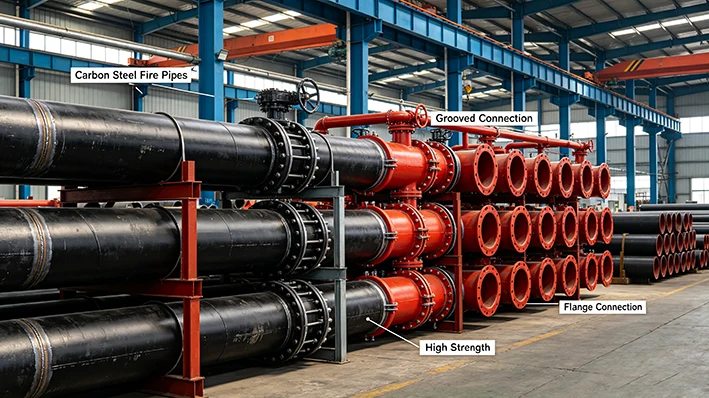
Carbon steel fire protection pipes used in industrial sprinkler systems
Stainless Steel Pipes for Fire Protection Applications
Stainless steel pipes provide excellent corrosion resistance, ukuqina, kanye nokwethembeka kwesikhathi eside, making them suitable for specialized fire protection applications.
Unlike traditional carbon steel pipes, stainless steel fire pipes perform better in environments where moisture, amakhemikhali, or aggressive conditions may affect piping performance.
For projects requiring higher durability and reduced maintenance, stainless steel is often considered a premium piping solution.
Advantages of Stainless Steel Fire Pipes
Ukumelana Ne-Corrosion Okuhle Kakhulu
Stainless steel’s corrosion resistance is its defining advantage. When exposed to oxidants, stainless steel passivates and forms a protective film on the surface that prevents further oxidation. This makes it ideal for:
- Coastal and marine environments
- Chemical processing facilities
- Food processing plants
- Areas with aggressive water conditions
Impilo Emide Yenkonzo
The superior corrosion resistance translates directly to:
- Reduced replacement frequency
- Minimal maintenance requirements
- Lower lifecycle costs despite higher initial investment
High Tensile Strength
The tensile strength of 304 stainless steel pipe is approximately two times that of carbon steel pipe and eight to ten times that of plastic pipe. It also offers good ductility and toughness, allowing it to withstand vibration, impact, and thermal expansion and contraction.
Clean and Professional Appearance
Stainless steel’s attractive appearance makes it suitable for:
- Visible piping systems in high-end facilities
- Architectural applications where aesthetics matter
Limitations of Stainless Steel Pipes
Higher Material Cost
The primary limitation is cost:
- Higher material cost than carbon steel
- Higher initial investment required
Corrosion Considerations
While stainless steel is highly corrosion-resistant, it is not immune to corrosion. In some cases, unexpected corrosion failures in austenitic stainless steel systems have been observed after only a few weeks to a few years of use. Most corrosion damage is associated with weld nuggets or heat-affected zones of girth site welds. Proper root shielding is especially important when welding pipes for fire protection systems.
In stagnant water conditions—common in firewater systems—the corrosion resistance of stainless steel diminishes. Microbially induced corrosion (I-MIC) can also increase the risk of corrosion damage.
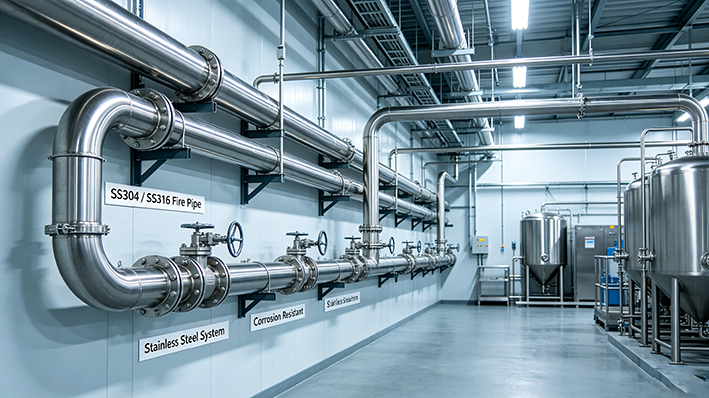
Stainless steel fire protection pipe with corrosion resistant surface
HDPE Pipes in Fire Protection Systems
I-HDPE (High-Density Polyethylene) amapayipi are lightweight piping solutions that may be used in certain fire protection applications, especially underground installations.
Compared with metal pipes, HDPE pipes offer excellent corrosion resistance and easier installation.
Nokho, the suitability of HDPE pipes depends on project requirements, izilinganiso zokucindezela, and local fire protection standards.
Advantages of HDPE Pipes
- Ukumelana nokugqwala – HDPE pipes are highly resistant to corrosion, an essential feature in fire fighting environments
- Engasindi – Easier to transport and install than metal pipes
- Ukuvumelana nezimo – Can accommodate ground movement and settlement
- Kuqiza kahle – Lower material and installation costs for large-diameter underground systems
Considerations and Limitations
- Above-ground limitations – When used above ground, fire resistance may be an issue. HDPE starts to melt at approximately 235°F (115°C)
- Application restrictions – HDPE is generally only allowed for underground use to avoid UV aging
- Izidingo zokucindezela – Must meet specific pressure ratings for fire protection service
- Local standards – Must comply with local fire protection codes and NFPA requirements
NFPA 24 permits the use of plastic piping for underground installations, provided it is listed for such use. Nokho, some local authorities prohibit certain plastic piping for fire underground service.
Isincomo
HDPE is best suited for underground fire mains where corrosion resistance and flexibility are priorities. For above-ground applications, metallic piping remains the standard choice.
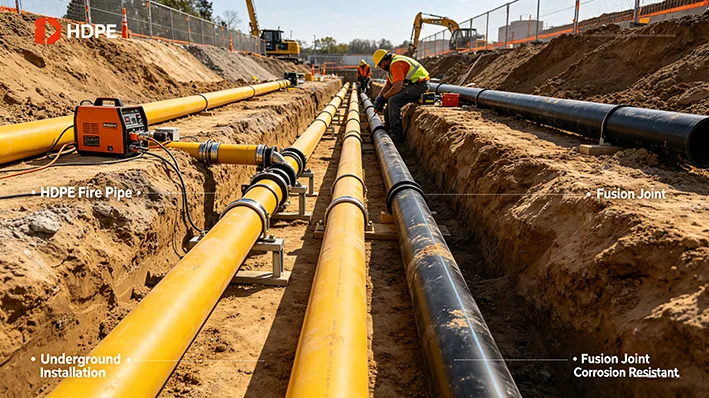
HDPE underground fire protection pipe installation project
Fire Protection Pipe Materials Comparison
| Isici | Insimbi Yekhabhoni | Insimbi engagqwali | I-HDPE |
| Amandla | Kuhle kakhulu | Kuhle kakhulu | Kuhle |
| Ukumelana Nokugqwala | Maphakathi (requires coating) | Kuhle kakhulu | Kuhle kakhulu |
| Izindleko Zokuqala | Phansi | Phezulu | Maphakathi |
| Maintenance Requirement | Maphakathi | Phansi | Phansi |
| Ukumelana Nokushisa | Kuhle kakhulu | Kuhle kakhulu | Inomkhawulo (melts at ~235°F) |
| Typical Application | Izimboni & ezentengiso | Corrosive environments | Underground systems |
| Key Standard | ASTM A795 | I-ASTM A312 / I-GB/T 12771 | Various |

Comparison of carbon steel stainless steel and HDPE fire protection pipes
Recommended Applications for Different Fire Protection Pipe Materials
Choosing the right fire protection pipe material depends largely on the project environment, system requirements, and long-term operating conditions.
There is no single material that is suitable for every application. Carbon steel, insimbi engagqwali, and HDPE pipes each have their own advantages in different scenarios.
Izakhiwo Zokuhweba (Offices, Hotels, Shopping Centers)
Recommended: Insimbi Yekhabhoni
Reasons:
- Cost-effective for large-scale installations
- Easy sourcing and established supply chains
- Reliable performance in indoor environments
- Meets NFPA 13 requirements for commercial occupancies
Izinsiza zezimboni
Recommended: Carbon Steel or Stainless Steel (depending on environment)
| Environment | Recommended Material |
| General industrial (dry) | Insimbi Yekhabhoni |
| Corrosive environments | Insimbi engagqwali |
| High-temperature areas | Carbon Steel or Stainless Steel |
| Food processing | Insimbi engagqwali |
Chemical and Coastal Applications
Recommended: Insimbi engagqwali
Reasons:
- High corrosion resistance in aggressive environments
- Longer service life reduces replacement frequency
- Withstands saltwater exposure and chemical atmospheres
A demonstration project at the Chimu-Wan tank farms on Okinawa Island—one of the most corrosive locations in the world for steel infrastructure—successfully replaced highly corroded carbon steel pipes with stainless steel.
Underground Fire Protection Systems
Recommended: HDPE or Coated Carbon Steel (depending on design requirements)
| Consideration | Recommended Material |
| Corrosive soil conditions | HDPE or coated steel |
| High traffic/loading areas | Ductile iron or steel |
| Budget-constrained projects | I-HDPE |
| Strict local codes | Coated carbon steel or ductile iron |
NFPA 24 provides guidance on underground fire piping materials, including ductile iron, ukhonkolo, ipulasitiki, ithusi, kanye nensimbi engagqwali.

Fire protection pipe applications in commercial industrial and underground systems
How to Choose the Right Fire Protection Pipe Material
Selecting the right fire protection pipe material requires a systematic evaluation of multiple factors. Here is a practical decision framework:
1. Assess System Pressure Requirements
- Determine working pressure and potential surge pressures
- Verify that the chosen material meets or exceeds requirements
- Consider future expansion or system modifications
2. Evaluate the Installation Environment
- Indoor or outdoor?
- Above ground or underground?
- Coastal, izimboni, or chemical environment?
- What are the temperature extremes?
3. Analyze Corrosion Risk
- What is the water quality (pH, chloride content, dissolved oxygen)?
- Is the system wet or dry?
- What is the expected service life?
- Consider microbiologically induced corrosion (I-MIC) risk
Izibonelo:
| Environment | Recommended Material |
| Standard commercial buildings | Insimbi Yekhabhoni |
| Industrial applications | Insimbi Yekhabhoni / Insimbi engagqwali |
| Izindawo zamakhemikhali | Insimbi engagqwali |
| Underground systems | I-HDPE / Protected Steel |
4. Consider Budget and Lifecycle Costs
- Initial material cost
- Izindleko zokufaka
- Maintenance requirements and frequency
- Expected replacement interval
- Total cost of ownership over system life
5. Verify Local Standards and Regulations
- NFPA 13, NFPA 14, and NFPA 24 izidingo
- Local building codes and fire marshal requirements
- ASTM specifications (A795 for carbon steel, njll.)
- UL/FM approvals where required
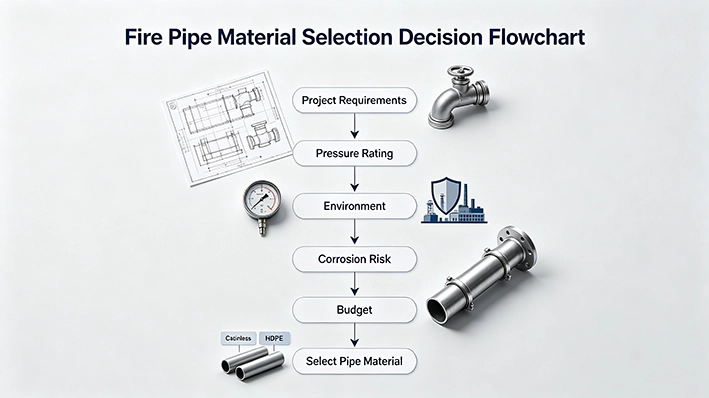
Fire protection pipe material selection decision making flowchart
Why Choose Us for Fire Protection Pipe Solutions
LUOYANG DATANG ENERGY TECH CO., LTD provides comprehensive fire protection piping solutions for projects worldwide.
Our Product Range
- Amapayipi okuvikela umlilo – Carbon steel (ASTM A795, A53, A135) kanye nensimbi engagqwali
- Industrial valves – For fire protection and general industrial applications
- Ukufakwa kwamapayipi – Complete range for fire sprinkler and hydrant systems
- Complete piping solutions – Engineered to meet your specific requirements
Our Advantages
- Manufacturing experience – Years of expertise in pipe production and supply
- Export capability – Global shipping and logistics support
- Multiple material options – Carbon steel, insimbi engagqwali, futhi nokuningi
- Customized solutions – Tailored to your project specifications
- Quality assurance – Products meet ASTM, NFPA, and international standards
Ready to discuss your fire protection piping needs?
Contact our team today for expert guidance and competitive quotes. Our engineers will assist you in selecting the most suitable specifications for your project.
IZITHUBA EZIHLOBANE
IPEX Floor Heating Pipe vs Copper /PE-RT Pipe
Ukuthuthukisa Amasistimu Amanzi Okupholisa Asezimbonini Ngokudizayina Kwepayipi Ephumelelayo

Yimuphi usayizi wepayipi engiwudingayo ku-A 1300 I-Ft Water Supply Line