


LUOYANG CAME ENERGY TECH CO.,LTD


Πυροσβεστικοί σωλήνες: Πώς να επιλέξετε τον σωστό τύπο
Fire fighting pipes are a critical part of modern fire protection systems. They provide a reliable pathway for transporting water from fire pumps or water sources to sprinklers, hydrants, and other firefighting equipment when emergency response is required.
Unlike ordinary industrial pipes used for regular fluid transportation, fire fighting pipes must meet higher requirements for safety, αντοχή, and pressure performance.
A reliable fire fighting pipe system must maintain stable operation during emergency conditions. Any failure caused by incorrect material selection, insufficient pressure rating, or improper installation may affect the performance of the entire fire protection system.
For industrial facilities, choosing the right fire fighting pipes is especially important because these systems are widely used in: εργοστάσια,Αποθήκες,Σταθμοί ηλεκτροπαραγωγής,Εμπορικά κτίρια,Chemical processing facilities and Infrastructure projects.
The selection process should consider several key factors, συμπεριλαμβανομένου: Pipe material, Αξιολόγηση πίεσης, Μέγεθος σωλήνα, Connection method and Applicable standards and certifications.
By selecting suitable fire protection pipes, engineers and contractors can improve system reliability, reduce maintenance requirements, and ensure long-term fire safety performance.
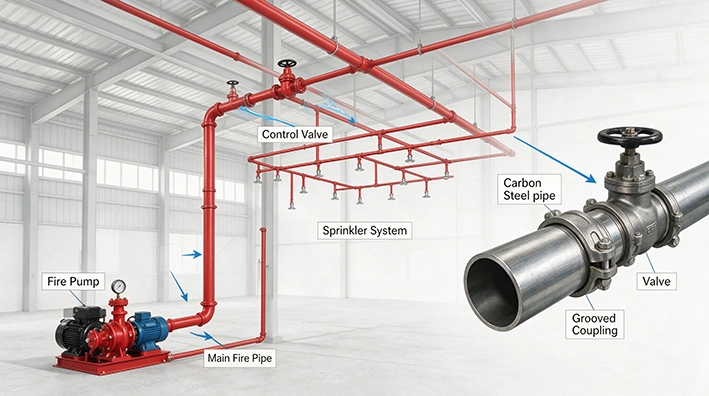
fire fighting pipe system overview for industrial fire protection
What Are Fire Fighting Pipes?
Fire fighting pipes are specially designed piping components used to transport water or other firefighting media in fire suppression systems.
The primary purpose of a fire fighting pipe system is to ensure that sufficient water can be delivered quickly and efficiently to fire protection equipment during an emergency.
A complete fire protection piping system usually includes:
| Συστατικό | Λειτουργία |
| Πυροσβεστικοί σωλήνες | Transport water throughout the system |
| Βαλβίδες πυροπροστασίας | Control and isolate water flow |
| Fire Sprinklers | Distribute water for fire suppression |
| Fire Pumps | Provide required water pressure |
| Εξαρτήματα σωλήνων | Connect and route pipelines |
Fire fighting pipes are commonly used in several fire protection applications:
Συστήματα καταιονιστήρα πυρκαγιάς
Fire sprinkler pipes deliver pressurized water to sprinkler heads installed throughout buildings or industrial facilities.
These systems require pipes with reliable pressure resistance because they must remain ready for immediate operation.
Fire Hydrant Systems
Fire hydrant piping systems provide water supply for firefighting operations by connecting hydrants with water sources.
They are commonly installed in: Industrial plants, Warehouses and Public buildings.
Fire Pump Systems
Fire pump systems require strong and durable pipes capable of handling high-pressure water flow.
In industrial projects, pipe selection directly affects system performance and emergency reliability.
Types of Fire Fighting Pipes by Material
The material of fire fighting pipes has a direct impact on corrosion resistance, pressure capability, διάρκεια ζωής, and project cost.
Different applications require different pipe materials. The most commonly used materials include:
- Carbon Steel Fire Fighting Pipes
- Galvanized Fire Protection Pipes
- Stainless Steel Fire Protection Pipes

carbon steel galvanized and stainless steel fire protection pipes comparison
Carbon Steel Fire Fighting Pipes
Carbon steel fire fighting pipes are one of the most widely used solutions for industrial fire protection systems.
Due to their excellent mechanical strength and cost efficiency, carbon steel pipes are commonly selected for large-scale fire protection projects.
Advantages of Carbon Steel Fire Fighting Pipes
1. Υψηλή Αντοχή
Carbon steel pipes provide excellent structural strength, making them suitable for systems requiring stable performance under pressure.
2. Αντίσταση σε υψηλή πίεση
Fire protection systems often operate under demanding pressure conditions, especially when connected with high-capacity fire pumps.
Carbon steel fire fighting pipes can provide reliable pressure performance for industrial applications.
3. Cost-Effective Solution
Compared with stainless steel pipes, carbon steel provides a more economical solution for large pipeline networks.
This makes carbon steel fire fighting pipes a preferred choice for:
- Manufacturing plants
- Αποθήκες
- Industrial fire networks
- Underground fire pipelines
Galvanized Fire Protection Pipes
Galvanized fire protection pipes are carbon steel pipes with a protective zinc coating that improves corrosion resistance.
They are commonly used in indoor fire sprinkler systems where moderate corrosion protection is required.
Advantages of Galvanized Fire Protection Pipes
Αντοχή στη διάβρωση
The galvanized coating helps protect the pipe surface from rust and corrosion.
Suitable for Indoor Applications
Galvanized pipes are widely used in:
- Εμπορικά κτίρια
- Office facilities
- Indoor sprinkler systems
Ωστόσο, for highly corrosive environments, additional material consideration may be required.
Stainless Steel Fire Protection Pipes
Stainless steel fire protection pipes are selected for applications where excellent corrosion resistance and long service life are required.
Although the initial cost is higher than carbon steel, stainless steel provides better performance in challenging environments.
Advantages of Stainless Steel Fire Protection Pipes
Εξαιρετική αντοχή στη διάβρωση
Stainless steel provides strong resistance against corrosion, χημικά, και υγρασία.
Suitable for Chemical Environments
Stainless steel fire protection pipes are commonly used in:
- Chemical plants
- Θαλάσσια περιβάλλοντα
- Food processing facilities
- Pharmaceutical factories
Fire Fighting Pipe Material Comparison: Ποιο να Διαλέξετε?
Selecting the correct material is one of the most important decisions when designing a fire fighting pipe system. Different materials provide different levels of strength, αντοχή στη διάβρωση, maintenance requirements, and cost performance.
There is no single material that is suitable for every fire protection application. The best choice depends on:
- Λειτουργικό περιβάλλον
- Required pressure rating
- Corrosion conditions
- Προϋπολογισμός έργου
- Απαιτήσεις εγκατάστασης
The following table provides a general comparison of the three most common fire protection pipe materials.
| Παράγοντας | Carbon Steel Fire Fighting Pipes | Galvanized Fire Protection Pipes | Stainless Steel Fire Protection Pipes |
| Δύναμη | Άριστη μηχανική αντοχή | Good strength | Excellent strength |
| Αντοχή στη διάβρωση | Μέτριος | Better than carbon steel | Εξοχος |
| Απόδοση πίεσης | Ψηλά | Medium to high | Ψηλά |
| Κόστος | Χαμηλό προς μέτριο | Μέσον | Ψηλά |
| Maintenance Requirement | Regular maintenance may be required | Lower maintenance | Low maintenance |
| Τυπική Εφαρμογή | Industrial plants, large fire networks | Indoor sprinkler systems, commercial buildings | Chemical and corrosive environments |
Fire Fighting Pipe Standards and Certifications
Fire protection systems are safety-critical applications, which means pipe quality and compliance with recognized standards are extremely important.
Industrial projects often require fire fighting pipes that meet international certifications and manufacturing standards.
Τα κοινά πρότυπα περιλαμβάνουν: UL, FM and ASTM.

UL FM ASTM standards for fire fighting pipes certification
UL Listed Fire Fighting Pipes
UL (Εργαστήρια Underwriters) is one of the most recognized safety certification organizations worldwide.
UL Listed Fire Fighting Pipes are evaluated according to strict safety and performance requirements.
For international fire protection projects, UL certification can help ensure:
- Product reliability
- Material performance
- System safety
FM Approved Fire Protection Pipes
FM Approved products are tested according to FM Global’s requirements for fire protection applications.
FM approval is widely recognized in industrial facilities where fire risk management is a critical concern.
Οι τυπικές εφαρμογές περιλαμβάνουν:
- Manufacturing plants
- Energy facilities
- Large warehouses
- Industrial infrastructure
ASTM Standards for Fire Fighting Pipes
ASTM standards define requirements for materials, dimensions, manufacturing processes, and performance characteristics.
Common ASTM standards related to fire protection pipes include:
| Πρότυπο | Εφαρμογή |
| ASTM A53 | Carbon steel pipe specification |
| ASTM A795 | Steel pipe specifically designed for sprinkler systems |
Using pipes that comply with appropriate standards helps ensure compatibility with fire protection system requirements.
Πρόγραμμα 10 vs Schedule 40 Πυροσβεστικοί σωλήνες
Pipe schedule refers to the wall thickness classification of steel pipes. It directly affects pressure capability, βάρος, and installation requirements.
In fire sprinkler systems, Πρόγραμμα 10 και Πρόγραμμα 40 pipes are two commonly discussed options.
Πρόγραμμα 10 Πυροσβεστικοί σωλήνες
Πρόγραμμα 10 pipes have thinner walls and lower weight compared with Schedule 40 σωλήνες.
Φόντα:
- Ελαφριά σχεδίαση
- Easier installation
- Lower material consumption
- Reduced installation cost
They are commonly used in: Συστήματα καταιωνιστήρων πυρκαγιάς, Commercial buildings and Projects requiring faster installation.
Πρόγραμμα 40 Πυροσβεστικοί σωλήνες
Πρόγραμμα 40 pipes have thicker walls and provide higher mechanical strength.
Φόντα:
- Higher durability
- Stronger pressure capability
- Better resistance to mechanical damage
They are commonly selected for: Industrial fire protection systems, High-pressure applications and Heavy-duty environments.
Πρόγραμμα 10 vs Schedule 40 Comparison Table
| Σύγκριση | Πρόγραμμα 10 Σωλήνας | Πρόγραμμα 40 Σωλήνας |
| Πάχος Τοίχου | Thinner | Thicker |
| Βάρος | Χαμηλότερος | Πιο ψηλά |
| Εγκατάσταση | Πιο γρήγορα και πιο εύκολα | More demanding |
| Δυνατότητα πίεσης | Μέτριος | Πιο ψηλά |
| Material Cost | Χαμηλότερος | Πιο ψηλά |
| Typical Use | Sprinkler systems | Industrial and high-pressure systems |

πρόγραμμα 10 and schedule 40 fire fighting pipe wall thickness comparison
How to Select the Right Fire Fighting Pipes?
Choosing suitable fire fighting pipes requires more than selecting a material. Engineers should evaluate the complete operating conditions of the fire protection system.
The following factors should be considered:
1. Εξετάστε την πίεση εργασίας
The pressure rating of fire protection pipes must match the requirements of the fire pump and the overall system design.
Σημαντικές εκτιμήσεις περιλαμβάνουν: Fire pump pressure, Πίεση λειτουργίας συστήματος, Maximum pressure conditions.
Selecting pipes with insufficient pressure capability may result in: Reduced water flow performance, System failure risk and Safety concerns.
2. Choose the Right Pipe Material
Material selection should consider:
| Παράγοντας | Explanation |
| Environment | Indoor, υπαίθριος, υπόγειος, chemical conditions |
| Corrosion Risk | Exposure to moisture or chemicals |
| Budget | Initial cost and long-term maintenance |
| Διάρκεια ζωής | Expected operation period |
3. Select Proper Pipe Size
Pipe size has a direct impact on water flow, απώλεια πίεσης, and firefighting coverage.
An undersized pipe may restrict water delivery, while an oversized pipe may increase unnecessary project costs.
Key considerations include: Απαιτούμενος ρυθμός ροής, Hydraulic calculation, Building size and Fire protection design requirements.
4. Consider Connection Methods
The connection method affects installation efficiency, maintenance convenience, and overall system reliability.
Common connection methods include:
Grooved Connection
Grooved pipe connections are increasingly popular in modern fire protection systems.
Τα πλεονεκτήματα περιλαμβάνουν: Ταχύτερη εγκατάσταση, Easier maintenance and Reduced construction time.
For many fire protection projects, grooved fittings provide an efficient alternative to traditional welding methods.
Welding Connection
Welding provides a strong permanent connection and is still widely used in industrial piping applications.
Ωστόσο, welding usually requires more installation time and professional skills.
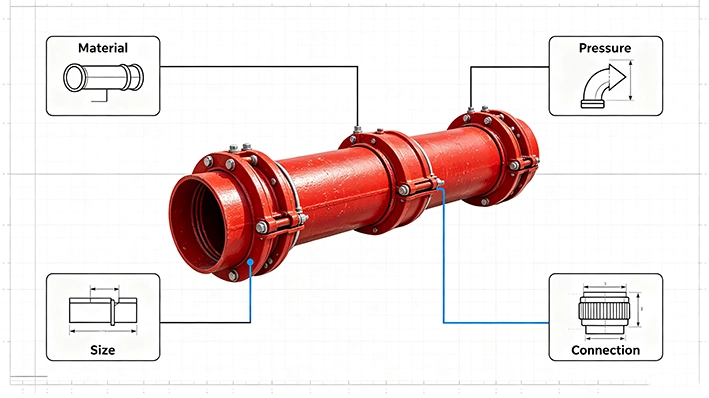
fire fighting pipe selection factors material pressure size connection
Fire Fighting Pipes Applications
Fire fighting pipes are used in a wide range of industrial, εμπορικός, and infrastructure projects. Ωστόσο, different environments have different requirements for pipe material, απόδοση πίεσης, αντοχή στη διάβρωση, and installation methods.
Selecting the correct fire protection pipes according to the application environment helps ensure system reliability and long-term performance.
Industrial Manufacturing Plants
Manufacturing facilities usually contain valuable equipment, production lines, and combustible materials, making reliable fire protection systems essential.
Carbon steel fire fighting pipes are commonly selected because they provide: Υψηλή μηχανική αντοχή, Good pressure resistance and Cost efficiency for large systems.
Οι τυπικές εφαρμογές περιλαμβάνουν:
- Factory fire sprinkler systems
- Fire hydrant networks
- Fire pump pipelines
Warehouses and Logistics Buildings
Warehouses often require large-scale fire protection networks because stored goods may create significant fire risks.
Recommended solutions:
| Εφαρμογή | Recommended Pipe Solution |
| Large warehouse sprinkler systems | Carbon steel fire fighting pipes |
| Fast installation projects | Grooved pipe systems |
| Indoor systems | Galvanized fire protection pipes |
Grooved fittings are especially suitable for warehouse projects because they reduce installation time and simplify future maintenance.
Power Plants and Energy Facilities
Power plants require highly reliable fire protection systems due to the presence of electrical equipment, συστήματα καυσίμων, and high-value infrastructure.
Fire fighting pipes used in these environments must provide:
- High pressure capability
- Μεγάλη διάρκεια ζωής
- Reliable emergency performance
Depending on the environment, carbon steel or stainless steel fire protection pipes may be selected.
Chemical and Process Industries
Chemical plants often face more aggressive operating environments where corrosion resistance becomes a critical consideration.
Stainless steel fire protection pipes may be preferred in areas exposed to: Chemical substances, High humidity and Corrosive atmosphere.
Εμπορικά Κτίρια
Commercial buildings such as offices, shopping centers, and hotels commonly use indoor fire sprinkler systems.
Common choices include: Galvanized fire protection pipes and Carbon steel fire fighting pipes.
Selection factors include: Building design, Installation requirements and Local fire protection regulations.
Fire Fighting Pipes vs Ordinary Industrial Pipes
Although both fire fighting pipes and ordinary industrial pipes are used for fluid transportation, their design purposes and performance requirements are different.
Fire fighting pipes are designed for emergency operation, where reliability and safety are the highest priorities.
Comparison Between Fire Fighting Pipes and Normal Pipes
| Comparison Factor | Πυροσβεστικοί σωλήνες | Ordinary Industrial Pipes |
| Κύριος Σκοπός | Fire protection and emergency water supply | General fluid transportation |
| Operating Condition | Standby and emergency operation | Continuous daily operation |
| Pressure Requirement | Usually higher reliability requirements | Depends on application |
| Πρότυπα | Fire protection standards required | General industrial standards |
| Πιστοποίηση | May require UL/FM approval | Usually general standards |
| Reliability Requirement | Extremely high | Application dependent |
The key difference is that fire protection systems must work correctly even after long periods of inactivity.
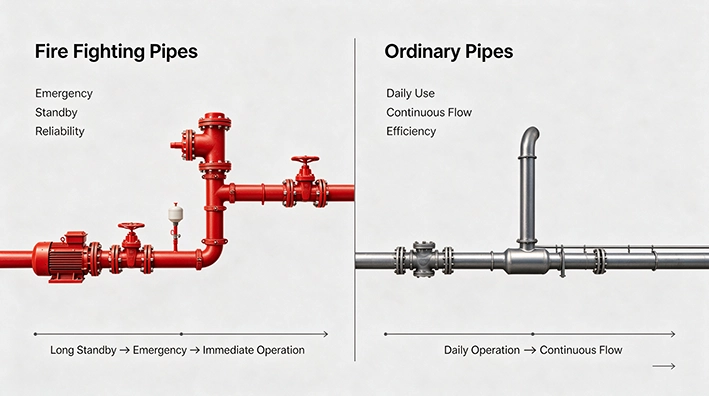
fire fighting pipes vs ordinary industrial pipes comparison
Common Mistakes When Selecting Fire Fighting Pipes
Choosing unsuitable fire fighting pipes can affect system performance and increase future maintenance costs.
The following mistakes should be avoided during project planning.
1. Selecting Pipes Based Only on Price
The cheapest pipe option may not always provide the best long-term value.
A lower-cost material may result in:
- Higher maintenance frequency
- Shorter service life
- Increased replacement costs
A balanced evaluation should consider both initial investment and lifecycle cost.
2. Ignoring Pressure Requirements
Fire protection systems depend on stable water pressure during emergencies.
Using pipes with insufficient pressure capability may reduce firefighting effectiveness.
Engineers should always verify: System pressure, Pump capacity and Pipe pressure rating.
3. Choosing Incorrect Pipe Materials
Different environments require different materials.
Για παράδειγμα:
| Environment | Recommended Material |
| General industrial applications | Ανθρακούχο χάλυβα |
| Indoor sprinkler systems | Galvanized steel |
| Chemical environments | Ανοξείδωτο ατσάλι |
4. Ignoring Connection Methods
The connection method affects installation speed and maintenance efficiency.
For large fire protection projects, selecting suitable grooved fittings or welding solutions can significantly improve construction efficiency.
How Fire Fighting Pipes Work with Other System Components
A fire fighting pipe system does not operate independently. It works together with valves, εξαρτήματα, γοβάκια, and other components to create a complete fire protection network.
A typical system includes:
| Συστατικό | Λειτουργία |
| Fire Pump | Provides water pressure |
| Πυροσβεστικοί σωλήνες | Transfers water |
| Βαλβίδες πυροπροστασίας | Controls flow direction |
| Αυλάκια Εξαρτήματα | Connects pipe sections |
| Ψεκαστήρες | Releases water |
For a complete understanding of fire protection system design, readers can refer to:
Πλήρης Οδηγός Συστήματος Σωληνώσεων Πυρασφάλειας: Σωλήνες, Βαλβίδες & Αυλάκια Εξαρτήματα
Complete Fire Protection Piping System Components
A reliable fire protection piping system requires coordination between multiple components.
The main components include:
- Πυροσβεστικοί σωλήνες-The main transportation pathway for firefighting water.
- Βαλβίδες πυροπροστασίας-Control water flow and allow system isolation during maintenance.
- Αυλάκια Εξαρτήματα-Provide efficient pipe connection solutions for modern fire protection systems.

complete fire protection piping system components with pipes valves and fittings
Σύναψη
Choosing the right fire fighting pipes is essential for building a reliable and efficient industrial fire protection system.
The ideal pipe solution depends on multiple factors, συμπεριλαμβανομένου:
- Επιλογή υλικού
- Απαιτήσεις πίεσης
- Μέγεθος σωλήνα
- Μέθοδος σύνδεσης
- Περιβάλλον εφαρμογής
- Fire protection standards
Carbon steel fire fighting pipes remain the preferred choice for many industrial projects due to their strength and cost efficiency, while galvanized and stainless steel options provide advantages in specific environments.
By understanding the differences between materials, πρότυπα, and applications, engineers and buyers can select the most suitable fire protection pipes for long-term safety and performance.
A properly designed fire fighting pipe system not only improves fire protection reliability but also helps reduce maintenance costs throughout the project lifecycle.
Frequently Asked Questions About Fire Fighting Pipes
1. Can Fire Fighting Pipes Be Used for Both Sprinkler and Hydrant Systems?
Ναί, fire fighting pipes can be used for different fire protection applications, including sprinkler systems, fire hydrant systems, and fire pump pipelines. Ωστόσο, the pipe material, διάμετρος, βαθμολογία πίεσης, and design requirements may vary depending on the specific system. A pipe suitable for a sprinkler network may not always meet the requirements of a high-flow hydrant system.
2. Do Fire Fighting Pipes Need Special Coating or Protection?
Ναί. Protection requirements depend on the installation environment. Carbon steel fire fighting pipes may require coatings, painting, or other corrosion protection methods, especially for outdoor or underground applications. For humid, χημική ουσία, or corrosive environments, galvanized or stainless steel pipes may provide better long-term performance. Proper protection helps extend service life and reduce maintenance costs.
3. Can Carbon Steel Pipes Be Used for Underground Fire Protection Systems?
Ναί, carbon steel pipes are commonly used in underground fire protection systems because of their strength and pressure resistance. Ωστόσο, underground installation requires proper corrosion protection, coating, and installation practices to prevent damage from soil conditions and moisture. The selection should consider local regulations, soil environment, and expected service life.
4. What Causes Fire Fighting Pipe Failure?
Common causes of fire fighting pipe failure include corrosion, incorrect pressure selection, poor installation quality, and unsuitable materials. Using pipes that do not match system requirements may affect water flow and reliability during emergencies. Regular inspection and selecting suitable pipe materials and connection methods are important for maintaining system performance.
5. How Often Should Fire Fighting Pipes Be Inspected?
Inspection frequency depends on local fire codes, system type, and operating environment. Regular inspections help identify corrosion, διαρροή, blockage, or connection problems before they affect system performance. For industrial fire protection systems, routine maintenance is especially important because the system may remain inactive for long periods before an emergency occurs.
Need Reliable Fire Fighting Pipes for Your Project?
Choosing the right fire fighting pipes is essential for building a safe and reliable fire protection system.
Στο Luoyang Datang Energy Tech Co., Ε.Π.Ε, we provide industrial piping solutions including fire fighting pipes, βαλβίδες, and pipe fittings for different applications.
With experience in industrial pipeline systems, we can help you select suitable pipe materials, μεθόδους σύνδεσης, and configurations according to your project requirements.
Επικοινωνήστε μαζί μας σήμερα to discuss your fire protection piping needs and get a professional solution.
ΣΧΕΤΙΚΑ ΑΝΑΡΤΗΣΕΙΣ
🔥 Tube China 2026: Το μέλλον της παγκόσμιας βιομηχανίας σωλήνων — Έξυπνη κατασκευή, Πράσινα Υλικά & Επέκταση της Αγοράς
Industrial PPR Pipes in Chemical Media and Process Water Transportation
Ανθεκτικότητα Σωλήνες HDPE σε εφαρμογές εξόρυξης και πολτού

Πλήρης οδηγός για σωλήνες και εξαρτήματα PVC για συστήματα παροχής νερού
Ποιος σωλήνας είναι καλύτερος για παροχή νερού
