LUOYANG CAME ENERGY TECH CO.,LTD


Mga Pipe sa Paglaban sa Sunog: Paano Piliin ang Tamang Uri
Ang mga tubo sa paglaban sa sunog ay isang kritikal na bahagi ng mga modernong sistema ng proteksyon sa sunog. Nagbibigay ang mga ito ng maaasahang daanan para sa pagdadala ng tubig mula sa mga bomba ng sunog o mga pinagmumulan ng tubig patungo sa mga sprinkler, mga hydrant, at iba pang kagamitan sa paglaban sa sunog kapag kinakailangan ang pagtugon sa emerhensiya.
Hindi tulad ng mga ordinaryong pang-industriya na tubo na ginagamit para sa regular na transportasyon ng likido, Ang mga tubo sa paglaban sa sunog ay dapat matugunan ang mas mataas na mga kinakailangan para sa kaligtasan, tibay, at pagganap ng presyon.
Ang isang maaasahang sistema ng tubo sa paglaban sa sunog ay dapat mapanatili ang matatag na operasyon sa panahon ng mga kondisyong pang-emergency. Anumang pagkabigo na dulot ng maling pagpili ng materyal, hindi sapat na rating ng presyon, o hindi wastong pag-install ay maaaring makaapekto sa pagganap ng buong sistema ng proteksyon sa sunog.
Para sa mga pasilidad na pang-industriya, lalo na mahalaga ang pagpili ng tamang mga tubo sa paglaban sa sunog dahil malawakang ginagamit ang mga sistemang ito sa: Mga pabrika,Mga bodega,Mga power plant,Mga komersyal na gusali,Mga pasilidad sa pagproseso ng kemikal at mga proyekto sa Infrastruktura.
Ang proseso ng pagpili ay dapat isaalang-alang ang ilang mga pangunahing salik, kasama ang: Materyal na tubo, Rating ng presyon, Laki ng tubo, Paraan ng koneksyon at Mga Naaangkop na pamantayan at sertipikasyon.
Sa pamamagitan ng pagpili ng angkop na mga tubo ng proteksyon sa sunog, maaaring mapabuti ng mga inhinyero at kontratista ang pagiging maaasahan ng system, bawasan ang mga kinakailangan sa pagpapanatili, at tiyakin ang pangmatagalang pagganap ng kaligtasan sa sunog.
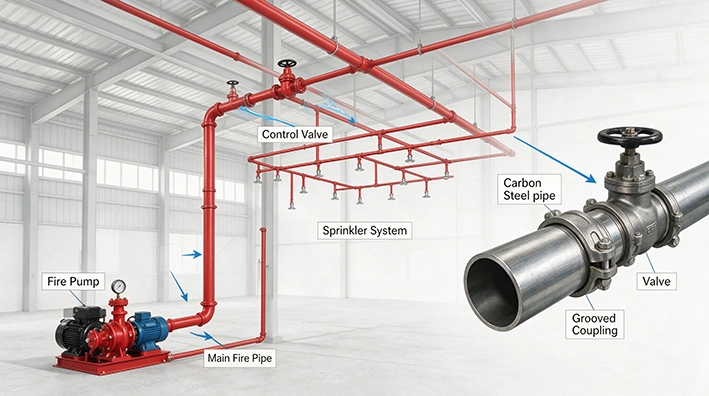
Pangkalahatang-ideya ng sistema ng tubo sa paglaban sa sunog para sa proteksyon ng sunog sa industriya
Ano Ang Mga Tubong Palaban sa Sunog?
Mga tubo sa paglaban sa sunog ay espesyal na idinisenyong mga bahagi ng piping na ginagamit upang maghatid ng tubig o iba pang media sa paglaban sa sunog sa mga sistema ng pagsugpo sa sunog.
Ang pangunahing layunin ng isang fire fighting pipe system ay upang matiyak na ang sapat na tubig ay maaaring maihatid nang mabilis at mahusay sa mga kagamitan sa proteksyon ng sunog sa panahon ng isang emergency..
Karaniwang kasama ang isang kumpletong sistema ng proteksiyon sa sunog:
| Component | Function |
| Mga Pipe sa Paglaban sa Sunog | Magdala ng tubig sa buong sistema |
| Mga Balbula sa Proteksyon ng Sunog | Kontrolin at ihiwalay ang daloy ng tubig |
| Mga Sprinkler ng Sunog | Ipamahagi ang tubig para sa pagsugpo sa sunog |
| Mga bomba ng sunog | Magbigay ng kinakailangang presyon ng tubig |
| Mga Pipe Fitting | Ikonekta at iruta ang mga pipeline |
Ang mga tubo sa paglaban sa sunog ay karaniwang ginagamit sa ilang mga aplikasyon ng proteksyon sa sunog:
Mga Sistema ng Pandilig ng Sunog
Ang mga tubo ng pandilig ng apoy ay naghahatid ng may presyon ng tubig sa mga ulo ng pandilig na naka-install sa mga gusali o pasilidad na pang-industriya.
Ang mga sistemang ito ay nangangailangan ng mga tubo na may maaasahang pressure resistance dahil dapat silang manatiling handa para sa agarang operasyon.
Mga Sistema ng Fire Hydrant
Ang mga sistema ng piping ng fire hydrant ay nagbibigay ng supply ng tubig para sa mga operasyon ng paglaban sa sunog sa pamamagitan ng pagkonekta ng mga hydrant sa mga pinagmumulan ng tubig.
Karaniwang naka-install ang mga ito sa: Mga halamang pang-industriya, Mga bodega at Pampublikong gusali.
Mga Sistema ng Fire Pump
Ang mga fire pump system ay nangangailangan ng malalakas at matibay na tubo na may kakayahang pangasiwaan ang mataas na presyon ng daloy ng tubig.
Sa mga proyektong pang-industriya, Ang pagpili ng pipe ay direktang nakakaapekto sa pagganap ng system at pagiging maaasahan ng emergency.
Mga Uri ng Fire Fighting Pipe ayon sa Materyal
Ang materyal ng mga tubo sa paglaban sa sunog ay may direktang epekto sa paglaban sa kaagnasan, kakayahan sa presyon, buhay ng serbisyo, at gastos ng proyekto.
Ang iba't ibang mga aplikasyon ay nangangailangan ng iba't ibang mga materyales sa tubo. Kabilang sa mga pinakakaraniwang ginagamit na materyales:
- Carbon Steel Fire Fighting Pipe
- Galvanized Fire Protection Pipe
- Hindi kinakalawang na asero na Proteksyon sa Sunog

carbon steel galvanized at hindi kinakalawang na asero proteksyon pipe paghahambing
Carbon Steel Fire Fighting Pipe
Carbon steel paglaban sa sunog pipe ay isa sa pinakamalawak na ginagamit na solusyon para sa mga pang-industriyang sistema ng proteksyon ng sunog.
Dahil sa kanilang mahusay na mekanikal na lakas at kahusayan sa gastos, ang mga carbon steel pipe ay karaniwang pinipili para sa malakihang mga proyektong proteksyon sa sunog.
Mga Bentahe ng Carbon Steel Fire Fighting Pipes
1. Mataas na Lakas
Ang mga carbon steel pipe ay nagbibigay ng mahusay na structural strength, ginagawa itong angkop para sa mga system na nangangailangan ng matatag na pagganap sa ilalim ng presyon.
2. Mataas na Paglaban sa Presyon
Ang mga sistema ng proteksyon sa sunog ay madalas na gumagana sa ilalim ng hinihingi na mga kondisyon ng presyon, lalo na kapag konektado sa mga high-capacity fire pump.
Ang carbon steel fire fighting pipe ay maaaring magbigay ng maaasahang pagganap ng presyon para sa mga pang-industriyang aplikasyon.
3. Sulit na Solusyon
Kung ikukumpara sa mga hindi kinakalawang na asero na tubo, Ang carbon steel ay nagbibigay ng mas matipid na solusyon para sa malalaking pipeline network.
Ginagawa nitong mas gusto ang carbon steel fire fighting pipes:
- Mga halaman sa paggawa
- Mga bodega
- Mga network ng sunog sa industriya
- Underground fire pipelines
Galvanized Fire Protection Pipe
Galvanized na mga tubo ng proteksyon sa sunog ay mga carbon steel pipe na may proteksiyon na zinc coating na nagpapabuti sa corrosion resistance.
Karaniwang ginagamit ang mga ito sa mga panloob na sistema ng pandilig ng apoy kung saan kinakailangan ang katamtamang proteksyon ng kaagnasan.
Mga Bentahe ng Galvanized Fire Protection Pipes
Paglaban sa Kaagnasan
Ang galvanized coating ay nakakatulong na protektahan ang ibabaw ng tubo mula sa kalawang at kaagnasan.
Angkop para sa Indoor Application
Ang mga galvanized pipe ay malawakang ginagamit sa:
- Mga komersyal na gusali
- Mga pasilidad sa opisina
- Mga panloob na sistema ng sprinkler
Gayunpaman, para sa mga lubhang kinakaing unti-unti na kapaligiran, maaaring kailanganin ang karagdagang materyal na pagsasaalang-alang.
Hindi kinakalawang na asero na Proteksyon sa Sunog
Ang mga hindi kinakalawang na asero na mga tubo ng proteksyon sa sunog ay pinili para sa mga aplikasyon kung saan kinakailangan ang mahusay na paglaban sa kaagnasan at mahabang buhay ng serbisyo.
Kahit na ang paunang gastos ay mas mataas kaysa sa carbon steel, hindi kinakalawang na asero ay nagbibigay ng mas mahusay na pagganap sa mapaghamong kapaligiran.
Mga Bentahe ng Stainless Steel Fire Protection Pipe
Napakahusay na Paglaban sa Kaagnasan
Ang hindi kinakalawang na asero ay nagbibigay ng malakas na pagtutol laban sa kaagnasan, mga kemikal, at kahalumigmigan.
Angkop para sa Chemical Environment
Ang hindi kinakalawang na asero na mga tubo ng proteksyon sa sunog ay karaniwang ginagamit sa:
- Chemical plants
- Marine environments
- Food processing facilities
- Pharmaceutical factories
Fire Fighting Pipe Material Comparison: Alin ang Dapat Mong Piliin?
Selecting the correct material is one of the most important decisions when designing a fire fighting pipe system. Different materials provide different levels of strength, paglaban sa kaagnasan, maintenance requirements, and cost performance.
There is no single material that is suitable for every fire protection application. The best choice depends on:
- Operating environment
- Required pressure rating
- Corrosion conditions
- Badyet ng proyekto
- Installation requirements
The following table provides a general comparison of the three most common fire protection pipe materials.
| Salik | Carbon Steel Fire Fighting Pipe | Galvanized Fire Protection Pipe | Hindi kinakalawang na asero na Proteksyon sa Sunog |
| Lakas | Excellent mechanical strength | Good strength | Excellent strength |
| Paglaban sa Kaagnasan | Katamtaman | Better than carbon steel | Magaling |
| Pagganap ng Presyon | Mataas | Medium to high | Mataas |
| Gastos | Low to medium | Katamtaman | Mataas |
| Maintenance Requirement | Regular maintenance may be required | Lower maintenance | Low maintenance |
| Karaniwang Aplikasyon | Mga halamang pang-industriya, large fire networks | Mga panloob na sistema ng sprinkler, mga komersyal na gusali | Chemical and corrosive environments |
Fire Fighting Pipe Standards and Certifications
Fire protection systems are safety-critical applications, which means pipe quality and compliance with recognized standards are extremely important.
Industrial projects often require fire fighting pipes that meet international certifications and manufacturing standards.
Common standards include: UL, FM and ASTM.

UL FM ASTM standards for fire fighting pipes certification
UL Listed Fire Fighting Pipes
UL (Underwriters Laboratories) is one of the most recognized safety certification organizations worldwide.
UL Listed Fire Fighting Pipes are evaluated according to strict safety and performance requirements.
For international fire protection projects, UL certification can help ensure:
- Product reliability
- Pagganap ng materyal
- System safety
FM Approved Fire Protection Pipes
FM Approved products are tested according to FM Global’s requirements for fire protection applications.
FM approval is widely recognized in industrial facilities where fire risk management is a critical concern.
Kasama sa mga karaniwang application:
- Mga halaman sa paggawa
- Energy facilities
- Large warehouses
- Industrial infrastructure
ASTM Standards for Fire Fighting Pipes
ASTM standards define requirements for materials, mga sukat, manufacturing processes, and performance characteristics.
Common ASTM standards related to fire protection pipes include:
| Pamantayan | Aplikasyon |
| ASTM A53 | Carbon steel pipe specification |
| ASTM A795 | Steel pipe specifically designed for sprinkler systems |
Using pipes that comply with appropriate standards helps ensure compatibility with fire protection system requirements.
Iskedyul 10 vs Schedule 40 Mga Pipe sa Paglaban sa Sunog
Pipe schedule refers to the wall thickness classification of steel pipes. It directly affects pressure capability, timbang, at mga kinakailangan sa pag-install.
In fire sprinkler systems, Iskedyul 10 at Iskedyul 40 pipes are two commonly discussed options.
Iskedyul 10 Mga Pipe sa Paglaban sa Sunog
Iskedyul 10 pipes have thinner walls and lower weight compared with Schedule 40 mga tubo.
Mga kalamangan:
- Magaan na disenyo
- Easier installation
- Lower material consumption
- Reduced installation cost
They are commonly used in: Fire sprinkler systems, Commercial buildings and Projects requiring faster installation.
Iskedyul 40 Mga Pipe sa Paglaban sa Sunog
Iskedyul 40 pipes have thicker walls and provide higher mechanical strength.
Mga kalamangan:
- Higher durability
- Stronger pressure capability
- Better resistance to mechanical damage
They are commonly selected for: Industrial fire protection systems, High-pressure applications and Heavy-duty environments.
Iskedyul 10 vs Schedule 40 Comparison Table
| Paghahambing | Iskedyul 10 Pipe | Iskedyul 40 Pipe |
| Kapal ng pader | mas payat | Mas makapal |
| Timbang | Ibaba | Mas mataas |
| Pag-install | Mas mabilis at mas madali | More demanding |
| Pressure Capability | Katamtaman | Mas mataas |
| Gastos ng Materyal | Ibaba | Mas mataas |
| Typical Use | Sprinkler systems | Industrial and high-pressure systems |

iskedyul 10 and schedule 40 fire fighting pipe wall thickness comparison
How to Select the Right Fire Fighting Pipes?
Choosing suitable fire fighting pipes requires more than selecting a material. Engineers should evaluate the complete operating conditions of the fire protection system.
The following factors should be considered:
1. Isaalang-alang ang Presyon sa Paggawa
The pressure rating of fire protection pipes must match the requirements of the fire pump and the overall system design.
Important considerations include: Fire pump pressure, System operating pressure, Maximum pressure conditions.
Selecting pipes with insufficient pressure capability may result in: Reduced water flow performance, System failure risk and Safety concerns.
2. Choose the Right Pipe Material
Material selection should consider:
| Salik | Explanation |
| Environment | Indoor, outdoor, sa ilalim ng lupa, chemical conditions |
| Corrosion Risk | Exposure to moisture or chemicals |
| Budget | Initial cost and long-term maintenance |
| Buhay ng Serbisyo | Expected operation period |
3. Select Proper Pipe Size
Pipe size has a direct impact on water flow, pagkawala ng presyon, and firefighting coverage.
An undersized pipe may restrict water delivery, while an oversized pipe may increase unnecessary project costs.
Key considerations include: Required flow rate, Hydraulic calculation, Building size and Fire protection design requirements.
4. Consider Connection Methods
The connection method affects installation efficiency, maintenance convenience, and overall system reliability.
Common connection methods include:
Grooved Connection
Grooved pipe connections are increasingly popular in modern fire protection systems.
Advantages include: Faster installation, Easier maintenance and Reduced construction time.
For many fire protection projects, grooved fittings provide an efficient alternative to traditional welding methods.
Welding Connection
Welding provides a strong permanent connection and is still widely used in industrial piping applications.
Gayunpaman, welding usually requires more installation time and professional skills.
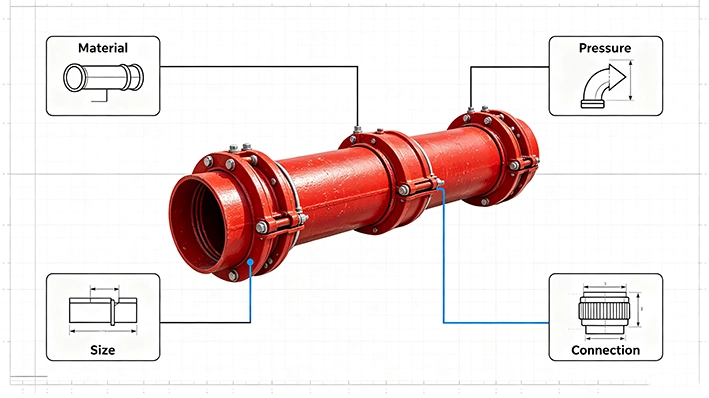
fire fighting pipe selection factors material pressure size connection
Fire Fighting Pipes Applications
Fire fighting pipes are used in a wide range of industrial, komersyal, at mga proyektong pang-imprastraktura. Gayunpaman, different environments have different requirements for pipe material, pressure performance, paglaban sa kaagnasan, and installation methods.
Selecting the correct fire protection pipes according to the application environment helps ensure system reliability and long-term performance.
Industrial Manufacturing Plants
Manufacturing facilities usually contain valuable equipment, production lines, and combustible materials, making reliable fire protection systems essential.
Carbon steel fire fighting pipes are commonly selected because they provide: Mataas na lakas ng makina, Good pressure resistance and Cost efficiency for large systems.
Kasama sa mga karaniwang application:
- Factory fire sprinkler systems
- Fire hydrant networks
- Fire pump pipelines
Warehouses and Logistics Buildings
Warehouses often require large-scale fire protection networks because stored goods may create significant fire risks.
Recommended solutions:
| Aplikasyon | Recommended Pipe Solution |
| Large warehouse sprinkler systems | Carbon steel paglaban sa sunog pipe |
| Fast installation projects | Grooved pipe systems |
| Indoor systems | Galvanized na mga tubo ng proteksyon sa sunog |
Grooved fittings are especially suitable for warehouse projects because they reduce installation time and simplify future maintenance.
Power Plants and Energy Facilities
Power plants require highly reliable fire protection systems due to the presence of electrical equipment, fuel systems, and high-value infrastructure.
Fire fighting pipes used in these environments must provide:
- High pressure capability
- Mahabang buhay ng serbisyo
- Reliable emergency performance
Depending on the environment, carbon steel or stainless steel fire protection pipes may be selected.
Chemical and Process Industries
Chemical plants often face more aggressive operating environments where corrosion resistance becomes a critical consideration.
Stainless steel fire protection pipes may be preferred in areas exposed to: Chemical substances, High humidity and Corrosive atmosphere.
Commercial Buildings
Commercial buildings such as offices, shopping centers, and hotels commonly use indoor fire sprinkler systems.
Common choices include: Galvanized fire protection pipes and Carbon steel fire fighting pipes.
Selection factors include: Building design, Installation requirements and Local fire protection regulations.
Fire Fighting Pipes vs Ordinary Industrial Pipes
Although both fire fighting pipes and ordinary industrial pipes are used for fluid transportation, their design purposes and performance requirements are different.
Fire fighting pipes are designed for emergency operation, where reliability and safety are the highest priorities.
Comparison Between Fire Fighting Pipes and Normal Pipes
| Comparison Factor | Mga Pipe sa Paglaban sa Sunog | Ordinary Industrial Pipes |
| Pangunahing Layunin | Fire protection and emergency water supply | General fluid transportation |
| Operating Condition | Standby and emergency operation | Continuous daily operation |
| Pressure Requirement | Usually higher reliability requirements | Depends on application |
| Mga pamantayan | Fire protection standards required | General industrial standards |
| Sertipikasyon | May require UL/FM approval | Usually general standards |
| Reliability Requirement | Napakataas | Application dependent |
The key difference is that fire protection systems must work correctly even after long periods of inactivity.
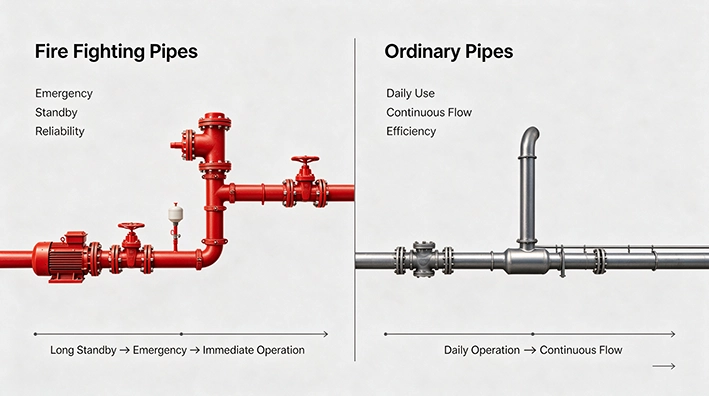
fire fighting pipes vs ordinary industrial pipes comparison
Common Mistakes When Selecting Fire Fighting Pipes
Choosing unsuitable fire fighting pipes can affect system performance and increase future maintenance costs.
The following mistakes should be avoided during project planning.
1. Selecting Pipes Based Only on Price
The cheapest pipe option may not always provide the best long-term value.
A lower-cost material may result in:
- Higher maintenance frequency
- Shorter service life
- Increased replacement costs
A balanced evaluation should consider both initial investment and lifecycle cost.
2. Ignoring Pressure Requirements
Fire protection systems depend on stable water pressure during emergencies.
Using pipes with insufficient pressure capability may reduce firefighting effectiveness.
Engineers should always verify: System pressure, Pump capacity and Pipe pressure rating.
3. Choosing Incorrect Pipe Materials
Different environments require different materials.
Halimbawa:
| Environment | Recommended Material |
| Pangkalahatang pang-industriya na aplikasyon | Carbon steel |
| Mga panloob na sistema ng sprinkler | Galvanized steel |
| Chemical environments | hindi kinakalawang na asero |
4. Ignoring Connection Methods
The connection method affects installation speed and maintenance efficiency.
For large fire protection projects, selecting suitable grooved fittings or welding solutions can significantly improve construction efficiency.
How Fire Fighting Pipes Work with Other System Components
A fire fighting pipe system does not operate independently. It works together with valves, mga kabit, mga bomba, and other components to create a complete fire protection network.
A typical system includes:
| Component | Function |
| Fire Pump | Provides water pressure |
| Mga Pipe sa Paglaban sa Sunog | Transfers water |
| Mga Balbula sa Proteksyon ng Sunog | Controls flow direction |
| Mga Grooved Fitting | Connects pipe sections |
| Sprinklers | Releases water |
For a complete understanding of fire protection system design, readers can refer to:
Complete Fire Protection Piping System Components
A reliable fire protection piping system requires coordination between multiple components.
The main components include:
- Mga Pipe sa Paglaban sa Sunog-The main transportation pathway for firefighting water.
- Mga Balbula sa Proteksyon ng Sunog-Control water flow and allow system isolation during maintenance.
- Mga Grooved Fitting-Provide efficient pipe connection solutions for modern fire protection systems.

complete fire protection piping system components with pipes valves and fittings
Konklusyon
Choosing the right fire fighting pipes is essential for building a reliable and efficient industrial fire protection system.
The ideal pipe solution depends on multiple factors, kasama ang:
- Material selection
- Pressure requirements
- Laki ng tubo
- Paraan ng koneksyon
- Application environment
- Fire protection standards
Carbon steel fire fighting pipes remain the preferred choice for many industrial projects due to their strength and cost efficiency, while galvanized and stainless steel options provide advantages in specific environments.
By understanding the differences between materials, mga pamantayan, and applications, engineers and buyers can select the most suitable fire protection pipes for long-term safety and performance.
A properly designed fire fighting pipe system not only improves fire protection reliability but also helps reduce maintenance costs throughout the project lifecycle.
Frequently Asked Questions About Fire Fighting Pipes
1. Can Fire Fighting Pipes Be Used for Both Sprinkler and Hydrant Systems?
Oo, fire fighting pipes can be used for different fire protection applications, including sprinkler systems, fire hydrant systems, and fire pump pipelines. Gayunpaman, the pipe material, diameter, rating ng presyon, and design requirements may vary depending on the specific system. A pipe suitable for a sprinkler network may not always meet the requirements of a high-flow hydrant system.
2. Do Fire Fighting Pipes Need Special Coating or Protection?
Oo. Protection requirements depend on the installation environment. Carbon steel fire fighting pipes may require coatings, painting, or other corrosion protection methods, especially for outdoor or underground applications. For humid, kemikal, or corrosive environments, galvanized or stainless steel pipes may provide better long-term performance. Proper protection helps extend service life and reduce maintenance costs.
3. Can Carbon Steel Pipes Be Used for Underground Fire Protection Systems?
Oo, carbon steel pipes are commonly used in underground fire protection systems because of their strength and pressure resistance. Gayunpaman, underground installation requires proper corrosion protection, patong, and installation practices to prevent damage from soil conditions and moisture. The selection should consider local regulations, soil environment, and expected service life.
4. What Causes Fire Fighting Pipe Failure?
Common causes of fire fighting pipe failure include corrosion, incorrect pressure selection, poor installation quality, and unsuitable materials. Using pipes that do not match system requirements may affect water flow and reliability during emergencies. Regular inspection and selecting suitable pipe materials and connection methods are important for maintaining system performance.
5. How Often Should Fire Fighting Pipes Be Inspected?
Inspection frequency depends on local fire codes, system type, and operating environment. Regular inspections help identify corrosion, pagtagas, blockage, or connection problems before they affect system performance. For industrial fire protection systems, routine maintenance is especially important because the system may remain inactive for long periods before an emergency occurs.
Need Reliable Fire Fighting Pipes for Your Project?
Choosing the right fire fighting pipes is essential for building a safe and reliable fire protection system.
Sa Luoyang Datang Energy Tech Co., Ltd, we provide industrial piping solutions including fire fighting pipes, mga balbula, and pipe fittings for different applications.
With experience in industrial pipeline systems, we can help you select suitable pipe materials, mga paraan ng koneksyon, and configurations according to your project requirements.
Contact us today to discuss your fire protection piping needs and get a professional solution.
MGA KAUGNAY NA POST
Anong Pipe ang Ginagamit Para sa Supply ng Tubig
Gabay sa Mga Sukat at Dimensyon ng HDPE Pipe: diameter, SDR, Rating ng Presyon at Mga Tip sa Pagpili
Pang-industriya na PPR Pipe Sa Chemical Media at Process Water Transportation
PE, PVC at PPR Pipe sa Drainage at Sewage System (DWV)
Gaano Katagal Dumikit ang Tubig sa Pader