LUOYANG CAME ENERGY TECH CO.,LTD


Paano Pumili ng Mga Check Valve para sa Pump System sa Mga Tubig Pipeline (Water Hammer & Gabay sa Pag-iwas sa Backflow)
Sa anumang sistema ng pipeline ng tubig na may mga bomba, ang check balbula ay arguably ang pinaka-kritikal na bahagi para sa pagprotekta ng kagamitan at pagtiyak ng pagiging maaasahan ng system. Ito ay maaaring mukhang isang simpleng aparato—isang balbula na nagbibigay-daan sa daloy sa isang direksyon lamang—ngunit ang pagpili ng maling check valve ay maaaring humantong sa mga sakuna na pagkabigo: water hammer na nakakabasag ng mga tubo, mga bombang umiikot pabalik sa mapanirang bilis, o mga balbula na kumakalat sa kanilang sarili sa loob ng mga buwan.
Sinasaklaw ng gabay na ito ang lahat ng kailangan mong malaman pang-industriya check balbula pagpili para sa mga sistema ng bomba sa mga pipeline ng tubig. Magkukumpara tayo swing check valve vs lift check valve mga disenyo, ipaliwanag kung paano maiwasan martilyo ng tubig, magbigay ng praktikal suriin ang gabay sa pagsukat ng balbula, at magbahagi ng mahalaga suriin ang pagpapanatili ng balbula mga tip upang maiwasan ang mga karaniwang sanhi ng pagkabigo.
Bakit Kailangan ng Bawat Pump System ng Check Valve
A non-return valve para sa water system ay hindi opsyonal—ito ay mahalaga. Kapag huminto ang bomba, ang column ng tubig sa discharge pipeline ay hindi agad tumitigil. Patuloy itong gumagalaw dahil sa inertia, lumilikha ng reverse flow na maaari:
- Paikutin ang pump pabalik sa bilis na lampas sa normal na operasyon, nakakasira sa pump at motor
- Gumawa ng water hammer pressure surges na maaaring pumutok sa mga tubo at makapinsala sa mga kabit
- Hayaang dumaloy ang kontaminadong tubig pabalik sa malinis na pinagmumulan ng tubig
- Maging sanhi ng pag-alis ng mga impeller ng pump o magdusa ng mekanikal na pinsala
Ang suriin ang balbula para sa proteksyon ng bomba awtomatikong pinipigilan ang reverse flow, nang walang interbensyon ng operator. Nagbubukas ito kapag tumatakbo ang bomba at nagsasara kapag huminto ang bomba, pagtiyak na ang tubig ay dumadaloy lamang sa nilalayong direksyon.
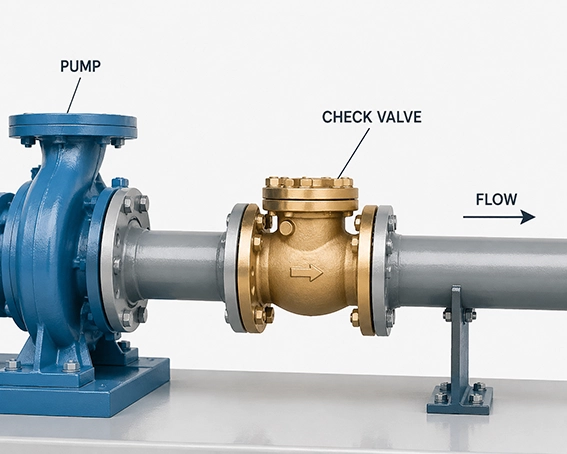
Naka-install ang check valve sa pump discharge pipeline
Swing Check Valve vs Lift Check Valve – Alin ang Kailangan Mo?
Ang dalawang pinakakaraniwang uri ng mga check valve para sa water pipeline pump system ay swing check valves at iangat ang mga check valve. Ang pag-unawa sa kanilang mga pagkakaiba ay ang unang hakbang pang-industriya check balbula pagpili.
Swing Check Valve
A swing check valve gumagamit ng disc na umiindayog sa isang bisagra. Ang pasulong na daloy ay nagtutulak sa disc na bukas; kapag huminto o bumaligtad ang daloy, ang disc ay umuugoy pabalik sa upuan sa pamamagitan ng gravity.
Mga Pangunahing Katangian:
✅Mababang presyon ng pagbaba – Minimum na pagbaba ng presyon ng humigit-kumulang 0.5 psi kapag fully open
✅Simpleng disenyo - Mas kaunting gumagalaw na bahagi, mas mababang maintenance
✅Tamang-tama para sa malalaking diameter – Karaniwang pagpipilian para sa NPS 2″ at mas mataas
✅Pinakamahusay para sa tubig at iba pang mga likido
❌Kinakailangan ang pahalang na pag-install – Dapat na naka-install sa pahalang o bahagyang sloping na linya
❌Hindi angkop para sa vertical-up na daloy – Hindi maibabalik ng gravity ang disc sa upuan nito
Iangat ang Check Valve
A iangat ang check valve (tinatawag ding piston check valve) Gumagamit ng disc o piston na umaalis sa upuan sa ilalim ng pasulong na daloy at bumababa pabalik sa pamamagitan ng gravity at spring force kapag bumabaliktad ang daloy. Ito ay gumagana nang katulad sa isang balbula ng globo.
Mga Pangunahing Katangian:
✅Superior na sealing – Mas mahusay para sa mga high-pressure na kapaligiran
✅Angkop para sa vertical-up na daloy – Gumagana nang maayos sa mga patayong pipeline
✅Maaaring mai-install nang pahalang – Available ang mga horizontal lift check valve
❌Mas mataas na pagbaba ng presyon – Tinatayang 2.0–3.0 psi na pinakamababa
❌Mas mataas na resistensya ng likido
❌Mas kumplikadong disenyo - Higit pang mga gumagalaw na bahagi, mas mataas na maintenance
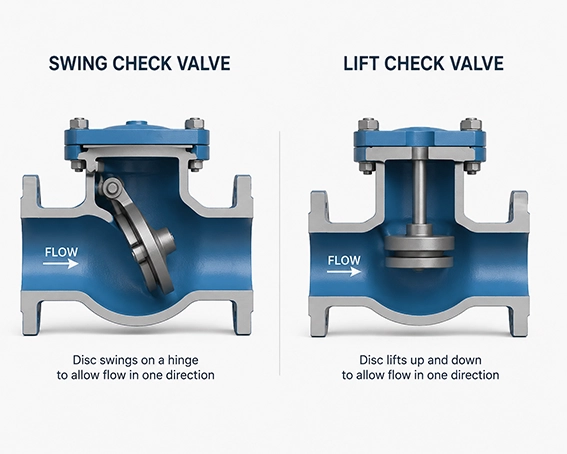
Swing check valve vs lift check valve paghahambing ng panloob na istraktura
Talahanayan ng Paghahambing
| Tampok | Swing Check Valve | Iangat ang Check Valve |
| Pagbaba ng presyon | Mababa (~0.5 psi) | Mas mataas (~2.0-3.0 psi) |
| Pag-install | Pahalang lang | Pahalang o patayo |
| Pinakamahusay para sa | Malaking diameter, tuluy-tuloy na daloy | Mataas na presyon, patayong daloy |
| Pagtatatak | Mabuti | Superior |
| Pagpapanatili | Ibaba | Mas mataas |
| Karaniwang hanay ng laki | NPS 2″ at mas mataas | Lahat ng laki |
Tip sa pagpili: Para sa karamihan ng mga water pipeline pump system na may pahalang na piping, a swing check valve ay ang ginustong pagpipilian dahil sa mababang presyon ng drop at simpleng disenyo. Para sa mga vertical pipeline o high-pressure application, a iangat ang check valve maaaring mas angkop.
Pag-iwas sa Water Hammer – Ang Silent System Killer
Tubig martilyo (tinatawag ding hydraulic shock) nangyayari kapag ang isang likidong kumikilos ay biglang pinipilit na huminto o magpalit ng direksyon. Sa mga sistema ng bomba, nangyayari ito kapag huminto ang pump at sumara ang check valve, o kapag ang balbula sa ibaba ng agos ay masyadong mabilis na isinara.
- Ang water hammer prevention balbula dapat maingat na piliin upang maiwasan:
- Suriin ang balbula slam – Kapag humampas ang disc sa upuan, lumilikha ng isang pressure wave na naglalakbay sa system
- Mga pagtaas ng presyon – Maaaring lumampas 10 beses ang normal na operating pressure
- Pagkasira ng tubo – Ang matinding pressure spike ay maaaring pumutok sa mga pipeline
- Pagkasira ng bomba – Ang baligtad na daloy ay maaaring magpaikot ng mga bomba pabalik sa mapanirang bilis
Paano Pumili ng Water Hammer Prevention Valve
Para maiwasan ang water hammer sa iyong pump discharge pipeline:
- Pumili ng mga non-slam check valve – Ang mga balbula na may mga mekanismo ng pagsasara na tinulungan ng tagsibol ay nagsasara bago mangyari ang reverse flow, makabuluhang pagbabawas ng martilyo ng tubig
- Gumamit ng dashpot o damping device – Kasama sa ilang check valve ang mga dashpot na nagpapabagal sa bilis ng pagsasara
- Itugma ang oras ng pagsasara ng balbula sa dynamics ng system – Ang mas mabilis na pagsasara ay hindi palaging mas mahusay; the valve must close fast enough to prevent backflow but slow enough to avoid pressure surges
- Consider slow-closing check valves – These are designed to close gradually, allowing pressure to dissipate gradually rather than instantly
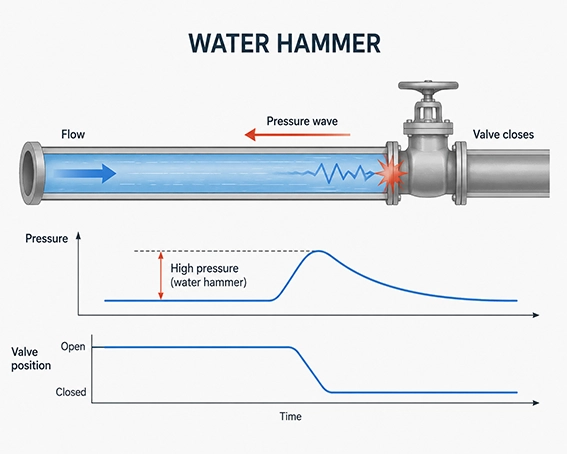
Water hammer pressure wave diagram
Check Valve Sizing Guide – Getting It Right
Proper check valve sizing is essential for reliable operation. An incorrectly sized valve can cause chattering (rapid opening and closing), excessive pressure drop, or failure to open fully.
The Pressure Drop Rule
The size of a check valve should be determined by the specified pressure drop, not simply by pipe size.
| Uri ng balbula | Minimum Pressure Drop |
| Swing Check Valve | 0.5 psi |
| Iangat ang Check Valve | 2.0–3.0 psi |
Rule of thumb: To keep a check valve fully open, the differential pressure should be at least two times the cracking pressure (the minimum pressure needed to open the valve).
Step-by-Step Sizing Process
Hakbang 1: Determine flow data
Gather the media type, temperatura, and expected flow rate for your system.
Hakbang 2: Calculate required Cv
The flow coefficient (Cv) must be less than the Cv calculated when using your desired pressure drop in the flow sizing equations.
Hakbang 3: Verify minimum flow
Determine what minimum flow rates the check valve can handle. If flow falls below this minimum, the valve may not fully open, causing chattering.
Hakbang 4: Check the pressure drop
Meeting the minimum pressure drop criteria will determine whether the sizing equation is correct. A check valve that is not fully open may cause chattering and damage.
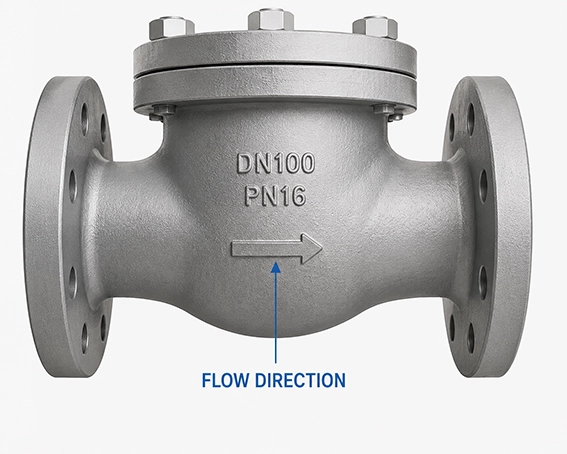
Flow arrow on check valve body
Check Valve Installation Direction & Best Practices
Check valve installation direction is critical. Every check valve has a flow arrow cast or stamped on the body indicating the required flow direction. Installing the valve backwards is a common and costly mistake.
Installation Requirements by Valve Type
Swing check valves: Must be installedhorizontally (or in lines that slope slightly). They will not work in vertical-up lines because gravity cannot return the disc to its seat.
Lift check valves: Can be installedhorizontally or vertically (vertical-up flow is recommended).
Installation Checklist
✅ Confirm flow arrow direction matches process flow
✅ Ensure the valve mechanism operates properly before installation
✅ Install with adequate straight pipe upstream (consult manufacturer recommendations)
✅ Use appropriate gaskets and torque bolts to specification
✅ Test the system for leaks after installation
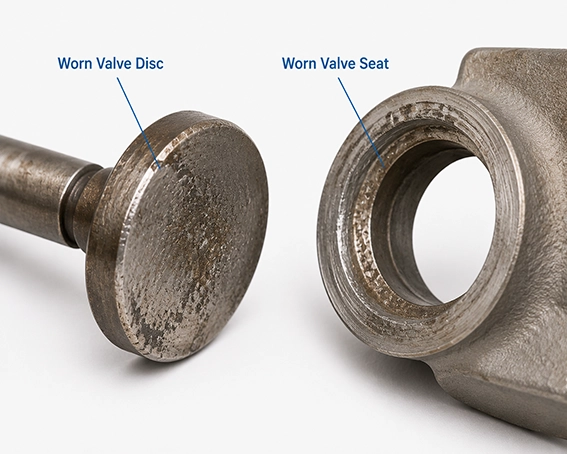
Worn check valve disc and seat
Common Check Valve Failure Causes – And How to Avoid Them
Understanding common check valve failure causes can help you prevent costly downtime.
Nangunguna 5 Failure Causes
| Failure Cause | Symptoms | Prevention |
| Chattering | Rapid opening/closing noise, vibration, wear | Ensure adequate flow and pressure drop |
| Slamming | Loud bang when pump stops, martilyo ng tubig | Use non-slam or damped check valves |
| Wear | Leakage, incomplete closure | Regular inspection and maintenance |
| Fouling | Sticking disc, incomplete opening | Ensure media compatibility, clean system |
| Compatibility issues | Seal degradation, kaagnasan | Match valve materials to media |
How to Extend Check Valve Life
Regular inspection: Check for wear on the disc and seat at scheduled intervals
Proper sizing: Ensure the valve is correctly sized for your flow and pressure conditions
Media compatibility: Confirm valve materials are compatible with your process media
Address chattering immediately: Chattering indicates the valve is not fully open—investigate flow and pressure conditions
Replace worn parts promptly: Excessive play in the disc can cause binding and failure
How to Prevent Reverse Flow in Piping Systems – Beyond the Check Valve
While a properly selected and installed check valve is the primary method to prevent reverse flow in piping systems, a comprehensive approach includes:
- Multiple check valves in critical systems – Redundant protection if one valve fails
- Pressure monitoring – Detect abnormal pressure drops that indicate check valve failure
- Regular maintenance – Scheduled inspection and replacement of worn components
- Proper pump control – Avoid rapid pump starts and stops that create water hammer
- Air chambers or surge tanks – Absorb pressure surges to protect the system
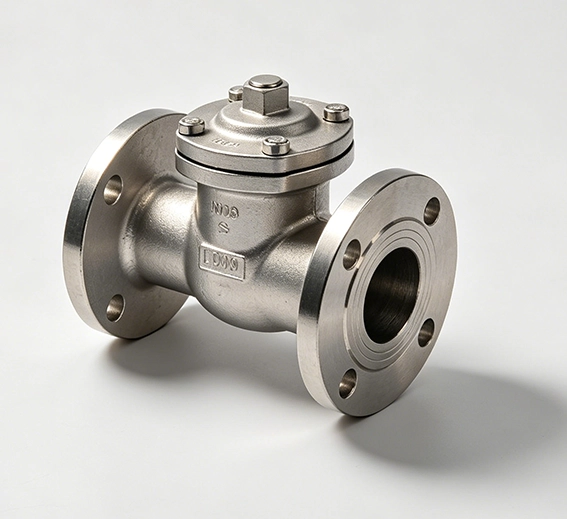
Industrial check valve product display
Frequently Asked Questions
Q1: What is the difference between a swing check valve and a lift check valve?
A: A swing check valve uses a disc that swings on a hinge, offering low pressure drop and simple design. It must be installed horizontally. A lift check valve uses a piston that lifts vertically, offering superior sealing but higher pressure drop. It can be installed in vertical or horizontal piping.
Q2: How do I prevent water hammer in my pump system?
A: Choose non-slam or damped check valves that close before reverse flow can occur, ensure proper valve sizing, avoid rapid pump starts and stops, and consider adding air chambers or surge tanks to absorb pressure surges.
Q3: What is the minimum pressure drop for a check valve?
A: For swing check valves, the minimum pressure drop is approximately 0.5 psi. For lift check valves, it is approximately 2.0–3.0 psi. The valve must be sized to meet these minimum pressure drop criteria to ensure full opening.
Q4: Why is my check valve chattering?
A: Chattering occurs when the valve is not fully open, typically due to insufficient flow or pressure drop. It can also be caused by worn internal components. Check your flow conditions and valve sizing.
Q5: Can I install a swing check valve vertically?
A: Hindi. Swing check valves must be installed horizontally or in slightly sloping lines. Gravity is required to return the disc to its seat, which does not work in vertical-up flow.
Why Choose Our Check Valves?
Sa Luoyang Datang Energy Tech Co., Ltd. , we supply high-quality check valves for pump protection and water pipeline systems. Our products feature:
✅Wide range of types – Swing check valves, iangat ang mga check valve, dual-plate check valves, and more
✅Multiple materials – Cast iron, ductile iron, carbon steel, hindi kinakalawang na asero, bronze, and alloy
✅Various connection options – Flanged, threaded, wafer, and grooved ends
✅Non-slam designs – Spring-assisted closure for water hammer prevention
✅Sizes from 1/2″ to 48″ – Suitable for all pipeline applications
✅Pressure ratings up to Class 2500 – For high-pressure systems
✅CE and ISO 9001 sertipikado – Quality assured
✅Competitive pricing – Factory-direct supply with OEM/ODM support
Makipag-ugnayan sa amin today for expert check valve selection advice, mga pagtutukoy ng produkto, and competitive quotes.
Check valve factory inventory
MGA KAUGNAY NA POST

Drip Irrigation vs. Sprinkler Irrigation: Which Pipe System Works Best?
Perpektong pagtatagpo ang Pex pipe at floor heating system.”1+1>2″
High-Density Polyethylene Water Supply Pipe for Drip Irrigation System
What are the key requirements for the installation of HDPE pipe systems?