LUOYANG CAME ENERGY TECH CO.,LTD


របៀបជ្រើសរើស Check Valves សម្រាប់ប្រព័ន្ធបូមក្នុងបំពង់ទឹក។ (ញញួរទឹក។ & ការណែនាំអំពីការទប់ស្កាត់លំហូរត្រឡប់មកវិញ)
នៅក្នុងប្រព័ន្ធបំពង់ទឹកណាមួយដែលមានស្នប់, នេះ។ ពិនិត្យវ៉ាល់ ជាធាតុផ្សំដ៏សំខាន់បំផុតសម្រាប់ការការពារឧបករណ៍ និងធានានូវភាពជឿជាក់នៃប្រព័ន្ធ. វាអាចហាក់ដូចជាឧបករណ៍សាមញ្ញមួយ — សន្ទះបិទបើកដែលអនុញ្ញាតឱ្យមានលំហូរក្នុងទិសដៅតែមួយប៉ុណ្ណោះ ប៉ុន្តែការជ្រើសរើសសន្ទះបិទបើកខុសអាចនាំទៅរកការបរាជ័យដ៏មហន្តរាយ: ញញួរទឹកដែលបំបែកបំពង់, ម៉ាស៊ីនបូមវិលថយក្រោយក្នុងល្បឿនបំផ្លិចបំផ្លាញ, ឬសន្ទះបិទបើកដែលជជែកគ្នាជាបំណែកៗក្នុងរយៈពេលជាច្រើនខែ.
ការណែនាំនេះគ្របដណ្តប់អ្វីគ្រប់យ៉ាងដែលអ្នកត្រូវដឹង ការជ្រើសរើសសន្ទះត្រួតពិនិត្យឧស្សាហកម្ម សម្រាប់ប្រព័ន្ធបូមនៅក្នុងបំពង់ទឹក។. យើងនឹងប្រៀបធៀប swing check valve vs lift check valve ការរចនា, ពន្យល់ពីរបៀបការពារ ញញួរទឹក។, ផ្តល់នូវការអនុវត្តជាក់ស្តែង ពិនិត្យមើលការណែនាំទំហំវ៉ាល់, និងចែករំលែកសំខាន់ ពិនិត្យថែទាំសន្ទះបិទបើក គន្លឹះដើម្បីជៀសវាងមូលហេតុនៃការបរាជ័យទូទៅ.
ហេតុអ្វីបានជាប្រព័ន្ធបូមនីមួយៗត្រូវការ Check Valve
ក វ៉ាល់មិនត្រឡប់សម្រាប់ប្រព័ន្ធទឹក។ មិនមែនជាជម្រើសទេ - វាចាំបាច់ណាស់។. នៅពេលម៉ាស៊ីនបូមឈប់, ជួរឈរទឹកនៅក្នុងបំពង់បង្ហូរចេញមិនឈប់ភ្លាមៗទេ។. វាបន្តផ្លាស់ទីដោយសារតែនិចលភាព, បង្កើតលំហូរបញ្ច្រាសដែលអាច:
- បង្វិលស្នប់ថយក្រោយក្នុងល្បឿនលើសពីប្រតិបត្តិការធម្មតា។, ធ្វើឱ្យខូចម៉ាស៊ីនបូមនិងម៉ូទ័រ
- បង្កើតសម្ពាធញញួរទឹកដែលអាចផ្ទុះបំពង់ និងខូចឧបករណ៍
- អនុញ្ញាតឱ្យទឹកកខ្វក់ហូរត្រឡប់ទៅប្រភពទឹកស្អាតវិញ។
- បណ្ដាលឱ្យម៉ាស៊ីនបូមមិនវីស ឬរងការខូចខាតមេកានិក
នេះ។ ពិនិត្យវ៉ាល់សម្រាប់ការការពារស្នប់ រារាំងលំហូរបញ្ច្រាសដោយស្វ័យប្រវត្តិ, ដោយគ្មានអន្តរាគមន៍ពីប្រតិបត្តិករ. វាបើកនៅពេលដែលស្នប់ដំណើរការ និងបិទនៅពេលបូមឈប់, ធានាថាទឹកហូរតាមទិសដៅដែលបានគ្រោងទុក.
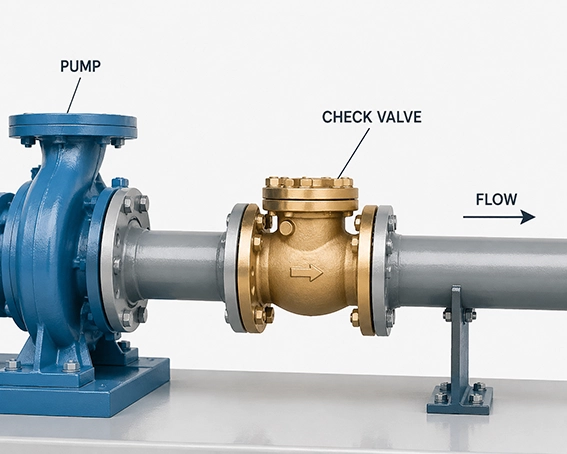
ពិនិត្យសន្ទះបិទបើកនៅលើបំពង់បង្ហូរបូម
Swing Check Valve vs Lift Check Valve - តើមួយណាដែលអ្នកត្រូវការ?
ប្រភេទវ៉ាល់ត្រួតពិនិត្យទូទៅបំផុតពីរសម្រាប់ប្រព័ន្ធបូមបំពង់ទឹកគឺ swing check valves និង លើកវ៉ាល់ត្រួតពិនិត្យ. ការយល់ដឹងពីភាពខុសគ្នារបស់ពួកគេគឺជាជំហានដំបូង ការជ្រើសរើសសន្ទះត្រួតពិនិត្យឧស្សាហកម្ម.
Swing Check Valve
ក សន្ទះត្រួតពិនិត្យ swing ប្រើឌីសដែលបង្វិលលើម្ជុលហ៊ីង. លំហូរទៅមុខរុញថាសបើក; នៅពេលលំហូរឈប់ឬបញ្ច្រាស, ឌីសវិលទៅកន្លែងអង្គុយវិញដោយទំនាញផែនដី.
លក្ខណៈសំខាន់ៗ:
✅ការធ្លាក់ចុះសម្ពាធទាប - ការធ្លាក់ចុះសម្ពាធអប្បបរមាប្រហែល 0.5 psi នៅពេលបើកពេញ
✅ការរចនាសាមញ្ញ - ផ្នែកផ្លាស់ទីតិច, ការថែទាំទាប
✅សមស្របសម្រាប់អង្កត់ផ្ចិតធំ - ជម្រើសទូទៅសម្រាប់ NPS 2″ និងខ្ពស់ជាងនេះ។
✅ល្អបំផុតសម្រាប់ទឹក និងវត្ថុរាវផ្សេងទៀត។
❌តម្រូវឱ្យមានការដំឡើងផ្ដេក – Must be installed in horizontal or slightly sloping lines
❌Not suitable for vertical-up flow – Gravity cannot return the disc to its seat
Lift Check Valve
ក lift check valve (also called a piston check valve) uses a disc or piston that lifts off the seat under forward flow and drops back by gravity and spring force when flow reverses. It operates similarly to a globe valve.
លក្ខណៈសំខាន់ៗ:
✅Superior sealing – Better for high-pressure environments
✅Suitable for vertical-up flow – Works well in vertical pipelines
✅Can be installed horizontally – Horizontal lift check valves available
❌Higher pressure drop – Approximately 2.0–3.0 psi minimum
❌Higher fluid resistance
❌More complex design – More moving parts, higher maintenance
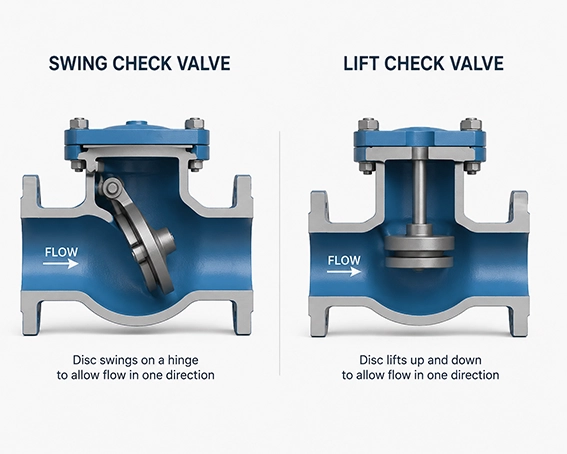
Swing check valve vs lift check valve internal structure comparison
Comparison Table
| លក្ខណៈ | Swing Check Valve | Lift Check Valve |
| Pressure drop | ទាប (~0.5 psi) | ខ្ពស់ជាង (~2.0-3.0 psi) |
| ការដំឡើង | Horizontal only | Horizontal or vertical |
| ល្អបំផុតសម្រាប់ | Large diameter, steady flow | High pressure, vertical flow |
| Sealing | ល្អ | Superior |
| ថែទាំ | ទាបជាង | ខ្ពស់ជាង |
| Typical size range | NPS 2″ and above | All sizes |
Selection tip: For most water pipeline pump systems with horizontal piping, ក សន្ទះត្រួតពិនិត្យ swing is the preferred choice due to its low pressure drop and simple design. For vertical pipelines or high-pressure applications, ក lift check valve may be more appropriate.
Preventing Water Hammer – The Silent System Killer
Water hammer (also called hydraulic shock) occurs when a fluid in motion is suddenly forced to stop or change direction. In pump systems, this happens when the pump stops and the check valve slams shut, or when a valve downstream is closed too quickly.
- នេះ។ water hammer prevention valve must be carefully selected to avoid:
- Check valve slam – When the disc slams against the seat, creating a pressure wave that travels through the system
- Pressure surges – Can exceed 10 times the normal operating pressure
- Pipe rupture – Extreme pressure spikes can burst pipelines
- Pump damage – Reverse flow can spin pumps backward at destructive speeds
How to Select a Water Hammer Prevention Valve
To prevent water hammer in your pump discharge pipeline:
- Choose non-slam check valves – Valves with spring-assisted closing mechanisms close before reverse flow can occur, significantly reducing water hammer
- Use dashpot or damping devices – Some check valves include dashpots that slow the closing speed
- Match valve closing time to system dynamics – Faster closing is not always better; the valve must close fast enough to prevent backflow but slow enough to avoid pressure surges
- Consider slow-closing check valves – These are designed to close gradually, allowing pressure to dissipate gradually rather than instantly
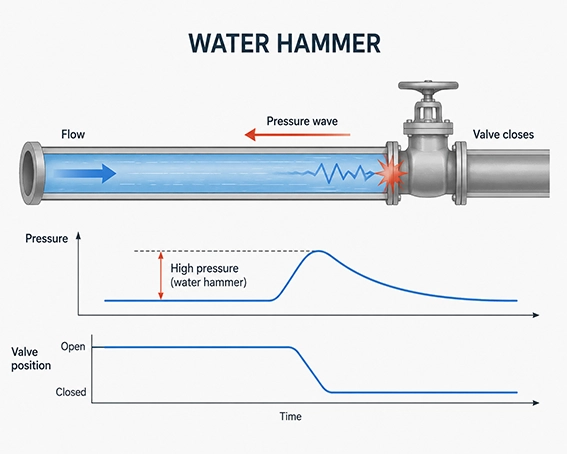
Water hammer pressure wave diagram
Check Valve Sizing Guide – Getting It Right
Proper check valve sizing is essential for reliable operation. An incorrectly sized valve can cause chattering (rapid opening and closing), excessive pressure drop, or failure to open fully.
The Pressure Drop Rule
The size of a check valve should be determined by the specified pressure drop, not simply by pipe size.
| ប្រភេទវ៉ាល់ | Minimum Pressure Drop |
| Swing Check Valve | 0.5 psi |
| Lift Check Valve | 2.0–3.0 psi |
Rule of thumb: To keep a check valve fully open, the differential pressure should be at least two times the cracking pressure (the minimum pressure needed to open the valve).
Step-by-Step Sizing Process
ជំហាន 1: Determine flow data
Gather the media type, សីតុណ្ហភាព, and expected flow rate for your system.
ជំហាន 2: Calculate required Cv
The flow coefficient (CV) must be less than the Cv calculated when using your desired pressure drop in the flow sizing equations.
ជំហាន 3: Verify minimum flow
Determine what minimum flow rates the check valve can handle. If flow falls below this minimum, the valve may not fully open, causing chattering.
ជំហាន 4: Check the pressure drop
Meeting the minimum pressure drop criteria will determine whether the sizing equation is correct. A check valve that is not fully open may cause chattering and damage.
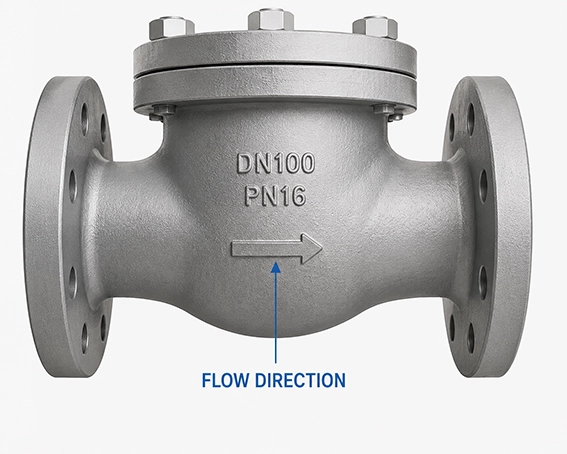
Flow arrow on check valve body
Check Valve Installation Direction & Best Practices
Check valve installation direction is critical. Every check valve has a flow arrow cast or stamped on the body indicating the required flow direction. Installing the valve backwards is a common and costly mistake.
Installation Requirements by Valve Type
Swing check valves: Must be installedhorizontally (or in lines that slope slightly). They will not work in vertical-up lines because gravity cannot return the disc to its seat.
Lift check valves: Can be installedhorizontally or vertically (vertical-up flow is recommended).
Installation Checklist
✅ Confirm flow arrow direction matches process flow
✅ Ensure the valve mechanism operates properly before installation
✅ Install with adequate straight pipe upstream (consult manufacturer recommendations)
✅ Use appropriate gaskets and torque bolts to specification
✅ Test the system for leaks after installation
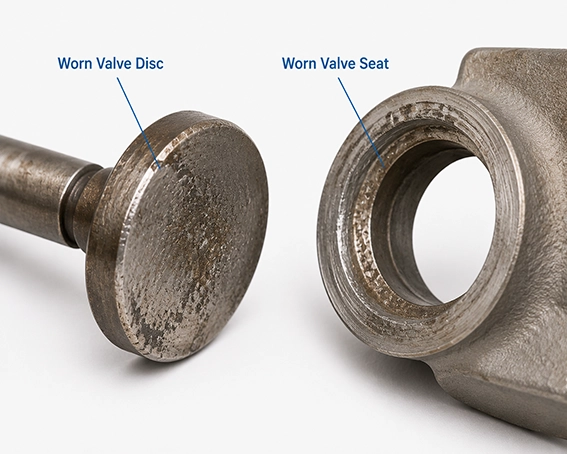
Worn check valve disc and seat
Common Check Valve Failure Causes – And How to Avoid Them
Understanding common check valve failure causes can help you prevent costly downtime.
កំពូល 5 Failure Causes
| Failure Cause | Symptoms | Prevention |
| Chattering | Rapid opening/closing noise, vibration, wear | Ensure adequate flow and pressure drop |
| Slamming | Loud bang when pump stops, ញញួរទឹក។ | Use non-slam or damped check valves |
| Wear | Leakage, incomplete closure | Regular inspection and maintenance |
| Fouling | Sticking disc, incomplete opening | Ensure media compatibility, clean system |
| Compatibility issues | Seal degradation, ច្រេះ | Match valve materials to media |
How to Extend Check Valve Life
Regular inspection: Check for wear on the disc and seat at scheduled intervals
Proper sizing: Ensure the valve is correctly sized for your flow and pressure conditions
Media compatibility: Confirm valve materials are compatible with your process media
Address chattering immediately: Chattering indicates the valve is not fully open—investigate flow and pressure conditions
Replace worn parts promptly: Excessive play in the disc can cause binding and failure
How to Prevent Reverse Flow in Piping Systems – Beyond the Check Valve
While a properly selected and installed check valve is the primary method to prevent reverse flow in piping systems, a comprehensive approach includes:
- Multiple check valves in critical systems – Redundant protection if one valve fails
- Pressure monitoring – Detect abnormal pressure drops that indicate check valve failure
- Regular maintenance – Scheduled inspection and replacement of worn components
- Proper pump control – Avoid rapid pump starts and stops that create water hammer
- Air chambers or surge tanks – Absorb pressure surges to protect the system
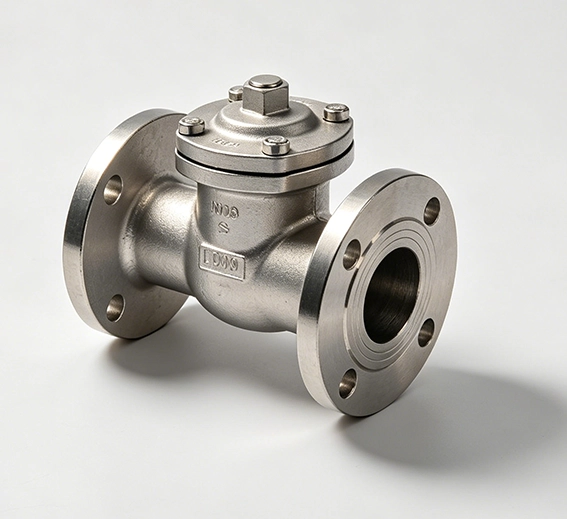
Industrial check valve product display
សំណួរដែលសួរញឹកញាប់
សំណួរទី 1: What is the difference between a swing check valve and a lift check valve?
ក: A swing check valve uses a disc that swings on a hinge, offering low pressure drop and simple design. It must be installed horizontally. A lift check valve uses a piston that lifts vertically, offering superior sealing but higher pressure drop. It can be installed in vertical or horizontal piping.
សំណួរទី 2: How do I prevent water hammer in my pump system?
ក: Choose non-slam or damped check valves that close before reverse flow can occur, ensure proper valve sizing, avoid rapid pump starts and stops, and consider adding air chambers or surge tanks to absorb pressure surges.
សំណួរទី 3: What is the minimum pressure drop for a check valve?
ក: For swing check valves, the minimum pressure drop is approximately 0.5 psi. For lift check valves, it is approximately 2.0–3.0 psi. The valve must be sized to meet these minimum pressure drop criteria to ensure full opening.
សំណួរទី 4: Why is my check valve chattering?
ក: Chattering occurs when the valve is not fully open, typically due to insufficient flow or pressure drop. It can also be caused by worn internal components. Check your flow conditions and valve sizing.
សំណួរទី 5: Can I install a swing check valve vertically?
ក: ទេ. Swing check valves must be installed horizontally or in slightly sloping lines. Gravity is required to return the disc to its seat, which does not work in vertical-up flow.
Why Choose Our Check Valves?
At Luoyang Datang Energy Tech Co., អិលធីឌី. , we supply high-quality check valves for pump protection and water pipeline systems. Our products feature:
✅Wide range of types – Swing check valves, លើកវ៉ាល់ត្រួតពិនិត្យ, dual-plate check valves, and more
✅Multiple materials – Cast iron, ductile iron, ដែកថែបកាបូន, ដែកអ៊ីណុក, bronze, and alloy
✅Various connection options – Flanged, threaded, wafer, and grooved ends
✅Non-slam designs – Spring-assisted closure for water hammer prevention
✅Sizes from 1/2″ to 48″ – Suitable for all pipeline applications
✅Pressure ratings up to Class 2500 – For high-pressure systems
✅CE and ISO 9001 certified – Quality assured
✅Competitive pricing – Factory-direct supply with OEM/ODM support
Contact us today for expert check valve selection advice, product specifications, and competitive quotes.
Check valve factory inventory
ប្រកាសដែលទាក់ទង

ប្រព័ន្ធធារាសាស្រ្ត Drip vs. Sprinkler ប្រព័ន្ធធារាសាស្រ្ត: ប្រព័ន្ធបំពង់មួយណាដំណើរការល្អបំផុត?
បំពង់ Pex និងប្រព័ន្ធកំដៅជាន់ ការជួបគ្នាដ៏ល្អឥតខ្ចោះ។”1+1> ២″
បំពង់ផ្គត់ផ្គង់ទឹក Polyethylene ដង់ស៊ីតេខ្ពស់សម្រាប់ប្រព័ន្ធធារាសាស្ត្រ Drip
តើអ្វីទៅជាតម្រូវការសំខាន់ៗសម្រាប់ការដំឡើងប្រព័ន្ធបំពង់ HDPE?