LUOYANG CAME ENERGY TECH CO., LTD


Qhov twg Brass Pipe Fitting Koj xav tau? Flared, Compression, Nipple los yog Coupling
Brass yeeb nkab fittings come in many connection styles, and the right choice depends less on the fitting’s appearance than on how the pipe or tube needs to be connected. If you are sourcing brass plumbing fittings for a project, you are probably asking yourself: should I use flared fittings, compression fittings, ib brass nipple, or a kev sib txuas? Each solves a different connection problem. This guide breaks down the selection process from a buyer’s perspective—so you can match the fitting to the job, not the other way around.
At a Glance: Which Connection Do You Need?
Before looking at individual products, it helps to understand what each fitting is designed to do.
| Hom haum | Main Connection Method | Typical Function | Common Applications |
| Brass Flare Fitting | Flared tube connection | Connects flared tubing | Fluid and tubing systems |
| Brass Compression Fitting | Compression ferrule | Connects tubing without tube threading | Plumbing and tubing |
| Brass Nipple | Male thread | Connects female-threaded components | Plumbing and piping |
| Brass Coupling | Threaded connection | Joins two pipe sections | Pipe systems |
| Brass Adapter | Threaded or mixed connection | Connects different connection types | Equipment and piping |
| Push-to-Connect Fitting | Push-fit connection | Quick tube connection | Plumbing and repair |

Brass Pipe Fittings
What Are Flared Pipe Fittings?
Flared pipe fittings use a mechanically formed flare at the end of a tube to create the sealing surface. Instead of relying on pipe threads at the tube end, the tubing itself is shaped to mate with the fitting.
A typical brass flare fitting consists of a fitting body and a nut. The end of the tube is flared, positioned against the fitting’s conical sealing surface, and secured by tightening the nut.
This creates a mechanical connection without requiring threads to be cut directly into the tubing.
How Does a Brass Flare Fitting Work?
The basic installation process is relatively straightforward:
- Cut the tube cleanly.
- Place the appropriate nut onto the tube.
- Form the flare at the tube end using the correct tool.
- Position the flared tube against the fitting.
- Tighten the nut to secure the connection.
The quality of the flare is important. An improperly formed flare may result in leakage or damage to the fitting.
For this reason, the tube material, flare angle, fitting specification, and installation procedure should always be checked before assembly.
When Should You Use Flared Pipe Fittings?
Flared connections can be useful when a mechanical tube connection is required and the system is designed for flare fittings.
They may be considered for:
- Tubing systems
- Fluid lines
- Refrigeration-related applications where specified
- Hydraulic-related tubing applications where compatible
- Systems that require a serviceable mechanical connection
The key point is compatibility. A flare fitting should not be selected simply because it is made of brass. The tube and fitting must be designed to work together.
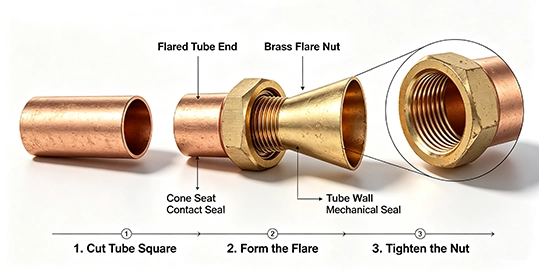
a Brass Flare Fitting Work
What Are Brass Compression Pipe Fittings?
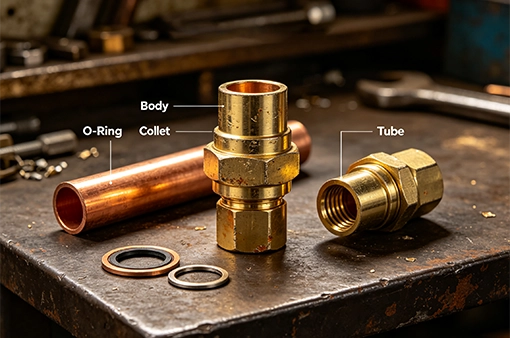
Brass compression fittings use a nut, ib ferrule (or sleeve), and a fitting body to create a seal around a tube. When you tighten the nut, it compresses the ferrule onto the tube, forming a tight mechanical seal. These are among the most common brass plumbing fittings for connecting copper, tooj dag, or plastic tubing.
How Does a Brass Compression Fitting Work?
| Cheebtsam | Muaj nuj nqi |
|---|---|
| Lub cev | Connects to the piping system |
| Ferrule | Creates the compression seal |
| Nut | Compresses the ferrule |
| Tube | Carries the medium |
The beauty of compression fittings is their simplicity. You don’t need to flare the tube or thread the pipe. Just cut the tube cleanly, slide on the nut and ferrule, insert the tube into the body, and tighten. The ferrule deforms slightly to grip the tube and seal against the body.
Where Are Brass Compression Fittings Commonly Used?
Brass compression fittings are widely considered when a practical tube connection is needed without directly threading the tube.
Tej kev siv may include:
- Plumbing systems
- Water lines
- Copper or compatible tubing
- HVAC-related tubing
- Maintenance and repair work
- Equipment connections
For each application, the fitting’s pressure rating, temperature range, tube material, and size should be checked.
A compression fitting is not automatically suitable for every pipe or tube. Proper matching is essential.

Brass Compression Fittings Used in Equipment connections
Brass Nipple Plumbing: What Is a Brass Nipple Used For?
A brass nipple is a short piece of pipe with male threads on both ends. In plumbing and industrial piping, it is used to connect two female-threaded components—like a valve and a fitting, or two sections of pipe. The term “brass nipple plumbing” often refers to this simple but essential connector.
What Is a Brass Nipple?
Common forms include hex nipple (with a hexagonal section for wrenching), close nipple (fully threaded, very short), reducing nipple (different thread sizes on each end), thiab male × male nipple. Each serves a specific purpose in extending, adapting, or connecting threaded piping.
When Should You Choose a Brass Nipple?
| Connection Requirement | Suitable Fitting |
|---|---|
| Connect two female-threaded ports | Brass nipple |
| Extend a threaded connection | Brass nipple |
| Connect a fitting to a valve | Brass nipple / adapter |
| Change connection size | Reducing nipple |
Brass nipples are also commonly used when connecting threaded brass fittings rau li qub or other flow-control components. This makes them a natural bridge between your piping and valve assemblies.
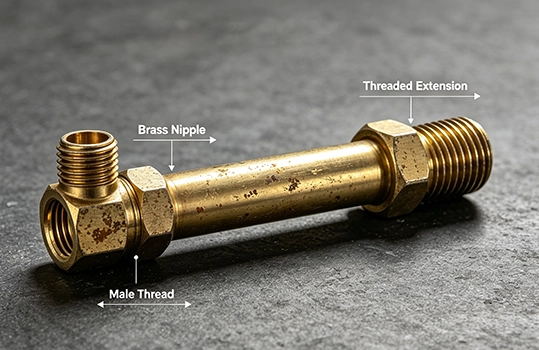
Brass Nipple Extend a threaded connection
What Is a Brass Coupling?
A brass coupling is a short sleeve with female threads on both ends (or sometimes one end female and one end male). Its primary job is to join two pipes or tubes in a straight line. In a tooj dag fittings qhov system, couplings are the go-to solution for extending a run or repairing a damaged section.
What Does a Brass Coupling Do?
Think of it as a connector that holds two threaded pipe ends together. It doesn’t change direction, reduce size, or adapt threads—it simply joins. That simplicity is why brass pipe couplings are so common in plumbing and industrial piping.
Brass Coupling vs Brass Nipple
| Feature | Brass Nipple | Brass Coupling |
|---|---|---|
| Typical thread | Txiv neej | Poj niam |
| Main function | Connect female-threaded ports | Join male-threaded pipes/fittings |
| Cov duab | Short threaded pipe | Short sleeve |
| Typical application | Extension/adaptation | Straight pipe connection |
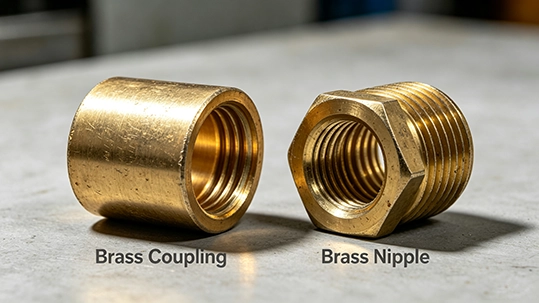
Brass Coupling vs Brass Nipple
Flared vs Compression vs Threaded Brass Fittings
This is the comparison that matters most when you’re selecting brass pipe fittings. Each connection method has its place, and the wrong choice can lead to leaks, callbacks, los yog project delays.
| Feature | Flared | Compression | Xov |
|---|---|---|---|
| Main connection | Flared tube | Ferrule compression | Xov |
| Tube preparation | Flare required | Usually tube cut/prepared | Threaded component required |
| Kev teeb tsa | Nruab nrab | Relatively simple | Simple when threads match |
| Disassembly | Possible | Possible | Yooj yim |
| Common use | Tubing systems | Plumbing/tubing | Piping/fittings |
| Key consideration | Correct flare | Proper ferrule compression | Thread compatibility |
Before you choose, always check connection standard, tube material, siab, kub, thiab application requirements. A fitting that works perfectly for low-pressure water may not be suitable for high-pressure gas or refrigeration lines.
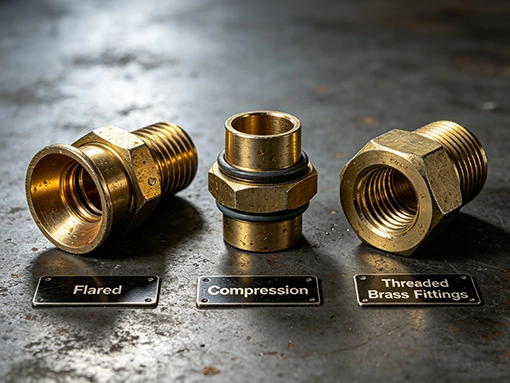
Flared vs Compression vs Threaded Brass Fittings
Brass Fittings vs SharkBite: What Is the Difference?
SharkBite is a well-known brand of push-to-connect fittings. They are not a replacement for all tooj dag fittings—they are a different connection method. Understanding the difference helps you specify the right product for each job.
Nco tseg: SharkBite is a registered trademark of its respective owner. Peb muabcompatible-style push-to-connect solutions, not branded SharkBite products.
| Feature | Traditional Brass Fittings | Push-to-Connect / SharkBite |
|---|---|---|
| Txoj kev sib txuas | Xov / compression / flare | Push-to-connect |
| Kev teeb tsa | Depends on fitting type | Designed for quick installation |
| Tools | Depends on connection | Often fewer installation tools |
| Disassembly | Depends on fitting | Designed for removal |
| Thread matching | Required for threaded types | Not the primary connection method |
| Application requirements | Depends on fitting | Must follow product specifications |
When Might a Traditional Brass Fitting Be Preferred?
If you’re working with an existing threaded system, need a specific thread standard, are replacing a fitting, or have particular pressure/temperature requirements, a traditional brass fitting is often the right call. Industrial and plumbing specifications sometimes mandate threaded los yog compression connections.
When Might Push-to-Connect Be Considered?
Push-to-connect fittings shine in fast installation, repair work, thiab hard-to-reach spaces. They are also useful when the system is specifically designed for push-fit connections. Just remember: they must be used according to the manufacturer’s specifications for siab, kub, thiab tube type.
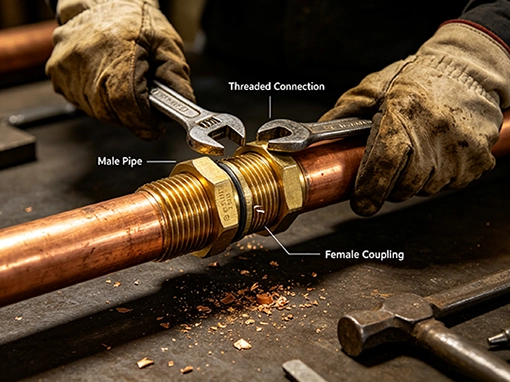
Connecting threaded pipes
Brass Plumbing Fittings: Which Connection Is Suitable for Common Applications?
Here’s a practical application table to help you match the fitting to the situation.
| Plumbing Situation | Fitting Type to Consider |
|---|---|
| Connecting threaded pipes | Brass nipple / kev sib txuas |
| Joining tubing | Compression fitting |
| Connecting flared tubing | Flare fitting |
| Extending a threaded line | Brass nipple |
| Joining two threaded pipe sections | Brass coupling |
| Quick tube connection | Push-to-connect fitting |
How to Choose the Right Brass Pipe Fitting
Use these six factors to narrow down your options. They are the same questions an experienced buyer asks before placing an order.
1. Pipe or Tube Type
Tooj, tooj dag, yas, stainless hlau, or other compatible tubing. The material affects the connection method thiab fitting compatibility.
2. Hom kev sib txuas
Flared, compression, threaded, los yog push-to-connect. This is your starting point.
3. Xov Standard
NPT, BSP, los yog metric. If you need a deeper explanation, see our guide NPT vs BSP Xov: Cov xov twg koj yuav tsum xaiv rau Brass Fittings?
4. Loj
Nominal size, actual dimensions, thiab thread size must all match. For a full breakdown, read Brass Pipe Fittings Sizes piav qhia: Xov, Dimensions thiab Selection Guide.
5. Pressure and Temperature
Confirmworking pressure, maximum allowable pressure, operating temperature, and themedium being carried.
6. Material and Application
Dej, huab cua, gas, roj, HVAC fluids, los yog industrial fluids. Each has its own requirements.
Push-to-connect fitting
What Should Buyers Check Before Ordering Brass Pipe Fittings?
Before you send an inquiry or place a PO, make sure you have these details ready. It speeds up quoting and reduces the risk of receiving the wrong part.
- Fitting type
- Loj
- Xov txheem
- Male/female configuration
- Txoj kev sib txuas
- Material grade
- Kev ntsuas siab
- Qhov kub thiab txias
- Surface finish
- Applicable standard
- Quantity
- Packaging
- Custom requirements
Why Brass Is Commonly Used for Pipe and Plumbing Fittings
From a buyer’s perspective, tooj dag offers a practical combination of corrosion kuj, machinability, mechanical zog, thiab threading performance. It is compatible with many plumbing systems and can be machined into precise threads and shapes. That said, the actual suitability still depends on the medium, operating conditions, thiab applicable standards. Always confirm the brass grade meets your project’s requirements.
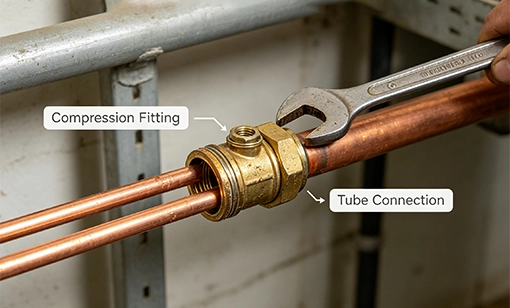
Compression fitting in Joining tubing
Choose the Right Brass Pipe Fitting for Your Project
The right brass fitting starts with the connection rather than the product name. If you need to connect flared tubing, look at brass flare fittings. For compatible tubing that requires a compression connection, brass compression pipe fittings may be suitable. When working with threaded plumbing components, brass nipples and couplings provide different male and female connection configurations. For projects considering push-to-connect technology, products such as SharkBite can be evaluated based on tube compatibility, installation requirements, and system specifications.
Before placing an order, confirm the fitting type, qhov loj, thread standard, connection method, khoom, kev ntsuas siab, temperature range, thiab daim ntawv thov. If you already have a fitting drawing, specification sheet, sample, or purchase list, providing these details can make product confirmation much faster.
Request a Quote
Tell Luoyang Datang Energy Tech Co., Ltd., Ltd your required fitting type, qhov loj, xov, khoom, quantity, thiab daim ntawv thov, and our team can help confirm the appropriate brass pipe fitting configuration for your project.
RELATED POSTS
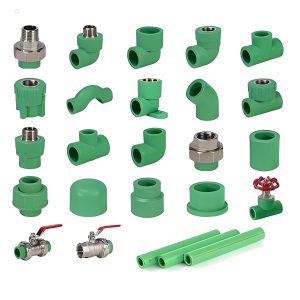
Dab tsi Fittings siv hauv PPR Yeeb Nkab? Yuav Ua Li Cas PPR Pipes Koom Nrog?

Kuv xav tau cov kav dej loj npaum li cas
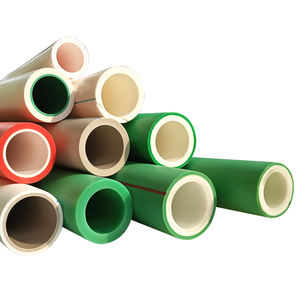
Qhov txawv thiab cov yam ntxwv sib xws:PVC yeeb nkab vs PPR kav

Qhov tob npaum li cas yuav tsum muab cov kav dej
Dab tsi yog Cov Dej Dej Dub