LUOYANG CAME ENERGY TECH CO., LTD


Brass Hose Connector Hom: Yuav Ua Li Cas Xaiv Qhov Zoo?
Hauv dej, huab cua, roj, thiab industrial fluid systems, tus txo hwj chim hose connector yog unsung hero uas ua kom txhua yam ntws. Txawm hais tias koj tab tom khiav ib txoj kab dej hauv vaj, tswj HVAC system, or managing high-pressure industrial equipment, tustooj dag hose connector serves as the critical link between flexible hoses and pipes, khoom siv, or other hose sections.
Choose the wrong connector, and you’re looking at leakage, poor sealing, and a dramatically reduced service life. Choose the right one, and you’ve got a connection that performs reliably for years. The problem? There are dozens of types on the market — threaded connectors, barb connectors, quick connectors, couplings — and picking the right one requires more than a quick glance at a catalog.
This guide breaks down the most common brass hose fitting types, explains how to match them to your application, and gives you the practical knowledge to make a confident purchasing decision.
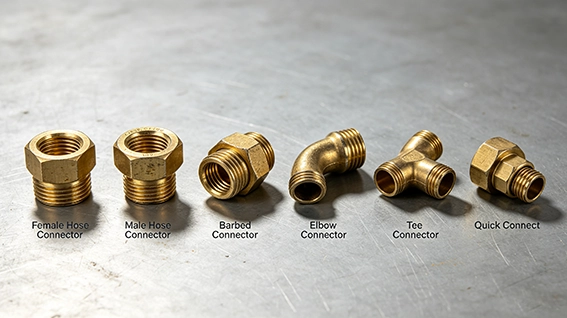
Brass Hose Fittings
What Is a Brass Hose Connector?
A tooj dag hose connector is a fitting used to connect flexible hoses with pipes, khoom siv, or other hose sections. It is typically machined from brass alloys such as C36000, known for its excellent machinability and corrosion resistance. Compared to plastic alternatives, brass connectors offer significantly longer service life — plastic tends to become brittle and snap over time, while brass maintains its structural integrity for years.
Brass Hose Connector Basic Information
| Item | Kev piav qhia |
|---|---|
| Khoom siv | tooj dag (commonly C36000 / C3604) |
| Main Function | Connect and secure hoses to equipment, cev, or other hoses |
| Common Connection Types | Thread, barb, quick coupling |
| Typical Fluid Media | Dej, huab cua, roj, gas, coolants, industrial fluids |
| Qhov Zoo Tshaj Plaws | Corrosion kuj, durability, easy installation, reusability |
| Qhov kub thiab txias | Typically -20°C to +100°C (depending on seal material) |

A brass hose connector is used to connect flexible hoses with pipes.
Common Types of Brass Hose Connectors
This is where the rubber meets the road — or rather, where the hose meets the fitting. Understanding the brass hose connector types available is the foundation for making the right choice.
Brass Barb Hose Connector
The barb connector is the workhorse of hose fittings. The barbed end is inserted into the hose bore, with the ridges gripping the interior wall without damaging it. Barbed fittings work best with soft tubing — flexible PVC, polyurethane, silicone, and thermoplastic rubber — because the tubing must give slightly to fit around the barbed end. A hose clamp or crimped ferrule is then used to secure the connection.
| Feature | Details |
|---|---|
| Txoj kev sib txuas | Barbed end inserted into hose, secured with clamp |
| Kev teeb tsa | Phau ntawv, with hose clamp or ferrule |
| Zoo tshaj rau | Flexible hoses (PVC, PU, silicone, roj hmab) |
| Key Advantage | Yooj yim, ntseeg tau, wide range of sizes |
| Tej kev siv | Garden hose, dej systems, low-pressure air lines |
Rau ib lub tswv yim: The outer diameter of the barbed area must be larger than the inner diameter of the tubing, and there should be noticeable resistance during insertion. Piv txwv li, 1/4″ I.D. tubing should use a barbed fitting with a barb O.D. of at least 0.270″.
Brass Barb Hose Connector
Threaded Brass Hose Connector
Threaded connectors usetxiv neej los yogpoj niam threads to create a sealed connection. They’re the go-to choice when you need a high-sealing, pressure-resistant joint. The two dominant thread standards are NPT (National Pipe Taper) thiab BSP (British Standard Pipe).
| Xov Hom | Txuj | Xov Angle | Sealing Method | Lub khw tseem ceeb |
|---|---|---|---|---|
| NPT | US standard | 60° | Tapered threads compress to form seal; use Teflon tape | North America |
| BSPT | UK standard | 55° | Tapered; requires thread sealant | UK, Teb chaws Europe |
| BSPP | UK standard | 55° | Parallel (ncaj); requires O-ring or sealing washer | Teb chaws Europe, thoob ntiaj teb |
NPT threads have a 60° thread angle and are flattened at the peaks and valleys. BSPP threads have a 55° angle with rounded peaks and valleys. These differences meanNPT and BSP are not interchangeable — mixing a male BSPP fitting into a female NPT port simply won’t create a reliable seal.
Related reading: NPT vs BSP Xov: Qhov txawv yog dab tsi?
Threaded Brass Hose Connector
Brass Quick Hose Connector
Quick connectors (also called quick-disconnect or quick-release couplers) allow hoses to be connected and disconnectedwithout tools using a push-button or lever mechanism. They’re especially popular in compressed air systems, pneumatic cov cuab yeej, and industrial equipment where frequent changeovers are needed. A key caveat: different coupling series (BSP, Euro, Milton) arenot interchangeable — both halves must come from the same series.
For a representative product example, Parker’s brass quick-acting barbed fittings are rated for a maximum operating pressure of 16 bar and can handle temperatures from -20°C to +100°C in water applications.
Brass Hose Coupling Connector
A coupling connectstwo hose sections together, while a connector typically connects a hose to equipment. The distinction matters: a fitting is a single connection between a hose and a threaded port, while a coupling is a set of units used together, often with male and female halves.
| Connector Type | Main Use |
|---|---|
| Hose Connector (Fitting) | Connect hose to equipment or pipe |
| Kev sib txuas | Connect two hose sections together |
| Adapter | Change connection type or size (e.g., NPT to BSP) |
Related reading: Brass Machino Coupling Guide

Brass Quick Hose Connector vs Brass Hose Coupling Connector
Brass Hose Connector vs Coupling vs Adapter: Qhov txawv yog dab tsi?
This is one of the most common sources of confusion in the industry — and getting it wrong means ordering the wrong part.
| Khoom | Muaj nuj nqi | Daim ntawv thov |
|---|---|---|
| Hose Connector | Connect hose to equipment/pipe | Garden hose to tap, air hose to compressor |
| Kev sib txuas | Join two hoses together | Fire hose sections, extending hose length |
| Adapter | Change connection type or thread standard | NPT to BSP conversion, size reduction |
Xav txog qhov no: ibtxuas is a one-ended link to a fixed point. Akev sib txuas joins two moving parts. Ibadapter translates between two different standards.
Related reading: Brass Hose Coupling Guide
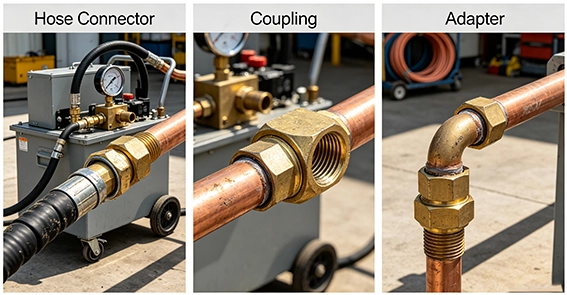
Brass Hose Connector vs Coupling vs Adapter
How to Choose the Right Brass Hose Connector?
This is where purchasing decisions are won or lost. Below are the five factors that matter most.
1. Check Hose Size
The single most common mistake in connector selection is a size mismatch. Always match the connector size to your hose’spuab txoj kab uas hla (I.D.) .
| Hose I.D. | Recommended Connector Size | Common Application |
|---|---|---|
| 1/2 nti (12.7 mm) | 1/2″ txuas | Garden hose, light industrial |
| 5/8 nti (15.9 mm) | 5/8″ txuas | Standard garden hose |
| 3/4 nti (19.1 mm) | 3/4″ txuas | Heavy-duty water transfer |
| 1 nti (25.4 mm) | 1″ txuas | Industrial fluid systems |
2. Consider Connection Type
| Connection Need | Best Choice | Vim li cas |
|---|---|---|
| Permanent, low-pressure connection | Barb + clamp | Yooj yim, raug nqi, ntseeg tau |
| Nquag txuas / disconnect | Quick connector | Tool-free operation, fast changeover |
| High sealing / siab | Xov (NPT lub BSP) | Superior sealing capability |
| Joining two hoses | Kev sib txuas | Designed for hose-to-hose connection |
3. Consider Working Pressure
Brass hose fittings have varying pressure ratings depending on size, hom, thiab kev tsim kho. A typical brass barb fitting from Dixon is rated for amaximum working pressure of 250 PSI at 72°F, with an operating temperature range of -40°F to 160°F. Parker’s brass quick-acting barbed fittings are rated at16 bar (approximately 232 PSI) .
Key muab: Always check the manufacturer’s pressure rating for your specific fitting, qhov loj, and operating temperature. Pressure ratings decrease as temperature increases.
4. Check Material Compatibility
Brass is compatible with a wide range of media including water, huab cua, roj, roj, inert gases, and many industrial fluids. Parker’s brass compression fittings are suitable for water, machining oil, roj, hydraulic oil, compressed cua, chemical fluids, and disinfectants.
Txawm li cas los, brass isnot suitable for all applications. It should not be used with acetylene, ammonia, or prolonged seawater contact — stainless steel is the right choice for those scenarios.
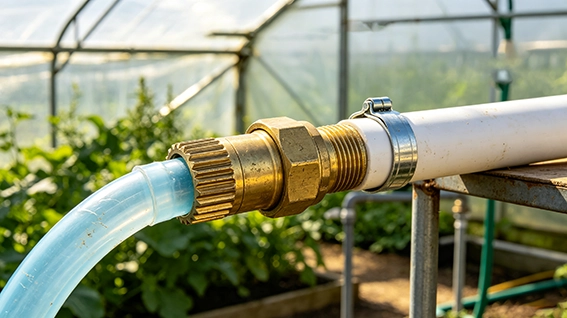
5. Consider Application Environment
| Daim ntawv thov | Recommended Connector Type | Sau ntawv |
|---|---|---|
| Garden / residential water | Barb or quick connector | Yooj yim, raug nqi |
| HVAC systems | Threaded connector | High sealing requirement |
| Fire hose systems | Machino coupling | JIS standard, high-strength brass |
| Compressed air / pneumatics | Quick connector | Frequent changeover |
| Industrial fluid transfer | Heavy-duty threaded or cam-lock | Siab siab, tshuaj tiv thaiv |

Brass Hose Connector in Heavy-duty water transfer
Brass Hose Connector Applications
| Kev lag luam | Daim ntawv thov | Typical Connector |
|---|---|---|
| Cov kav dej | Water connection, pipe transition | Xov, adapter |
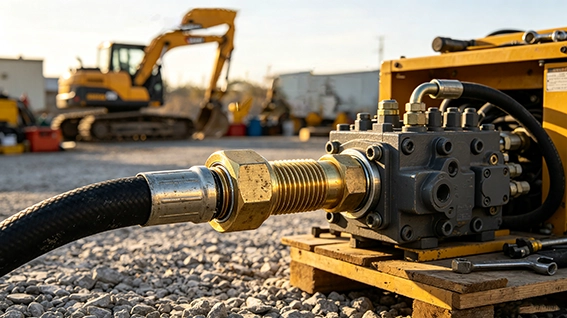
| HVAC | Cov khoom sib txuas, coolant lines | Xov (BSP/NPT) |
| Ua liaj ua teb | Irrigation hose systems | Barb, quick connector |
| Tiv thaiv hluav taws | Fire hose systems | Machino coupling |
| Kev lag luam | Cua, fluid, thiab hloov roj | Quick connector, cam-lock |
| Automotive | Heater hose, roj kab | Barb, xov |
Brass hose connectors are commonly found in water and power plants, HVAC systems, thiab cua sov tshuab, where they provide watertight seals under both domestic and industrial conditions.
Related reading: Brass Pipe Fittings piav qhia
Why Choose Brass Hose Connectors?
Rather than listing generic advantages, here’s what actually matters in practice:
| Tau txais txiaj ntsig | Vim Li Cas Nws Tseem Ceeb |
|---|---|
| Superior durability | Outlasts plastic alternatives by years; won’t become brittle or snap |
| Corrosion kuj | Performs well in damp, warm, and outdoor environments |
| Excellent machinability | Enables precise thread cutting and tight tolerances |
| Stable sealing performance | Maintains reliable seals under thermal cycling |
| Reusability | Can be disassembled, inspected, and reused without degradation |
| Wide compatibility | Works with water, huab cua, roj, gas, and many industrial fluids |
The price difference between brass and plastic connectors is real — brass costs more upfront. But as one user review put it: tooj dag “should work out much cheaper due to plastic becoming brittle and snapping”.
Related reading: Why Brass Hose Fittings Are Still a Preferred Choice
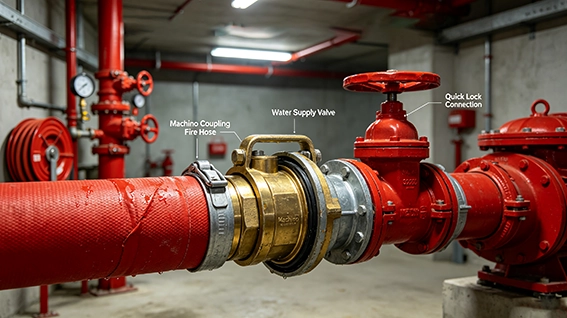
Machino coupling in Fire Protection
Common Mistakes When Selecting Brass Hose Connectors
FAQ
Q1: What is a brass hose connector used for?
A brass hose connector is used to join a flexible hose to a pipe, tap, piece of equipment, or another hose section. Nws ua kom muaj kev nyab xeeb, leak-free connection for transferring water, huab cua, roj, or other fluids.
Q2: Are brass hose connectors suitable for high pressure?
It depends on the type and size. A standard brass barb fitting is typically rated for up to 250 PSI at 72°F. Threaded and heavy-duty industrial connectors can handle higher pressures. Always verify the specific pressure rating for your fitting and operating temperature.
Q3: What is the difference between a hose connector and coupling?
A hose connector (haum) connects a hose to a fixed point (khoom siv, cev, tap). A coupling connects two hose sections together. Couplings are typically sold as matched sets (male and female halves).
Q4: How do I choose the right brass hose connector size?
Match the connector to your hose’s inner diameter. Qhov ntau thiab tsawg yog 1/2″, 5/8″, thiab 3/4″. If connecting to a threaded port, also confirm the thread size and standard (NPT lub BSP).
Q5: Are brass hose connectors better than plastic connectors?
For most applications requiring durability and long service life, yog. Brass resists corrosion and won’t become brittle over time. Plastic connectors are cheaper and lighter but typically don’t last as long, especially under UV exposure or temperature cycling.
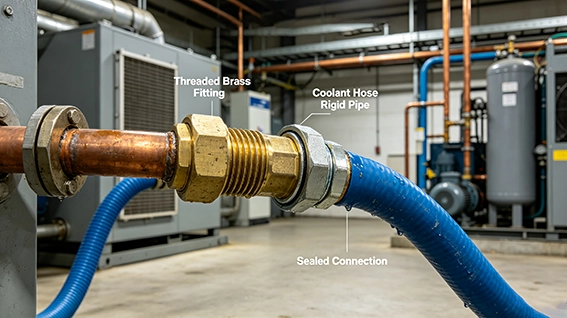
Threaded in coolant lines
Need Reliable Brass Hose Connectors for Your Project?
Luoyang Datang Energy Tech Co., Ltd., Ltd supply brass hose connectors for a full range of applications — from garden water systems to industrial fluid handling.
✓OEM Available — Custom branding and packaging
✓Multiple Thread Options — NPT, BSP, BSPP, thiab ntau dua
✓Custom Sizes — 1/4 ib″ through 2″ thiab tshaj
✓Material Certifications — C36000, lead-free brass options
✓Competitive Pricing — Factory-direct, no middlemen
RELATED POSTS

Peb Common Brass Hose Connection Parts: Txuas, Adapter thiab Coupling
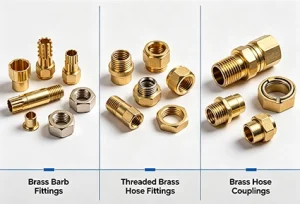
Qhov no Brass Hose haum haum rau koj lub hose? Qhov loj thiab xov sib txuam piav qhia
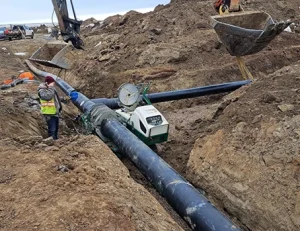
Yuav ua li cas rau nruab HDPE kav dej hauv av: Cov kauj ruam tseem ceeb, Cov txheej txheem, thiab Cov Kev Cai Zoo Tshaj Plaws
Cov yeeb nkab twg yog siv rau kev siv dej
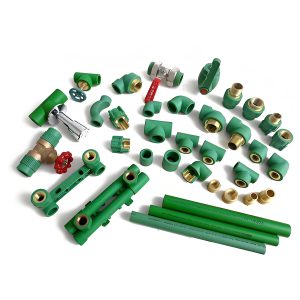
Vim li cas PPR cov kav dej thiab fittings dhau los ua qhov kev xaiv zoo tshaj plaws rau cov dej hauv tsev hauv Middle East, Teb chaws Africa thiab Southeast Asia kub cheeb tsam?