


LUOYANG CAME ENERGY TECH CO., LTD


Розміри та розміри труб ПНД: Діаметр, SDR, Номінальний тиск і поради щодо вибору
Поліетилен високої щільності (HDPE) труби are widely used in water supply, зрошення, видобуток корисних копалин, промислові трубопроводи, і муніципальну інфраструктуру через їх чудову довговічність, стійкість до корозії, і довгий термін служби.
Проте, selecting the correct HDPE pipe size is not only about choosing a diameter. Engineers and project managers need to consider multiple factors, including pipe dimensions, товщина стінки, SDR rating, вимоги до тиску, and installation conditions.
HDPE pipe sizes are available in a wide range of diameters and specifications to meet different application requirements. Choosing the right specification ensures sufficient flow capacity, reliable pressure performance, and long-term operational stability.
This guide explains the key factors affecting HDPE pipe dimensions, в тому числі:
- Common HDPE pipe diameter sizes
- Outside diameter and inside diameter
- Wall thickness requirements
- SDR ratings and pressure classes
- How to select the right HDPE pipe size for different applications
Whether you are designing a water supply system, agricultural irrigation project, or industrial pipeline, understanding HDPE pipe specifications helps avoid incorrect selection and improves overall system efficiency.
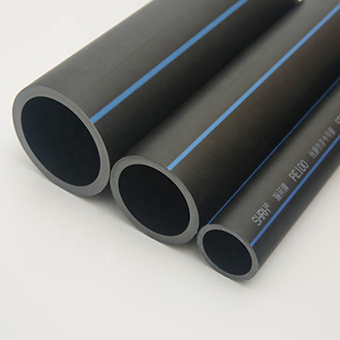
HDPE Pipe Sizes and Dimensions
Understanding HDPE Pipe Sizes and Dimensions
Before diving into specific sizes and charts, it’s essential to understand how HDPE pipes are dimensioned. На відміну від сталевих труб, which use the Nominal Pipe Size (NPS) system—a label that no longer matches any actual dimension—HDPE pipes areoutside-diameter controlled.
This means the outside diameter (OF) is the fixed reference. А 110 mm HDPE pipe really is 110 mm across the outside, every time, regardless of wall thickness or pressure class. Фурнітура, fusion machines, and tapping tools all register on that OD, which is why getting the OD system right matters more than any other single number.
Key Dimension Parameters
| Параметр | Meaning |
|---|---|
| Nominal Size (DN) | The designated size, typically matching the outside diameter in millimeters |
| Зовнішній діаметр (OF) | The actual external diameter of the pipe—the fixed reference dimension |
| Inside Diameter (ID) | The internal bore; varies with wall thickness |
| Товщина стінки | The thickness of the pipe wall; determines pressure capacity |
| SDR Rating | Standard Dimension Ratio—OD divided by wall thickness |
| Номінальний тиск (ПН) | The nominal pressure the pipe can handle |

HDPE pipes Pressure vs. Flow
Common HDPE Pipe Diameter Sizes Chart
The following HDPE pipe size chart covers the most commonly used HDPE pipe diameter sizes in global markets. These dimensions generally follow ISO 4427 and EN 12201 стандарти, though slight variations may exist between manufacturers.
Common HDPE Pipe Sizes
| Nominal Diameter (DN) | Зовнішній діаметр (OF) | Типові програми |
|---|---|---|
| 20 мм | 20 мм | Small water systems, household connections |
| 25 мм | 25 мм | Garden irrigation, minor distribution |
| 32 мм | 32 мм | Drip irrigation systems, landscape watering |
| 40 мм | 40 мм | Small-scale agricultural pipelines |
| 50 мм | 50 мм | Agricultural pipelines, small water networks |
| 63 мм | 63 мм | Розподіл води, rural supply |
| 75 мм | 75 мм | Medium irrigation, building supply |
| 90 мм | 90 мм | Промислове застосування, factory water lines |
| 110 мм | 110 мм | Міський водопровід, sewerage |
| 125 мм | 125 мм | Medium municipal networks |
| 160 мм | 160 мм | Large pipelines, main distribution |
| 200 мм | 200 мм | Municipal trunk lines, industrial projects |
| 250 мм | 250 мм | Major water transmission |
| 315 мм | 315 мм | Bulk water supply, гірничі роботи |
| 400 мм+ | 400 мм+ | Large-scale industrial and municipal projects |
Small-Diameter Pipes (DN20–DN63):
- Residential plumbing:Household water pipes and courtyard water supply
- Drip and sprinkler irrigation:Precision agriculture is the first choice
- Landscape and gardening:Greenbelt irrigation system
Medium-Diameter Pipes (DN75–DN160) :
- Municipal water distribution:Urban water supply branch network
- Industrial process water:Factory internal circulating water system
- Sewerage and drainage:Gravity flow and pressure flow drainage systems
Large-Diameter Pipes (DN200+) :
- Municipal trunk mains:Long-distance water conveyance and raw water transportation
- Промислові трубопроводи:Chemical and power cooling water systems
- Mining slurry transport:Excellent wear resistance
- Marine outfalls:Corrosion resistant and flexible to adapt to seabed topography
Internal Link:
- For agricultural applications, see our guide on Сільськогосподарські іригаційні труби
- For industrial specifications, visit Industrial HDPE Pipes

HDPE Pipes in Modern Agricultural Irrigation
HDPE Pipe Wall Thickness and SDR Explained
One of the most critical yet misunderstood aspects of HDPE pipe dimensions is the Стандартне співвідношення розмірів (SDR). The SDR defines the relationship between the pipe’s outside diameter and its wall thickness, and it directly determines the pipe’s pressure capability.
What is SDR?
SDR = Outside Diameter (OF) / Товщина стінки
Наприклад, a pipe with an OD of 110 mm and a wall thickness of 10 mm has an SDR of 11.
The Inverse Relationship :
Lower SDR value → Thicker wall → Higher pressure capacity → Smaller inner diameter & Lower flow rate
Higher SDR value → Thinner wall → Lower pressure capacity → Larger inner diameter & Higher flow rate
Relationship Between SDR and Wall Thickness
| SDR Rating | Товщина стінки | Pressure Capability | Typical Use |
|---|---|---|---|
| SDR 9 | Very thick | Дуже високий | High-pressure industrial |
| SDR 11 | Thick | Високий | Водопостачання, розподіл газу |
| SDR 13.6 | Medium-thick | Medium-high | General water systems |
| SDR 17 | Середній | Середній | зрошення, водовідведення |
| SDR 21 | Тонкий | Низький | Low-pressure drainage |
| SDR 26 | Very thin | Дуже низький | Non-pressure applications |
| SDR 33 | Ultra thin | Minimal | Захист кабелю |
SDR11 vs SDR17 — A Practical Comparison:
| Особливість | SDR 11 | SDR 17 |
|---|---|---|
| Товщина стінки | Thicker | Thinner |
| Номінальний тиск | PN16 (higher) | PN10 (lower) |
| Weight per meter | Важче | Запальничка |
| Cost per meter | Вища | Нижній |
| Flow Capacity | Нижній (smaller ID) | Вища (larger ID) |
| Типове застосування | Municipal water, high-pressure | зрошення, водовідведення |
Key Insight:
Many buyers mistakenly believe that a larger pipe diameter means higher pressure capacity. Проте, pressure capability is determined by the SDR value (the ratio of wall thickness to outside diameter), rather than the diameter alone. A DN400 SDR33 pipe, for instance, has a much lower pressure rating than a DN90 SDR11 pipe.
Internal Link:
- For a detailed comparison, read our article on Труба HDPE SDR11 проти SDR17

HDPE Pipe Wall Thickness between SDR11 and SDR17
HDPE Pipe Pressure Rating and PN Classes
HDPE pipe pressure rating is the maximum allowable operating pressure that a pipe can withstand continuously at a specified temperature (usually 20°C). In the HDPE industry, pressure ratings are commonly expressed using PN classes (Pressure Nominal).
Посібник з визначення тиску в трубах HDPE
| Pressure Class | Maximum Working Pressure | Типові програми |
|---|---|---|
| ПН 6 | 6 бар (0.6 МПа) | Low-pressure drainage, gravity sewers |
| ПН 8 | 8 бар (0.8 МПа) | Storm water, low-pressure irrigation |
| ПН 10 | 10 бар (1.0 МПа) | General water supply, agricultural systems |
| ПН 12.5 | 12.5 бар (1.25 МПа) | Промислові трубопроводи, medium-pressure water |
| ПН 16 | 16 бар (1.6 МПа) | Подача води високого тиску, розподіл газу |
| ПН 20 | 20 бар (2.0 МПа) | Very high-pressure industrial systems |
| ПН 25 | 25 бар (2.5 МПа) | Extreme pressure applications |
Relationship Between PN and SDR:
| PN Class | Typical SDR | Common PE Grade |
|---|---|---|
| ПН 6 | SDR 26 | PE80, PE100 |
| ПН 8 | SDR 21 | PE80, PE100 |
| ПН 10 | SDR 17 | PE80, PE100 |
| ПН 12.5 | SDR 13.6 | PE100 |
| ПН 16 | SDR 11 | PE100 |
| ПН 20 | SDR 9 | PE100 |
| ПН 25 | SDR 7.4 | PE100 |
Factors Affecting Pressure Rating:
- Operating Temperature
- Standard pressure ratings are based on 20°C. For every 10°C increase in temperature, the pressure-bearing capacity decreases by approximately 10%.
- At 30°C, a PN16 pipe effectively becomes a PN14.4 pipe.
- In high temperature environments (such as tropical areas or industrial hot water), a higher PN level must be selected or temperature correction must be performed.
- Safety Factor
- A safety factor of 1.25 до 1.5 is typically used in design.
- For critical applications (such as gas delivery), a safety factor of 2.0 or higher may be required.
- Cyclic Loading
- Systems with frequent pressure fluctuations (such as pump stations with severe water hammer) require additional consideration of fatigue factors.
- HDPE materials have good fatigue resistance, but a margin should still be allowed when selecting a material.
- Pipe Material Grade
- The minimum required strength (ПАНІ) of PE100 is 10 МПа, which is better than PE80’s 8 МПа.
- Under the same SDR, the PN grade of PE100 pipe is higher than that of PE80.
Internal Link:
- For comprehensive pressure guidance, see our Посібник з визначення тиску в трубах HDPE
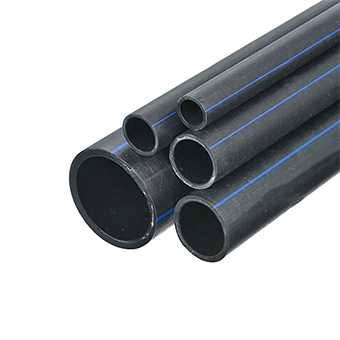
HDPE Pipe Sizes and Dimensions
How to Choose the Right HDPE Pipe Size
This section represents the highest commercial value of the article. Selecting the correct HDPE pipe size is not about picking the cheapest option — it is about matching engineering requirements with material capabilities.
Крок 1: Determine Required Flow Rate
Flow rate (Q) is the starting point for selection. Based on the design flow rate, the minimum required inner diameter can be deduced.
Basic Formula:
Q = A × v
Where: Q = Flow rate (m³/s) = Cross-sectional area (м²)= π × (ID/2)² v = Flow velocity (m/s)
Recommended Flow Velocities:
| застосування | Recommended Velocity |
|---|---|
| Водопостачання | 0.5 – 2.0 m/s |
| зрошення | 0.3 – 1.5 m/s |
| Каналізація | 0.6 – 2.5 m/s |
| Slurry | 1.0 – 3.0 m/s |
| Industrial process | 0.5 – 3.0 m/s |
Practical Tip:
Too low a flow velocity (<0.3 m/s) may lead to the deposition of suspended solids; too high a flow velocity (>3 m/s) will exacerbate pipe wall wear and the risk of water hammer. For long-distance water transmission, it is recommended to use a value in the range of 1.0–1.5 m/s to balance energy consumption and pipeline cleanliness.
Крок 2: Check Operating Pressure
After determining the pipe diameter, it is necessary to check whether the pressure-bearing capacity of the pipe material meets the maximum working pressure of the system.
Pressure Check Formula:
PN_selected ≥ P_max × Safety Factor
Where:
- P_max = Maximum operating pressure including surge / Maximum working pressure (including water hammer)
- Safety Factor = Typically 1.25–1.5 for water
приклад:If a water system has a normal pressure of 8 bar and potential water hammer of 3 бар, the maximum pressure is 11 бар. With a safety factor of 1.25, the required PN is 13.75 → Select PN16 (SDR11).
Internal Link:
- For detailed pressure calculations, refer to our Посібник з визначення тиску в трубах HDPE
3. Consider Installation Conditions
Installation environment significantly impacts pipe selection:
| Condition | Consideration |
|---|---|
| Підземний монтаж | Soil loads, глибина заглиблення, traffic loading |
| Above-ground installation | UV exposure (requires protection), thermal expansion |
| температура | Derate pressure rating for temperatures above 20°C |
| Soil conditions | Rocky soil may require thicker walls or sand bedding |
| Seismic zones | HDPE’s flexibility is an advantage, but wall thickness may need adjustment |
Temperature Considerations:
- High ambient temperature:To reduce pressure resistance, the PN rating needs to be upgraded.
- Low ambient temperature:HDPE becomes brittle, requiring extra care during handling and bending.
- Fluid temperature:When supplying hot water, the derating must be strictly followed according to the temperature correction factor.
Internal Link:
- For installation best practices, see Як прокласти труби ПНД під землею
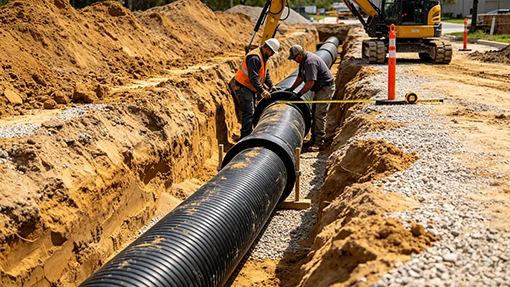
Install HDPE Pipes Underground
Крок 4: Match Pipe Size With Application
Different application scenarios have different requirements for pipe size and performance.
Application-Based HDPE Pipe Selection
| застосування | Key Considerations | Recommended SDR/PN | Notes |
|---|---|---|---|
| Сільськогосподарське зрошення | Flow capacity, cost efficiency | SDR17 (PN10) / SDR11 (PN16) for pressurized systems | Prioritize SDR17 for gravity; SDR11 for pump systems |
| Міський водопровід | Номінальний тиск, longevity, безпеки | SDR11 (PN16) or SDR13.6 (PN12.5) | PE100 material mandatory |
| Industrial use | Хімічна стійкість, тиск, температура | SDR11 (PN16) or SDR9 (PN20) | Verify chemical compatibility |
| Mining slurry | Abrasion resistance, товщина стінки | SDR9 or thicker | HDPE’s abrasion resistance is 4× steel |
| Gas distribution | Безпека, leak-tightness, regulations | SDR11 (PN16) minimum | Must comply with local gas codes |
| Дренаж & sewerage | Вартість, flow capacity, хімічна стійкість | SDR26 to SDR17 | Gravity flow often uses SDR26 |
| Захист кабелю | Гнучкість, вартість | SDR33 or higher | Non-pressure application |
Internal Link:
- For irrigation specifics: Іригаційні труби HDPE
- For industrial standards: Промислові труби HDPE
5. Check Fitting and Component Compatibility
Because HDPE is OD-controlled, арматура, клапани, and fusion equipment must match the same OD system. Always verify:
- Фурнітура are rated for the same PN class
- Fusion equipment is calibrated for the specific OD and wall thickness
- Transition fittings are available if connecting to other pipe materials
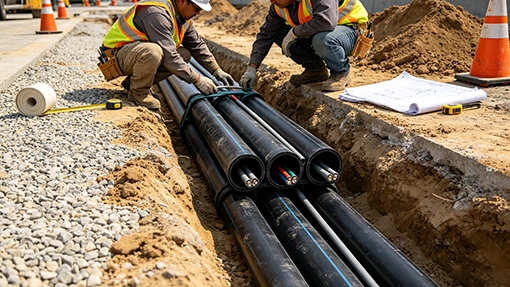
HDPE Pipes in Cable protection
Common HDPE Pipe Size Selection Mistakes
Mistake 1: Ignoring Pressure Rating
The most common error is selecting a pipe based on diameter alone without verifying the pressure rating. А 110 mm pipe could be SDR17 (PN10) or SDR11 (PN16)—the OD is the same, but the pressure capacity and wall thickness are completely different.
Mistake 2: Choosing Diameter Only by Cost
Oversizing a pipe increases material cost but may reduce pumping costs over the system’s lifetime. Undersizing saves money upfront but leads to higher energy costs and potential flow restrictions. Always consider life-cycle cost, not just initial purchase price.
Mistake 3: Ignoring SDR
SDR determines both pressure rating and internal diameter. Two pipes with the same OD but different SDR values have different IDs and different flow capacities. Always specify both the diameter AND the SDR/PN class.
Mistake 4: Not Considering Future Expansion
Pipeline systems often need to accommodate future growth. Installing a larger diameter or higher pressure class pipe now can save significant costs later. Коли є сумніви, plan for at least 10–20 years of expected demand growth.
Mistake 5: Overlooking Temperature Derating
Many engineers specify pipes based on the standard 20°C pressure rating without accounting for higher operating temperatures. In hot climates or systems with elevated temperatures, the effective pressure rating can be significantly lower than the nominal PN class.
Internal Link:
- For a comprehensive checklist, read Помилки при виборі труб ПНД: 7 Фактори, які інженери повинні перевірити перед покупкою
HDPE Pipe Sizes FAQs
1. What are the most common HDPE pipe sizes?
The most commonly used HDPE pipe sizes are 20 мм, 32 мм, 50 мм, 63 мм, 90 мм, 110 мм, 160 мм, 200 мм, 250 мм, 315 мм, і 400 мм. These cover the majority of water supply, зрошення, і промислове застосування.
2. How do I calculate HDPE pipe diameter?
HDPE pipe diameter is specified by its outside diameter (OF). The inside diameter (ID) depends on the wall thickness, which is determined by the SDR:
ID = OD – (2 × Wall Thickness)
Наприклад, a 110 mm OD pipe with SDR11 has a wall thickness of 10.0 мм, so the ID = 110 – (2 × 10.0) = 90 мм.
3. What is the difference between SDR11 and SDR17 HDPE pipe?
SDR11 has a thicker wall than SDR17 for the same outside diameter. For PE100:
- SDR11 = PN16 (16 бар / 1.6 МПа)—higher pressure capacity, smaller internal bore
- SDR17 = PN10 (10 бар / 1.0 МПа)—lower pressure capacity, larger internal bore
Choose SDR11 for high-pressure applications and SDR17 for standard-pressure applications where maximum flow is needed.
4. Does a larger HDPE pipe diameter mean higher pressure?
немає. Pressure rating depends on wall thickness and SDR, not diameter. A small-diameter pipe with a thick wall (low SDR) can have a higher pressure rating than a large-diameter pipe with a thin wall (high SDR). Always check the SDR or PN class, not just the diameter.
5. What does PN mean in HDPE pipes?
PN stands for “Номінальний тиск” and is measured in bars. It indicates the maximum allowable operating pressure at 20°C. Common PN classes include PN6, PN8, PN10, PN12.5, PN16, PN20, і PN25.
6. Скільки служать труби ПНД?
HDPE pipes are designed for a service life of50 до 100 років with minimal maintenance, provided they are properly selected and installed.
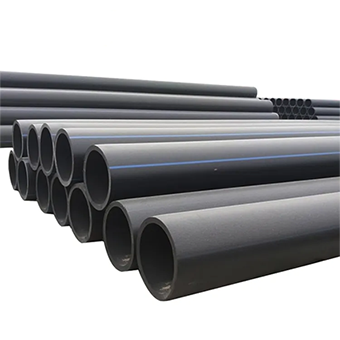
Труби HDPE
Висновок
Вибір правильного HDPE pipe sizes і HDPE pipe dimensions is a multi-dimensional engineering decision that goes far beyond simply picking a diameter. A successful selection requires balancing діаметр (for flow), товщина стінки (for pressure via SDR), номінальний тиск (PN class), і application-specific requirements such as chemical resistance, abrasion resistance, and installation conditions. By following the four-step method — determining flow rate, checking operating pressure, considering installation conditions, and matching the application — you can avoid common pitfalls and ensure your HDPE piping system delivers reliable performance for its 50+ year design life. Whether your project involves municipal water supply, сільськогосподарське зрошення, industrial processing, or mining operations, understanding the relationship between HDPE pipe diameter, SDR, і номінальний тиск is the key to making informed, cost-effective decisions.
контакт Luoyang Datang Energy Tech Co., ТОВ for customized HDPE pipe solutions tailored to your specific project requirements. Our engineering team is ready to assist with size selection, pressure calculations, and material recommendations.
ПОВ’ЯЗАНІ ПУБЛІКАЦІЇ
Один затискач підходить для всіх, глобально застосовні: Чому професійні сантехніки ніколи не йдуть на компроміс із інструментами для труб?
Що краще в Water Valve? Запірний або кульовий кран
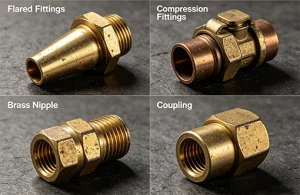
Який латунний фітинг вам потрібен? Розкльошені, Компресія, Ніпель або муфта
Водопровідна труба PPR проти водопровідної труби PE: Що краще?

Латунні фітинги для труб: 7 Поширені сантехнічні проблеми, які вони допоможуть вирішити
