


U-LUOYANG WAFIKA ENERGY TECH CO., LTD


I-HDPE Pipe Sizes and Dimensions Guide: Ububanzi, I-SDR, Izilinganiso Zokucindezela kanye Namathiphu Wokukhetha
I-polyethylene ephezulu kakhulu (I-HDPE) amapayipi are widely used in water supply, ukuchelela, izimayini, amapayipi ezimboni, and municipal infrastructure because of their excellent durability, ukumelana nokugqwala, nempilo ende yesevisi.
Nokho, selecting the correct HDPE pipe size is not only about choosing a diameter. Engineers and project managers need to consider multiple factors, including pipe dimensions, ukujiya kodonga, Isilinganiso se-SDR, izidingo zokucindezela, and installation conditions.
HDPE pipe sizes are available in a wide range of diameters and specifications to meet different application requirements. Choosing the right specification ensures sufficient flow capacity, reliable pressure performance, and long-term operational stability.
This guide explains the key factors affecting HDPE pipe dimensions, kuhlanganise:
- Common HDPE pipe diameter sizes
- Outside diameter and inside diameter
- Wall thickness requirements
- SDR ratings and pressure classes
- How to select the right HDPE pipe size for different applications
Whether you are designing a water supply system, agricultural irrigation project, or industrial pipeline, understanding HDPE pipe specifications helps avoid incorrect selection and improves overall system efficiency.
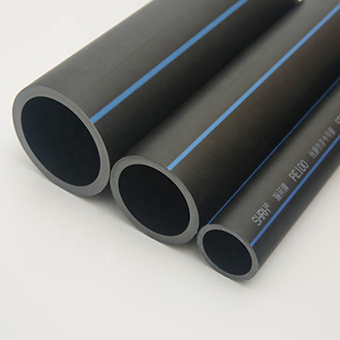
HDPE Pipe Sizes and Dimensions
Understanding HDPE Pipe Sizes and Dimensions
Before diving into specific sizes and charts, it’s essential to understand how HDPE pipes are dimensioned. Unlike steel pipes, which use the Nominal Pipe Size (I-NPS) system—a label that no longer matches any actual dimension—HDPE pipes areoutside-diameter controlled.
This means the outside diameter (OF) is the fixed reference. A 110 mm HDPE pipe really is 110 mm across the outside, every time, regardless of wall thickness or pressure class. Ukufakwa, imishini yokuhlanganisa, and tapping tools all register on that OD, which is why getting the OD system right matters more than any other single number.
Key Dimension Parameters
| Ipharamitha | Meaning |
|---|---|
| Usayizi Wokuzisholo (DN) | The designated size, typically matching the outside diameter in millimeters |
| Ngaphandle Ububanzi (OF) | The actual external diameter of the pipe—the fixed reference dimension |
| Inside Diameter (I-ID) | The internal bore; varies with wall thickness |
| Ukuqina Kwezindonga | The thickness of the pipe wall; determines pressure capacity |
| Isilinganiso se-SDR | Standard Dimension Ratio—OD divided by wall thickness |
| Isilinganiso Sokucindezela (PN) | The nominal pressure the pipe can handle |

HDPE pipes Pressure vs. Flow
Common HDPE Pipe Diameter Sizes Chart
The following HDPE pipe size chart covers the most commonly used HDPE pipe diameter sizes in global markets. These dimensions generally follow ISO 4427 kanye ne-EN 12201 izindinganiso, though slight variations may exist between manufacturers.
Common HDPE Pipe Sizes
| Ububanzi Okuzisholo (DN) | Ngaphandle Ububanzi (OF) | Izicelo Ezijwayelekile |
|---|---|---|
| 20 mm | 20 mm | Small water systems, household connections |
| 25 mm | 25 mm | Garden irrigation, minor distribution |
| 32 mm | 32 mm | Drip irrigation systems, landscape watering |
| 40 mm | 40 mm | Small-scale agricultural pipelines |
| 50 mm | 50 mm | Agricultural pipelines, small water networks |
| 63 mm | 63 mm | Ukusatshalaliswa kwamanzi, rural supply |
| 75 mm | 75 mm | Medium irrigation, building supply |
| 90 mm | 90 mm | Izicelo zezimboni, factory water lines |
| 110 mm | 110 mm | Ukuhlinzekwa kwamanzi kamasipala, indle |
| 125 mm | 125 mm | Medium municipal networks |
| 160 mm | 160 mm | Large pipelines, main distribution |
| 200 mm | 200 mm | Municipal trunk lines, industrial projects |
| 250 mm | 250 mm | Major water transmission |
| 315 mm | 315 mm | Bulk water supply, imisebenzi yezimayini |
| 400 mm+ | 400 mm+ | Large-scale industrial and municipal projects |
Small-Diameter Pipes (DN20–DN63):
- Amapayipi okuhlala:Household water pipes and courtyard water supply
- Drip and sprinkler irrigation:Precision agriculture is the first choice
- Landscape and gardening:Greenbelt irrigation system
Medium-Diameter Pipes (DN75–DN160) :
- Municipal water distribution:Urban water supply branch network
- Industrial process water:Factory internal circulating water system
- Sewerage and drainage:Gravity flow and pressure flow drainage systems
Large-Diameter Pipes (DN200+) :
- Municipal trunk mains:Long-distance water conveyance and raw water transportation
- Amapayipi ezimboni:Chemical and power cooling water systems
- Ukuthuthwa kwe-slurry yezimayini:Excellent wear resistance
- Marine outfalls:Corrosion resistant and flexible to adapt to seabed topography
Internal Link:
- For agricultural applications, see our guide on Amapayipi Okunisela Ezolimo
- For industrial specifications, visit Industrial HDPE Pipes

HDPE Pipes in Modern Agricultural Irrigation
HDPE Pipe Wall Thickness and SDR Explained
One of the most critical yet misunderstood aspects of HDPE pipe dimensions yi I-Standard Dimension Ratio (I-SDR). The SDR defines the relationship between the pipe’s outside diameter and its wall thickness, and it directly determines the pipe’s pressure capability.
Yini i-SDR?
SDR = Outside Diameter (OF) / Ukuqina Kwezindonga
Ngokwesibonelo, a pipe with an OD of 110 mm and a wall thickness of 10 mm has an SDR of 11.
The Inverse Relationship :
Lower SDR value → Thicker wall → Higher pressure capacity → Smaller inner diameter & Lower flow rate
Higher SDR value → Thinner wall → Lower pressure capacity → Larger inner diameter & Higher flow rate
Relationship Between SDR and Wall Thickness
| Isilinganiso se-SDR | Ukuqina Kwezindonga | Amandla Wokucindezela | Ukusetshenziswa Okuvamile |
|---|---|---|---|
| I-SDR 9 | Ugqinsi kakhulu | Very high | Izimboni ezinengcindezi ephezulu |
| I-SDR 11 | Okukhulu | Phezulu | Ukunikezwa kwamanzi, ukusatshalaliswa kwegesi |
| I-SDR 13.6 | Medium-thick | Medium-high | General water systems |
| I-SDR 17 | Maphakathi | Maphakathi | Ukunisela, amanzi |
| I-SDR 21 | Thin | Phansi | Ukukhipha ingcindezi ephansi |
| I-SDR 26 | Very thin | Iphansi kakhulu | Non-pressure applications |
| I-SDR 33 | Ultra thin | Okuncane | Ukuvikelwa kwekhebula |
SDR11 vs SDR17 — A Practical Comparison:
| Isici | I-SDR 11 | I-SDR 17 |
|---|---|---|
| Ukuqina Kwezindonga | Kakhulu | Mncane |
| Isilinganiso Sokucindezela | I-PN16 (ngaphezulu) | I-PN10 (lower) |
| Weight per meter | Kusinda | Okulula |
| Cost per meter | Phezulu | Phansi |
| Amandla Okugeleza | Phansi (smaller ID) | Phezulu (larger ID) |
| Uhlelo lokusebenza olujwayelekile | Amanzi kamasipala, high-pressure | Ukunisela, amanzi |
Ukuqonda Okubalulekile:
Many buyers mistakenly believe that a larger pipe diameter means higher pressure capacity. Nokho, pressure capability is determined by the SDR value (the ratio of wall thickness to outside diameter), rather than the diameter alone. A DN400 SDR33 pipe, Ngokwesibonelo, has a much lower pressure rating than a DN90 SDR11 pipe.
Internal Link:
- For a detailed comparison, read our article on Ipayipi le-SDR11 vs SDR17 HDPE

HDPE Pipe Wall Thickness between SDR11 and SDR17
HDPE Pipe Pressure Rating and PN Classes
HDPE pipe pressure rating is the maximum allowable operating pressure that a pipe can withstand continuously at a specified temperature (usually 20°C). In the HDPE industry, pressure ratings are commonly expressed using PN classes (Pressure Nominal).
I-HDPE Pipe Pressure Rating Guide
| Pressure Class | Maximum Working Pressure | Izicelo Ezijwayelekile |
|---|---|---|
| PN 6 | 6 ibha (0.6 I-MPa) | Ukukhipha ingcindezi ephansi, gravity sewers |
| PN 8 | 8 ibha (0.8 I-MPa) | Storm water, low-pressure irrigation |
| PN 10 | 10 ibha (1.0 I-MPa) | General water supply, agricultural systems |
| PN 12.5 | 12.5 ibha (1.25 I-MPa) | Amapayipi ezimboni, medium-pressure water |
| PN 16 | 16 ibha (1.6 I-MPa) | High-pressure water supply, ukusatshalaliswa kwegesi |
| PN 20 | 20 ibha (2.0 I-MPa) | Very high-pressure industrial systems |
| PN 25 | 25 ibha (2.5 I-MPa) | Extreme pressure applications |
Relationship Between PN and SDR:
| PN Class | I-SDR evamile | Common PE Grade |
|---|---|---|
| PN 6 | I-SDR 26 | I-PE80, I-PE100 |
| PN 8 | I-SDR 21 | I-PE80, I-PE100 |
| PN 10 | I-SDR 17 | I-PE80, I-PE100 |
| PN 12.5 | I-SDR 13.6 | I-PE100 |
| PN 16 | I-SDR 11 | I-PE100 |
| PN 20 | I-SDR 9 | I-PE100 |
| PN 25 | I-SDR 7.4 | I-PE100 |
Factors Affecting Pressure Rating:
- Operating Temperature
- Standard pressure ratings are based on 20°C. For every 10°C increase in temperature, the pressure-bearing capacity decreases by approximately 10%.
- At 30°C, a PN16 pipe effectively becomes a PN14.4 pipe.
- In high temperature environments (such as tropical areas or industrial hot water), a higher PN level must be selected or temperature correction must be performed.
- Safety Factor
- A safety factor of 1.25 ku 1.5 is typically used in design.
- For critical applications (such as gas delivery), a safety factor of 2.0 or higher may be required.
- Cyclic Loading
- Systems with frequent pressure fluctuations (such as pump stations with severe water hammer) require additional consideration of fatigue factors.
- HDPE materials have good fatigue resistance, but a margin should still be allowed when selecting a material.
- Pipe Material Grade
- The minimum required strength (NKOS) of PE100 is 10 I-MPa, which is better than PE80’s 8 I-MPa.
- Under the same SDR, the PN grade of PE100 pipe is higher than that of PE80.
Internal Link:
- For comprehensive pressure guidance, bona wethu I-HDPE Pipe Pressure Rating Guide
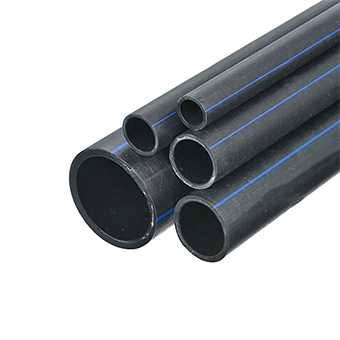
HDPE Pipe Sizes and Dimensions
How to Choose the Right HDPE Pipe Size
This section represents the highest commercial value of the article. Selecting the correct HDPE pipe size is not about picking the cheapest option — it is about matching engineering requirements with material capabilities.
Isinyathelo 1: Determine Required Flow Rate
Flow rate (Q) is the starting point for selection. Based on the design flow rate, the minimum required inner diameter can be deduced.
Basic Formula:
Q = A × v
Where: Q = Flow rate (m³/s) = Cross-sectional area (m²)= π × (ID/2)² v = Flow velocity (m/s)
Recommended Flow Velocities:
| Isicelo | Recommended Velocity |
|---|---|
| Ukunikezwa kwamanzi | 0.5 - 2.0 m/s |
| Ukunisela | 0.3 - 1.5 m/s |
| Sewerage | 0.6 - 2.5 m/s |
| Slurry | 1.0 - 3.0 m/s |
| Industrial process | 0.5 - 3.0 m/s |
Practical Tip:
Too low a flow velocity (<0.3 m/s) may lead to the deposition of suspended solids; too high a flow velocity (>3 m/s) will exacerbate pipe wall wear and the risk of water hammer. For long-distance water transmission, it is recommended to use a value in the range of 1.0–1.5 m/s to balance energy consumption and pipeline cleanliness.
Isinyathelo 2: Check Operating Pressure
After determining the pipe diameter, it is necessary to check whether the pressure-bearing capacity of the pipe material meets the maximum working pressure of the system.
Pressure Check Formula:
PN_selected ≥ P_max × Safety Factor
Where:
- P_max = Maximum operating pressure including surge / Maximum working pressure (including water hammer)
- Safety Factor = Typically 1.25–1.5 for water
Isibonelo:If a water system has a normal pressure of 8 bar and potential water hammer of 3 ibha, the maximum pressure is 11 ibha. With a safety factor of 1.25, the required PN is 13.75 → Select PN16 (I-SDR11).
Internal Link:
- For detailed pressure calculations, refer to our I-HDPE Pipe Pressure Rating Guide
3. Consider Installation Conditions
Installation environment significantly impacts pipe selection:
| Condition | Ukucabangela |
|---|---|
| Ukufakwa ngaphansi komhlaba | Soil loads, ukujula kokungcwaba, traffic loading |
| Above-ground installation | Ukuchayeka kwe-UV (requires protection), thermal expansion |
| Izinga lokushisa | Derate pressure rating for temperatures above 20°C |
| Soil conditions | Rocky soil may require thicker walls or sand bedding |
| Seismic zones | HDPE’s flexibility is an advantage, but wall thickness may need adjustment |
Temperature Considerations:
- High ambient temperature:To reduce pressure resistance, the PN rating needs to be upgraded.
- Low ambient temperature:HDPE becomes brittle, requiring extra care during handling and bending.
- Fluid temperature:When supplying hot water, the derating must be strictly followed according to the temperature correction factor.
Internal Link:
- For installation best practices, see Ungawafaka kanjani amapayipi e-HDPE ngaphansi komhlaba
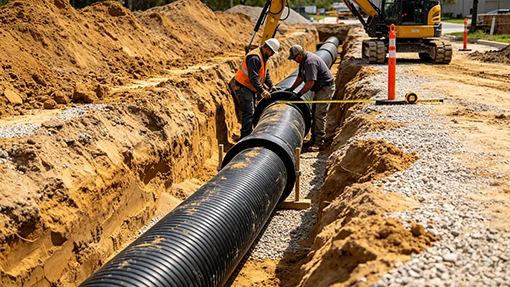
Install HDPE Pipes Underground
Isinyathelo 4: Match Pipe Size With Application
Different application scenarios have different requirements for pipe size and performance.
Application-Based HDPE Pipe Selection
| Isicelo | Ukucatshangelwa Okubalulekile | Recommended SDR/PN | Amanothi |
|---|---|---|---|
| Ukuchelela kwezolimo | Flow capacity, cost efficiency | I-SDR17 (I-PN10) / I-SDR11 (I-PN16) for pressurized systems | Prioritize SDR17 for gravity; SDR11 for pump systems |
| Ukuhlinzekwa kwamanzi kamasipala | Isilinganiso sokucindezela, longevity, ukuphepha | I-SDR11 (I-PN16) or SDR13.6 (I-PN12.5) | PE100 material mandatory |
| Ukusetshenziswa kwezimboni | Ukumelana namakhemikhali, ingcindezi, izinga lokushisa | I-SDR11 (I-PN16) or SDR9 (PN20) | Verify chemical compatibility |
| Mining slurry | Ukumelana nemihuzuko, ukujiya kodonga | SDR9 or thicker | HDPE’s abrasion resistance is 4× steel |
| Gas distribution | Ukuphepha, leak-tightness, regulations | I-SDR11 (I-PN16) minimum | Must comply with local gas codes |
| Ukukhipha amanzi & indle | Izindleko, flow capacity, ukumelana kwamakhemikhali | SDR26 to SDR17 | Gravity flow often uses SDR26 |
| Ukuvikelwa kwekhebula | Ukuvumelana nezimo, izindleko | SDR33 or higher | Non-pressure application |
Internal Link:
- For irrigation specifics: HDPE Irrigation Amapayipi
- For industrial standards: I-HDPE Industrial Pipes
5. Check Fitting and Component Compatibility
Because HDPE is OD-controlled, okokufaka, ama-valve, and fusion equipment must match the same OD system. Always verify:
- Ukufakwa are rated for the same PN class
- Fusion equipment is calibrated for the specific OD and wall thickness
- Transition fittings are available if connecting to other pipe materials
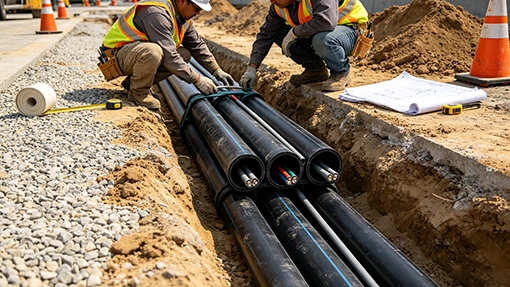
HDPE Pipes in Cable protection
Common HDPE Pipe Size Selection Mistakes
Iphutha 1: Ignoring Pressure Rating
The most common error is selecting a pipe based on diameter alone without verifying the pressure rating. A 110 mm pipe could be SDR17 (I-PN10) or SDR11 (I-PN16)—the OD is the same, but the pressure capacity and wall thickness are completely different.
Iphutha 2: Choosing Diameter Only by Cost
Oversizing a pipe increases material cost but may reduce pumping costs over the system’s lifetime. Undersizing saves money upfront but leads to higher energy costs and potential flow restrictions. Always consider life-cycle cost, not just initial purchase price.
Iphutha 3: Ignoring SDR
SDR determines both pressure rating and internal diameter. Two pipes with the same OD but different SDR values have different IDs and different flow capacities. Always specify both the diameter AND the SDR/PN class.
Iphutha 4: Not Considering Future Expansion
Pipeline systems often need to accommodate future growth. Installing a larger diameter or higher pressure class pipe now can save significant costs later. Lapho ungabaza, plan for at least 10–20 years of expected demand growth.
Iphutha 5: Overlooking Temperature Derating
Many engineers specify pipes based on the standard 20°C pressure rating without accounting for higher operating temperatures. In hot climates or systems with elevated temperatures, the effective pressure rating can be significantly lower than the nominal PN class.
Internal Link:
- For a comprehensive checklist, read Amaphutha Wokukhetha Ipayipi le-HDPE: 7 Onjiniyela Bezinto Okumele Bahlole Ngaphambi Kokuthenga
HDPE Pipe Sizes FAQs
1. What are the most common HDPE pipe sizes?
The most commonly used HDPE pipe sizes are 20 mm, 32 mm, 50 mm, 63 mm, 90 mm, 110 mm, 160 mm, 200 mm, 250 mm, 315 mm, futhi 400 mm. These cover the majority of water supply, ukuchelela, kanye nezicelo zezimboni.
2. How do I calculate HDPE pipe diameter?
HDPE pipe diameter is specified by its outside diameter (OF). The inside diameter (I-ID) depends on the wall thickness, which is determined by the SDR:
ID = OD – (2 × Wall Thickness)
Ngokwesibonelo, a 110 mm OD pipe with SDR11 has a wall thickness of 10.0 mm, so the ID = 110 - (2 × 10.0) = 90 mm.
3. What is the difference between SDR11 and SDR17 HDPE pipe?
SDR11 has a thicker wall than SDR17 for the same outside diameter. For PE100:
- I-SDR11 = PN16 (16 ibha / 1.6 I-MPa)—higher pressure capacity, smaller internal bore
- I-SDR17 = PN10 (10 ibha / 1.0 I-MPa)—lower pressure capacity, larger internal bore
Choose SDR11 for high-pressure applications and SDR17 for standard-pressure applications where maximum flow is needed.
4. Does a larger HDPE pipe diameter mean higher pressure?
Cha. Pressure rating depends on wall thickness and SDR, not diameter. A small-diameter pipe with a thick wall (low SDR) can have a higher pressure rating than a large-diameter pipe with a thin wall (high SDR). Always check the SDR or PN class, not just the diameter.
5. What does PN mean in HDPE pipes?
PN stands for “Ukucindezela Okuzisholo” and is measured in bars. It indicates the maximum allowable operating pressure at 20°C. Common PN classes include PN6, PN8, I-PN10, I-PN12.5, I-PN16, PN20, kanye ne-PN25.
6. Amapayipi e-HDPE ahlala isikhathi esingakanani?
HDPE pipes are designed for a service life of50 ku 100 iminyaka with minimal maintenance, provided they are properly selected and installed.
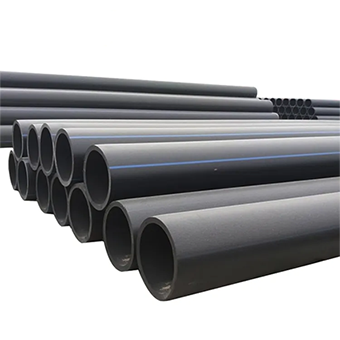
Amapayipi we-HDPE
Isiphetho
Ukukhetha ilungelo HDPE pipe sizes futhi HDPE pipe dimensions is a multi-dimensional engineering decision that goes far beyond simply picking a diameter. A successful selection requires balancing ububanzi (for flow), ukujiya kodonga (for pressure via SDR), isilinganiso sokucindezela (PN class), futhi application-specific requirements such as chemical resistance, abrasion resistance, and installation conditions. By following the four-step method — determining flow rate, checking operating pressure, considering installation conditions, and matching the application — you can avoid common pitfalls and ensure your HDPE piping system delivers reliable performance for its 50+ year design life. Whether your project involves municipal water supply, ukuchelela kwezolimo, industrial processing, or mining operations, understanding the relationship between HDPE pipe diameter, I-SDR, futhi isilinganiso sokucindezela is the key to making informed, cost-effective decisions.
Oxhumana naye Inkampani Luoyang Datang Energy Tech Co., Ltd for customized HDPE pipe solutions tailored to your specific project requirements. Our engineering team is ready to assist with size selection, pressure calculations, and material recommendations.
IZITHUBA EZIHLOBANE
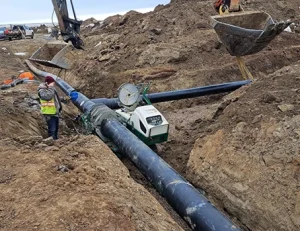
Ungawafaka kanjani amapayipi e-HDPE ngaphansi komhlaba: Izinyathelo Ezibalulekile, Izindlela, kanye Nemikhuba Emihle
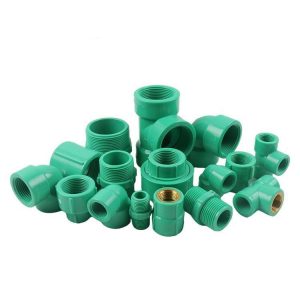
Amapayipi we-PPR & Ukufakwa:Izisombululo Zamapayipi ezihamba phambili emakethe yaseSaudi Arabia
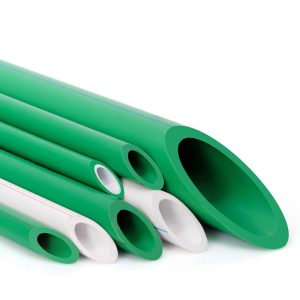
Ingabe ipayipi le-PPR lingasebenza ngaphezu kwalokho 50 iminyaka?
Ulwakha kanjani uhlelo lwamapayipi lwe-HDPE olungavuzi?

Indlela Yokukhetha I-Valve Yesango Elilungile Lamanzi, Amafutha & I-Industrial Pipeline Systems
