LUOYANG DATANG ENERGY TECH CO.,LTD

Pipe Cutter vs. Tube Cutter: What’s the Difference and Which One Do You Need?
A crushed PVC end that won’t seat in a coupling. A copper tube with an inward lip that refuses to take a flare. A stainless line scored by a wheel that was never meant to touch it. These are not tool failures in the dramatic sense. They are the quiet, expensive kind—the ones that show up as leaks, rework, or a joint that never quite seals, long after the cut was “finished.”
The root cause is usually not a bad tool. It is a tool matched to the wrong tube—or a tube matched to the wrong cutter. “Pipe cutter” and “tube cutter” get used interchangeably on job sites and in product listings, but they are not the same class of tool, and the materials they meet are not the same class of product either.
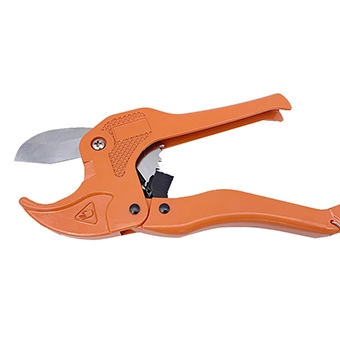
a Pipe Cutter
What Is the Difference Between a Pipe and a Tube?
The distinction is not about shape. Both are hollow cylinders. The distinction is about how they are specified, toleranced, and expected to behave at the joint.
Pipe is sized by Nominal Pipe Size (NPS) and schedule. The NPS number is a rough indication of flow capacity, not the actual outside diameter—below NPS 14, NPS does not equal the real OD. A 4-inch NPS pipe does not measure 4 inches across the outside; it measures 4.500 inches (114.3 mm). The schedule sets wall thickness, which in turn sets the inside diameter. Pipe tolerances are comparatively loose because the joint is usually made with flanges, threads, or welds, and the fitting system is designed around the nominal size, not the exact OD.
Tube is sized by actual outside diameter (OD) and wall thickness, often expressed in millimeters or Birmingham Wire Gauge (BWG). A 4-inch OD tube is exactly 4.000 inches across the outside. Tube tolerances are tighter—OD tolerance on the order of ±0.5% or tighter is not unusual in instrumentation and heat-exchanger specifications—because the joint often depends on a compression fitting, a flare, or a precise mechanical interface where a few thousandths of an inch matter.
| Comparison | Pipe | Tube |
|---|---|---|
| Common specification | Nominal Pipe Size (NPS) | Actual Outside Diameter (OD) |
| Dimension focus | Nominal size and schedule | OD and wall thickness |
| Tolerance character | Looser; fitting system absorbs variation | Tighter; joint depends on dimensional precision |
| Common applications | Plumbing, water supply, process piping | Instrumentation, heat exchangers, mechanical systems |
| Material examples | PVC, steel, copper | Copper, stainless steel, aluminum |
This is a common industry distinction, not a universal law. Some products and standards blur the line; always confirm the specification of the actual material in front of you.
What Is a Pipe Cutter?
A pipe cutter is built to survive thick walls and high cutting loads. It typically uses a heavier, thicker cutting wheel carried on a rigid body with a feed screw or ratchet mechanism that can apply sustained pressure as the tool rotates around the pipe. The wheel scores a groove that deepens with each revolution until the pipe separates. Jaw capacity and wheel hardness are sized for steel, thick-wall copper, cast iron, and large-diameter plastic pipe—the kind of material where a thin wheel would either collapse or take an impractical number of turns to complete the cut.
The trade-off is that a thick wheel displaces metal as it scores. On a thin-wall tube, that displacement becomes a visible inward compression before the cut is complete. The pipe cutter will often still cut the tube—but the end may need reaming, and a compression fitting or flare may not seat the way it should.
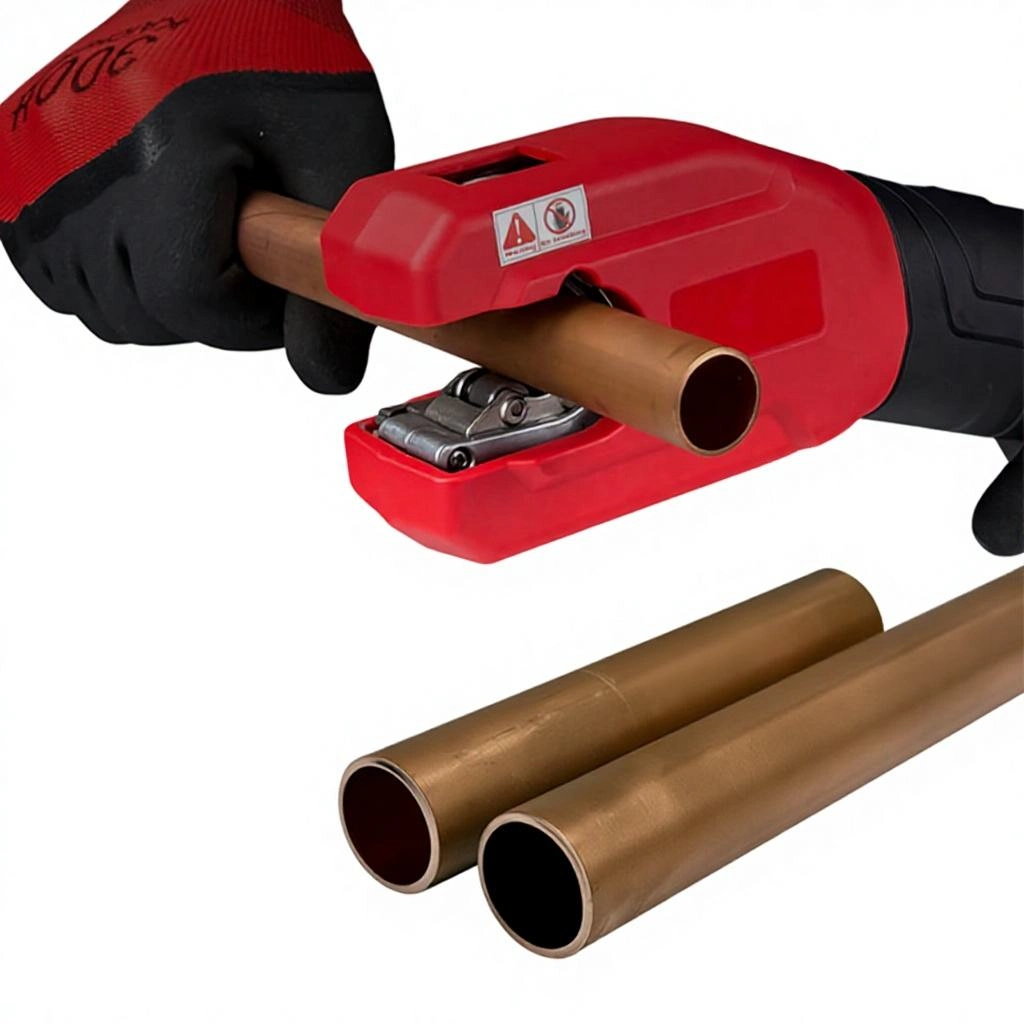
a Tube Cutter
What Is a Tube Cutter?
A tube cutter is a precision scoring tool for thin-wall material. It uses a thinner cutting wheel, often with a tighter bearing arrangement and a geometry designed to keep the wheel tracking squarely around a small-to-medium OD. The target materials are copper, brass, aluminum, thin-wall steel, and thin-wall stainless tube, usually up to roughly 35 mm OD in the common wheel-cutter class. The cut it produces is intended to be square enough to flare or to accept a compression fitting without re-machining the end.
Put a tube cutter on thick steel pipe and the failure mode reverses: the thin wheel cannot withstand the load, the cut stalls, and the wheel may chip or collapse before the pipe yields. The pipe cutter can cut tubing (with a compression caveat); the tube cutter cannot cut pipe.
Pipe Cutter vs. Tube Cutter: Key Differences
| Dimension | Pipe Cutter | Tube Cutter |
|---|---|---|
| Wheel thickness | Thicker; displaces material as it scores | Thinner; precision scoring with minimal displacement |
| Body and feed | Heavy-duty; sustained pressure for thick walls | Lighter; controlled feed for thin walls |
| Typical OD range | Larger; up to 150 mm NB in heavy-duty classes | Smaller; commonly ≤35 mm OD in wheel-cutter classes |
| Material target | Steel, thick-wall copper, cast iron, large plastic | Copper, brass, aluminum, thin-wall steel/stainless |
| Failure mode if misapplied | Compresses thin-wall tube; requires reaming | Collapses or chips on thick-wall pipe; stalls the cut |
| Joint compatibility | Usually followed by threading, welding, or flanging | Often intended for direct flaring or compression fitting |
The table is not a ranking. It is a matching matrix. The right question is not “which cutter is better?” but “which cutter geometry matches the wall thickness, OD tolerance, and joint requirement of this specific material?”
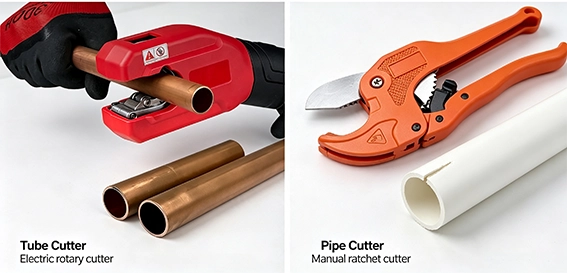
Pipe Cutter vs. Tube Cutter
Can You Use a Pipe Cutter on Tubing or a Tube Cutter on Pipe?
One direction works, with a caveat. The other direction does not.
A pipe cutter on thin-wall tubing will usually complete the cut, but the thick wheel compresses the tube end inward before separation. On copper DWV tube, the compressed end can often be reamed back to round and used. On a tube destined for a flare or a precision compression fitting, that compression may compromise the joint. The cut is “done,” but the end is not necessarily “ready”.
A tube cutter on pipe is a different story. The thin wheel is not built for the wall thickness or the cutting load. It will either stall, chip, or collapse before the pipe is severed. This is not a technique problem; it is a tool-design mismatch.
The practical rule: a pipe cutter is the more tolerant tool across both categories, but tolerance is not the same as suitability. If the cut surface is the working surface—a flare, a compression fitting, a sanitary joint—match the cutter to the tube, not to the convenience of the nearest tool.
How to Choose the Right Cutter for Different Materials
| Material | Common Cutting Tool | Key Consideration |
|---|---|---|
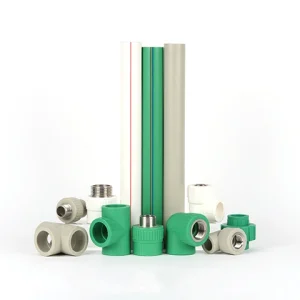
| PVC / PPR / PEX | Ratchet or scissor plastic pipe cutter | Even pressure matters more than force. A ratchet cutter compresses as it slices; uneven pressure crushes the cylindrical shape and ruins fitting fit. For thin PVC, rotate the pipe slightly to initiate a circumferential cut before completing the stroke. |
| Copper tube | Rotary wheel tube cutter | Control feed pressure. Copper is soft and folds inward under a steady wheel; over-tightening the feed screw flattens the tube before the wheel scores through. A tube cutter wheel intended for copper should not be forced onto stainless. |
| Stainless steel tube | Dedicated stainless tube cutter with suitable wheel | The wheel, not the body, is the limiting factor. Stainless work-hardens under the wheel and wears a copper-rated wheel quickly. A cutter rated “copper and stainless” is not the same as a cutter optimized for stainless; confirm wheel material and hardness for the wall thickness involved. |
| Steel pipe | Pipe cutter or mechanical cutting equipment | Diameter and wall thickness set the tool class. A ratchet or heavy-duty wheel cutter for steel pipe is sized by jaw capacity and feed strength; thin-wall tube cutters are not substitutes regardless of OD match. |
| Large-diameter plastic pipe | Ratchet plastic pipe cutter or saw with fine-tooth blade | Squareness is the whole game. A coarse wood blade tears PVC; a fine-tooth blade (32 TPI or higher) with the pipe braced squarely produces a solvent-weldable face. |
A note on the stainless trap. Stainless steel is not “harder copper.” It work-hardens ahead of the cutting wheel, meaning the material resists deformation more as the wheel passes, and a blade that cuts copper cleanly may leave a galled, work-hardened edge on stainless while wearing out prematurely. Using a copper-rated wheel on stainless is one of the most common false economies in tube cutting: the cut may eventually happen, but the wheel life collapses and the edge quality suffers.
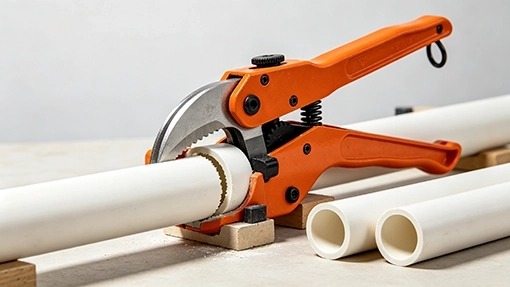
a Pipe Cutter on Tubing
Common Mistakes When Choosing a Pipe or Tube Cutter
Treating pipe and tube as synonyms when reading the tool label. A product listed as a “pipe cutter” may have a jaw range that covers the OD but a wheel geometry intended for wall thicknesses far above what the tube has. The OD fit tells you the tool will go around the material; it does not tell you the cut will be fit for the joint.
Using a ratchet PVC cutter like a pair of bolt cutters. The ratchet mechanism rewards steady, full strokes, not maximum hand force. Uneven or partial strokes are exactly what produce the crushed oval ends that won’t seat in a coupling.
Assuming “stainless-rated” means “stainless-optimized.” A wheel that is merely compatible with stainless may cut it once or twice; a wheel engineered for stainless maintains edge geometry and hardness under work-hardening conditions. On a production line, the difference is wheel life and edge consistency, not just whether the cut completes.
Skipping the reamer because the cut “looks clean.” A wheel cut almost always leaves some inner burr or lip. On a flare or compression joint, that burr becomes a leak path or a stress riser. The reamer step is not optional because the cut looks acceptable at a glance.
Frequently Asked Questions
Can a tube cutter cut pipe?
Generally no, if the pipe is thick-wall steel or a large-schedule material. The thin wheel is not designed for the load and will stall, chip, or collapse before severing the pipe. It may work on very thin-wall pipe-like material that is effectively tube in everything but name, but that is a material-specific exception, not a tool capability.
Can a pipe cutter cut tubing?
Often yes, with a finish penalty. The thick wheel will make the cut but tends to compress the tube end inward. If the end will be reamed and the joint does not depend on a precision flare or a delicate compression seal, a pipe cutter can be a practical fallback. If the cut surface is the sealing surface, use a tube cutter.
What is the best cutter for stainless steel tubing?
A dedicated stainless tube cutter with a wheel rated for stainless, not a copper wheel used on stainless as an afterthought. Stainless work-hardens under the wheel, and a copper-rated wheel loses hardness and edge geometry quickly. Confirm the wheel material and hardness against the actual wall thickness and alloy; the body of the tool is rarely the limiting factor.
Why does my PVC pipe cutter crush the pipe instead of cutting it?
The two usual causes are uneven or partial strokes that let the blade compress the wall without completing the shear, or a blade that is dull or misaligned so the force goes into deformation rather than separation. Hold the pipe firmly, keep the blade perpendicular, and use full ratchet strokes rather than short squeezes.
Is a pipe cutter the same as a tubing cutter?
In casual trade conversation, the terms overlap. In supplier catalogues and engineering practice, they map to different tool classes: a tube cutter is typically a small-to-medium precision wheel tool for thin-wall material, while a pipe cutter is a heavier-duty tool sized for thicker walls and larger diameters. The label on the package matters less than whether the wheel geometry and feed mechanism match the material you are cutting.
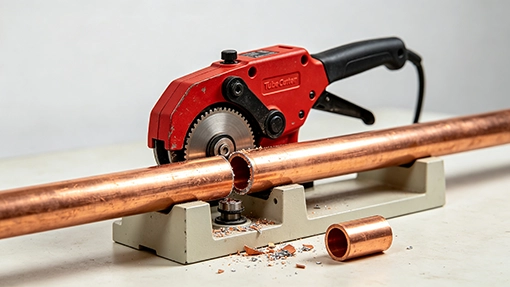
a Tube Cutter on Pipe
Which One Do You Actually Need?
The answer is not “buy both.” It is match the cutter to the specification that governs the joint. If you are working with NPS and schedule, the material will meet a flange, a thread, or a weld—a pipe cutter (or a mechanical cutting method sized to the wall) is the class of tool built for that job. If you are working with OD and wall thickness, and the cut end is expected to flare, seal, or fit into a precision interface, the tool class is a tube cutter, and the wheel must be matched to the alloy, not just the diameter.
Need a cutter that matches your actual pipe or tube specification—OD, wall thickness, material, and joint type? Luoyang Datang Energy Tech Co., Ltd. can help you sort through the options and find the cutter class that fits the material in front of you, not the label on the shelf.
RELATED POSTS
Cold Welds Pass the Tightness Test. That’s Why They Leak Six Months Later.

How to Choose HDPE Pipes for Water Supply Projects
Which Of The Following Refers To Piping That Connects The Sprinkler System To The Main Water Supply?

Complete Guide to PVC Pipes and Fittings for Water Supply Systems
Innovative Applications of PVC Pipes in Plumbing System