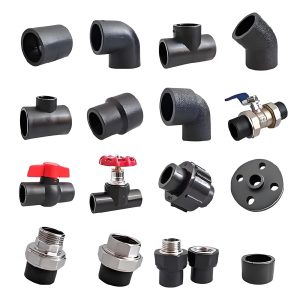
LUOYANG CAME ENERGY TECH CO.,LTD

Kio estas la diferencoj inter PE-pipoj kaj HDPE-pipoj?
The difference between HDPE-tuboj and PE pipes is a question that is often asked. Ŝajnas simple, sed malmultaj homoj klarigas ĝin klare. Here we will systematically introduce it to you.
PE pipes are Polyethylene plastic pipes. Kiel la plej baza tipo de plasto, PE has excellent resistance to most household and industrial chemicals. Common plastic bags, cling film, ktp. are all made of PE.
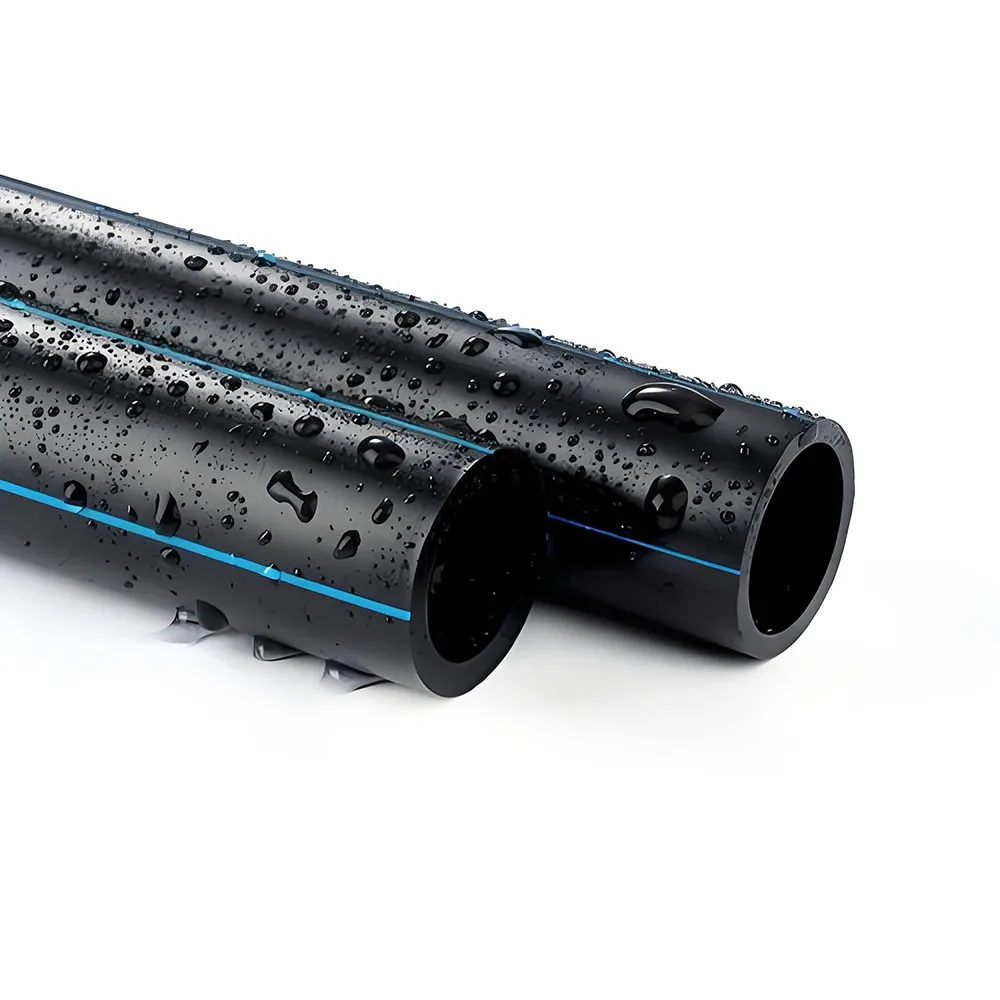
PE pipes as a whole can be classified into three types: malalt-densecaj polietilenaj tuboj (LDPE-tuboj), mez-densecaj polietilenaj tuboj (MDPE-tuboj), kaj alt-densecaj polietilenaj tuboj (HDPE-tuboj).
PE Pipe Family at a Glance
| Tajpu | Denso (g/cm³) | Crystallinity | Ŝlosilaj Karakterizaĵoj | Common Applications |
|---|---|---|---|---|
| LDPE | 0.910–0.925 | 55%–65% | Soft, flexible, low melting point | Films, packaging, cling wrap |
| MDPE | 0.926–0.940 | 70%–80% | Balanced flexibility and strength | Gas pipes, pressure pipes, packaging |
| HDPE | 0.941–0.965 | 80%–95% | High rigidity, forto, kemia rezisto | Water supply, dissendo de gaso, industriaj tubaroj |
1. Malalta denseca polietileno (abbreviated as LDPE)
Low-density polyethylene is generally produced by high-pressure polymerization with a density of 0.9910 -0.925g/cm ³. The molecular structure of low-density polyethylene is a linear macromolecule with many side chains. The side chains of different lengths on the main chain affect the regularity of the macromolecule arrangement, and the stacking is not tight, which hinders the crystallization of polyethylene. Tial, the crystallinity is 55% -65%. Low-density polyethylene has a low melting point and a soft texture. La longaj flankaj ĉenoj donas al ĝi malaltan viskozecon ĉe altaj tondrapidecoj dum prilaborado kaj altan degelforton dum streĉado., making it very suitable for the blown film process and mainly used in the production of agricultural films, heavy packaging films, ktp.
2. Medium-density polyethylene (MDPE mallonge)
Medium-density polyethylene (MDPE) is controlled in density by A-olefin copolymerization at medium and low pressures using an efficient catalyst
(0.926-0.940q/cm3), kun kristaleco de 70%-80%. Pro ĝiaj multnombraj kaj longaj flankaj ĉenoj, density and crystallinity decrease, medium-density polyethylene has better flexibility and low-temperature properties, and its tensile strength, malmoleco, thermal properties, ktp. are inferior to those of high-density polyethylene. Due to the fact that copolyolefin can increase the intergranular linking chains of the crystal sheets of medium-density polyethylene, its resistance to slow cracking and long-term retention of mechanical strength are greatly improved compared to LDPE. Medium-density polyethylene can be used in the production of pressure pipes, liveraj tuboj, various containers and packaging films.
3. High-density Polyethylene (HDPE for short)
Polietileno de alta denseco (HDPE) is produced by a low-pressure polymerization process, is linear, has a density of 0.94-0.965q/cm ³, has a crystallinity of 80%-95%, and is a white powder or granule. Compared with low-density polyethylene, it has fewer other sub-chains, a nearly linear structure, regular and close-packed molecules, and thus has high crystallinity, alta denseco, relative molecular mass ranging from hundreds of thousands to hundreds of thousands, kaj mallarĝa gamo de fandaj flukvantoj. High density polyethylene has high rigidity and toughness, good mechanical strength and heat resistance, as well as good resistance to deep agents and steam penetration. High-density polyethylene has the lowest permeability among all types of polyethylene, the strongest corrosion resistance, and good rigidity, and is mainly used in the production of various pressure pipes, injection molded products, ktp.
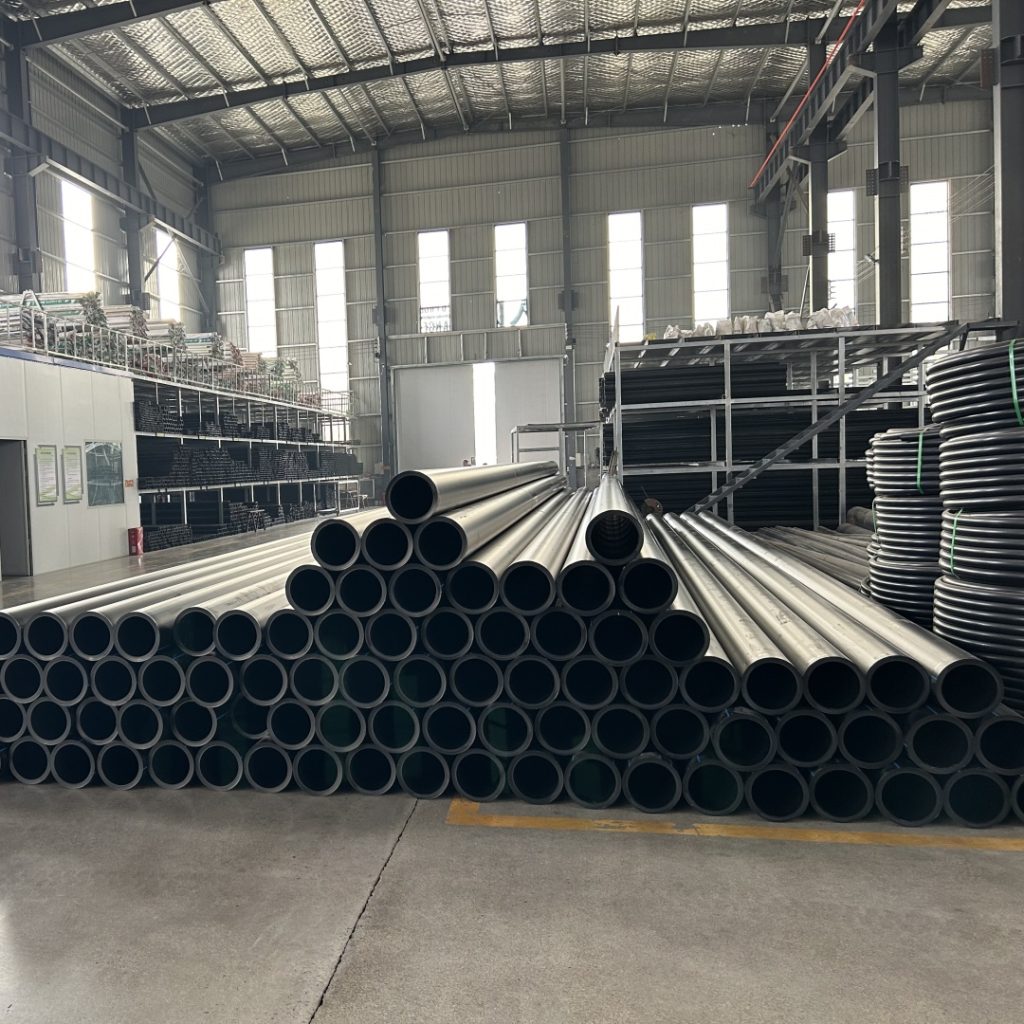
HDPE pipe is a type of PE pipe, but the performance of HDPE pipe is superior to that of ordinary PE pipe, which we can summarize as follows:
PE Pipe vs HDPE Pipe: Rapida Komparo
| Faktoro | General PE Pipe | HDPE Pipo |
|---|---|---|
| Pressure Resistance | Malsupre | Pli alta (up to 9x stronger) |
| Rezisto al abrazio | Modera | Best among engineering plastics |
| Primaraj Aplikoj | Gas transport, flexible tubing | Water supply, gaso, industria, buried systems |
| Konekta Metodo | Mechanical fittings, quick-connect | Varma fandado (pugo fandado, elektrofuzio) |
| Komenca Kosto | Malsupre | Pli alta |
| Longtempa Valoro | Shorter lifespan, higher maintenance | Longer lifespan, lower lifecycle cost |
1, Different pressure resistance:
- HDPE pipes must be able to withstand certain pressures, and usually a high molecular weight and good mechanical properties PE resin is chosen, such as HDPE resin, which is nine times stronger than ordinary polyethylene pipes (PE-tuboj);
2, the wear resistance is different
- Inter ĉiuj inĝenieraj plastoj, HDPE has the best abrasion resistance. Ju pli alta estas la molekula pezo, the more wear-resistant the material is, even more than many metal materials (kiel karbonŝtalo, neoksidebla ŝtalo, bronzo, ktp.) the abrasion resistance of common PE is only one-tenth of that of HDPE;
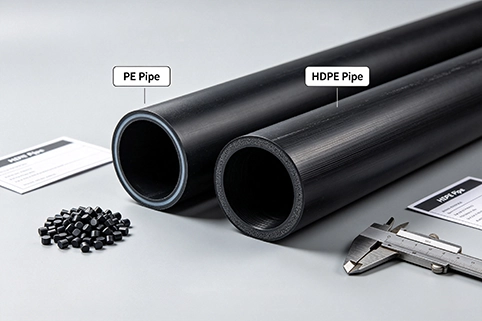
PE Pipe vs HDPE Pipe
- Ĝeneralaj PE-tuboj (mez-densecaj polietilenaj tuboj) taŭgas por transporto de gasa artefarita gaso, natura gaso, liquefied petroleum gas, while low-density polyethylene pipes are flexible tubes;
- HDPE-tuboj (alt-densecaj polietilenaj tuboj) estas ĉefe uzataj por transporto de tergaso, municipal engineering water supply systems, indoor water supply systems of buildings, outdoor buried water supply systems and buried water supply systems in residential areas and factories, old pipeline repair, water treatment engineering pipeline systems, kaj industriaj akvotuboj en ĝardenoj, irrigation and other fields.
- HDPE-tuboj can be used as a replacement for traditional steel pipes and polyvinyl chloride drinking water pipes, which ordinary PE pipes cannot.
4,Different connection methods:
- Ĝeneralaj PE-tuboj, especially LDPE and MDPE, are often connected using mechanical fittings or quick-connect joints, which are convenient for flexible tubing and low-pressure applications.
- HDPE-tuboj, aliflanke, are widely recognized for their compatibility with heat fusion technology. Butt fusion and electrofusion create a seamless joint that is as strong as the pipe itself, ensuring a completely leak-proof system for high-pressure water and gas transmission.
5,Cost and economic value:
While general PE materials are generally cheaper and widely used in packaging and low-stress environments, HDPE pipes offer a higher initial investment but deliver exceptional long-term value.,
Due to their superior durability, lower maintenance needs, and extended lifespan, HDPE-tuboj significantly reduce replacement and operational costs over decades of use, making them highly cost-effective for major infrastructure projects.
Kiel Elekti Between PE and HDPE Pipes
The choice isn’t about which pipe is “better”—it’s about which one fits your application.
- Choose general PE pipes (LDPE or MDPE) if: you’re working with low-pressure gas transport, need flexible tubing, or have budget constraints on short-term projects.
- Choose HDPE pipes if: you need high-pressure water or gas transmission, require leak-proof fusion joints, demand long-term durability with minimal maintenance, or are building infrastructure meant to last decades.
For most municipal, industria, and buried applications, HDPE is the clear winner. For temporary or low-stress uses, general PE pipes offer a cost-effective solution.
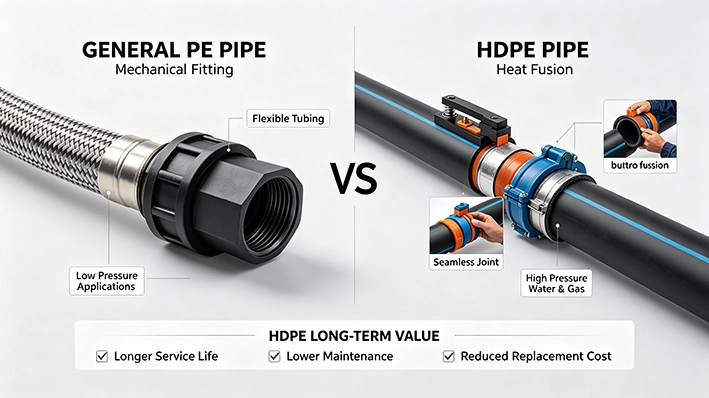
PE pipe and HDPE pipe connection methods comparison including mechanical fittings and heat fusion technology
Oftaj Demandoj
Q1: Is HDPE pipe the same as PE pipe?
A: Ne. HDPE is a specific type of PE pipe. All HDPE pipes are PE pipes, but not all PE pipes are HDPE.
Q2: Which is stronger, PE or HDPE?
A: HDPE is significantly stronger. Its higher density and crystallinity give it superior pressure resistance, abrasion resistance, and mechanical strength.
Q3: Can PE pipes be used for drinking water?
A: General PE pipes may not meet drinking water standards. HDPE pipes are widely certified for potable water systems.
Q4: What is the main difference in installation?
A: General PE pipes typically use mechanical fittings. HDPE pipes use heat fusion (butt fusion or electrofusion), which creates joints as strong as the pipe itself.
Provizanto
Luoyang Datang Energy Tech Co., Ltd. estas ĉefa ĉina fabrikisto specialigita pri altkvalitaj plastaj pipoj kaj garnituro. Ekipita per plej modernaj aŭtomatigitaj produktadlinioj kaj subtenata de teamo de 200 profesiuloj, ni proponas ampleksan produktan linion konsistantan el super 150 types of plastic pipes and fittings designed for water supply and drainage systems, dissendo de gaso, kaj plankaj hejtsistemoj. Niaj ĉefaj produktoj inkluzivas PVC Pipojn kaj Fittings, PE (HDPE) Pipoj kaj Fittings, PPR Pipoj kaj Fittings, kaj PEX Floor Heating Pipes.
Ĉu vi havus demandojn pri PVC-Pipo & PE Pipe en Agrikultura Irigacio, bonvolu ne hezitu kontakti nin!
- Tel.:0086-183 3790 0677
- Wechat: 0086-183 3790 0677
- Whatsapp: 0086-183 3790 0677
- Retpoŝto: [email protected]
RELATAJ AFIŜOJ
PE Pipe en Agrikultura Irigacio & Guta Akvuma Sistemo
Kiel Instali Provizan Pipon Por Akvo
🔥 Tubo Ĉinio 2026: La Estonteco de la Tutmonda Pipa Industrio— Inteligenta Fabrikado, Verdaj Materialoj & Merkata Ekspansio

Kiom Profunde Devus Akvo-Provizo-Pipo Esti
Kiel Identigi Nemarkitan Pipon “Akvoprovizo”