LUOYANG DATANG ENERGY TECH CO.,LTD


Brass Pipe Fittings Applications: Choosing the Right Fitting for Every Piping System
Different piping systems face different demands. A residential plumbing system prioritizes reliability and ease of installation. Commercial systems need to withstand years of high-frequency usage. HVAC systems demand consistent performance across temperature fluctuations. Gas systems require absolute sealing integrity and regulatory compliance. Industrial piping deals with high pressure, aggressive media, and challenging environments. Irrigation systems must endure outdoor exposure year after year.
The right brass pipe fitting depends not only on pipe size, but also on application, connection type, pressure, temperature, and fluid compatibility. A fitting that works perfectly under a kitchen sink may fail catastrophically in a gas line or high-pressure industrial application. Understanding these distinctions is the difference between a reliable piping system and a costly failure.
This article covers where brass pipe fittings are used, which fittings suit different systems, how to choose the right fitting, and what factors to check before purchasing.

Brass pipe fittings
Where Are Brass Pipe Fittings Used?
Before diving into specific applications, it helps to see the full picture. Brass pipe fittings appear across virtually every sector of plumbing and piping — from the faucet in your kitchen to the machinery on a factory floor.
| Application | Common Brass Fittings | Main Requirements |
|---|---|---|
| Residential Plumbing | Elbows, adapters, couplings, compression fittings | Reliability, corrosion resistance |
| Commercial Plumbing | Tees, unions, adapters, elbows | Durability, easy maintenance |
| Water Supply | Adapters, couplings, elbows | Water compatibility, pressure |
| HVAC | Adapters, elbows, connectors | Temperature, vibration |
| Gas Systems | Threaded fittings, adapters | Sealing, standards |
| Industrial Piping | Elbows, tees, nipples, adapters | Pressure, media compatibility |
| Irrigation | Hose fittings, adapters, connectors | Outdoor durability |
| Compressed Air | Adapters, elbows, connectors | Pressure, sealing |
Each of these applications has its own set of requirements, and the following sections break them down in detail.
1. Brass Pipe Fittings for Residential Plumbing
Residential plumbing is where most people first encounter brass fittings. These are the connections behind your walls, under your sinks, and around your water heater that keep your home running smoothly.
Common Applications:
- Kitchen plumbing
- Bathroom plumbing
- Water heater connections
- Washing machine hookups
- Household water supply lines
- Appliance connections
Common Brass Fittings for Residential Use
| Fitting | Typical Use |
|---|---|
| Brass Elbow | Change pipe direction |
| Brass Tee | Create branch connections |
| Brass Coupling | Join two pipes |
| Brass Adapter | Connect different thread/pipe types |
| Brass Compression Fitting | Mechanical pipe connection |
| Brass Hose Connector | Connect flexible hoses |
Why Brass Is Used in Residential Plumbing
Brass has been a staple in residential plumbing for decades, and for good reason. Its durability means fittings can last the lifetime of a home. Corrosion resistance ensures that water quality remains unaffected and connections stay intact over years of use. The material machines easily, allowing for precise threads and reliable seals. Compact designs fit into tight spaces behind walls and under cabinets. And when maintenance is needed, brass fittings can be disassembled and reassembled without compromising the connection — a significant advantage over glued or soldered alternatives.
What to Check for Residential Applications
- Pipe size — Ensure the fitting matches the nominal pipe size
- Thread type — NPT for North America, BSP for many other markets
- Water temperature — Standard brass handles hot and cold residential water
- Pressure — Residential systems typically operate at 40–80 PSI
- Connection method — Threaded, compression, or push-fit depending on the application

Brass Pipe Fittings for Residential Plumbing
2. Brass Pipe Fittings for Commercial Plumbing Systems
Commercial plumbing systems are found in hotels, restaurants, office buildings, schools, shopping centers, public buildings, and other facilities where water systems may have many connection points and operate frequently.
Compared with a typical household system, commercial installations can place greater emphasis on durability, maintenance access, standardized connections, and long-term reliability.
What Matters Most in Commercial Plumbing?
| Requirement | Why It Matters |
|---|---|
| Durability | Commercial systems may operate continuously or frequently |
| Reliable sealing | Helps reduce the risk of leakage |
| Easy maintenance | Simplifies inspection and replacement |
| Correct sizing | Helps maintain appropriate flow |
| Standardized threads | Makes replacement easier |
Brass plumbing fittings can be used at pipe junctions, equipment connections, valves, fixtures, and other service points.
For larger commercial projects, however, the fitting should always be selected according to the system design and applicable local requirements rather than simply choosing brass because it is a familiar material.
The connection type is equally important. A threaded fitting may be suitable for one installation, while a compression fitting, union, or other connection may be more practical where frequent maintenance is expected.

Brass Pipe Fittings for Commercial Plumbing Systems
3. Brass Fittings for Water Supply Systems
Water supply is arguably the most common application for brass pipe fittings. These systems carry water from the main supply line to fixtures, equipment, and appliances throughout a building.
Water supply applications include:
- Cold water distribution
- Hot water distribution
- Potable (drinking) water systems
- Building water supply mains
- Equipment connections
Common Water Supply Connections
| Water Application | Suitable Fitting |
|---|---|
| Direction change | Brass Elbow |
| Branch connection | Brass Tee |
| Pipe extension | Brass Nipple |
| Pipe joining | Brass Coupling |
| Different connection types | Brass Adapter |
| Flexible hose connection | Hose Connector |
Why Brass Works Well for Water Applications
Brass offers excellent corrosion resistance to water, heat, acids, and minerals commonly found in water supplies. Its mechanical strength ensures connections remain secure under pressure. Dimensional stability means threads stay true over time, maintaining leak-free seals. And for potable water systems, lead-free brass alloys are available to meet health and safety standards.
For potable water applications, always verify that the brass fittings you select are certified for drinking water use. Standards like NSF/ANSI 61 and WRAS approval indicate compliance with potable water safety requirements.
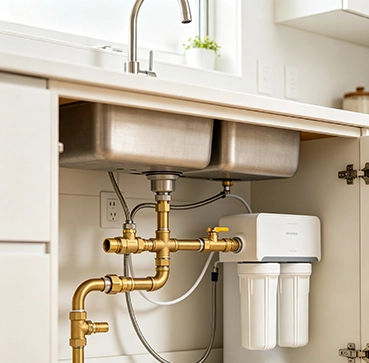
Brass Fittings for Water Supply Systems
4. Brass Pipe Fittings for HVAC Systems
HVAC systems create another important application for brass fittings. They can be found around heating and cooling equipment, hydronic systems, air-conditioning equipment, and other components where piping or tubing must connect to equipment or change direction.
Compared with simple household water connections, HVAC applications may involve temperature changes, pressure variations, vibration, and repeated thermal cycling.
Key Factors for HVAC Fitting Selection
When choosing brass fittings for HVAC, consider:
- Temperature – Check the operating and maximum temperature requirements.
- Pressure – Confirm that the fitting’s pressure rating is appropriate.
- Vibration – Equipment connections may experience mechanical movement or vibration.
- Connection type – Match the fitting to the pipe, tube, or equipment interface.
- Fluid compatibility – Confirm that the fitting material is suitable for the circulating medium.
Common configurations include brass elbows, adapters, connectors, and other threaded or mechanical fittings.
Brass fittings are often useful around HVAC equipment where a compact, durable connection is required. Nevertheless, the fitting specification should always be checked against the actual operating conditions rather than relying only on the material name.

Brass Pipe Fittings for HVAC Systems
5. Brass Fittings for Gas and Fuel Lines
This is an area where caution is paramount. Gas and fuel lines carry flammable materials under pressure, and any failure can have serious consequences. Brass is widely used in gas applications because it does not spark, resists corrosion from fuel components, and can maintain a reliable seal over long periods.
Typical gas and fuel applications:
- Natural gas lines
- LP (liquefied petroleum) gas lines
- Propane systems
- Gas appliance connections
- Fuel systems
Critical factors for gas fittings:
| Factor | What to Check |
|---|---|
| Material | Suitable for the specific gas/media |
| Thread | Correct thread standard (NPT, BSP, etc.) |
| Pressure | Required pressure rating |
| Sealing | Appropriate sealing method and sealant |
| Certification | Applicable local standards and codes |
| Installation | Follow manufacturer and code requirements |
Never assume that any brass fitting is suitable for gas. Gas fittings must meet specific standards and often require certification. Look for compliance with standards such as:
- International Fuel Gas Code (IFGC)
- National Fuel Gas Code (NFPA 54)
- ASTM F1281
- Local and regional gas codes
Fittings certified for gas use will typically carry markings indicating compliance with applicable codes. Always verify certification before purchasing brass fittings for any gas or fuel application.

Brass Fittings for Gas and Fuel Lines
6. Brass Fittings for Industrial Piping Systems
Industrial piping is where brass fittings face their toughest tests. Manufacturing plants, machinery, process equipment, fluid transfer systems, pneumatic systems, and utility piping all rely on fittings that can handle demanding conditions.
Why Industrial Systems Use Brass Fittings
Brass brings several advantages to industrial applications. Its mechanical strength allows it to withstand significant pressures without deformation. Corrosion resistance protects against many industrial fluids and environmental conditions. The material machines well, enabling precise dimensional consistency across large production runs. And connection reliability means fewer leaks and less downtime in continuous operations.
Industrial Applications
| Industry/System | Possible Application |
|---|---|
| Machinery | Equipment connections |
| Manufacturing | Utility piping |
| Pneumatic systems | Air connections |
| Fluid systems | Tubing connections |
| Process equipment | Instrument connections |
| Maintenance systems | Replacement fittings |
Important note for industrial applications: While brass is suitable for pneumatic systems, water-based hydraulic fluids, and systems in humid or corrosive environments, it is primarily used in pneumatic and low-to-medium pressure applications. For high-pressure hydraulic systems or highly corrosive media, other materials may be more appropriate. Always match the fitting material to the specific process fluid, temperature, and pressure.

Brass Fittings for Industrial Piping Systems
7. Brass Fittings for Compressed Air Systems
Compressed air is often called the “fourth utility” in industrial facilities, and brass fittings play a significant role in these systems. From small workshops to large manufacturing plants, compressed air powers tools, equipment, and automation systems.
Compressed air applications include:
- Air compressors
- Pneumatic equipment
- Air distribution lines
- Workshop systems
- Industrial air systems
Brass fittings for compressed air must handle the working pressure of the system — typically ranging from 90 PSI for shop air to over 150 PSI for industrial applications. Sealing is critical because even small leaks in compressed air systems waste energy and increase operating costs.
Key considerations for compressed air fittings:
- Pressure rating — Must exceed the system’s maximum working pressure
- Sealing — Use appropriate thread sealant or sealing method
- Thread compatibility — Match the existing thread standard
- Leakage prevention — Choose fittings designed for reliable sealing
Brass and bronze fittings are standard choices for compressed air, pneumatics, and industrial water circuits due to brass’s technical characteristics and reliability.
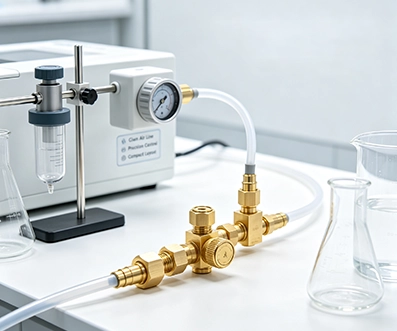
Brass Fittings for Compressed Air Systems
8. Brass Fittings for Irrigation and Outdoor Water Systems
Irrigation systems and outdoor water connections face a different set of challenges. Exposure to weather, UV radiation, temperature extremes, and physical impacts all take their toll on pipe fittings.
Irrigation and outdoor applications include:
- Agricultural irrigation
- Garden water systems
- Outdoor water connections
- Hose connections
- Landscape watering systems
Common fittings for irrigation:
- Hose connectors
- Adapters
- Elbows
- Tees
- Couplings
Brass is well-suited for outdoor use because it resists corrosion from water, soil, and weather exposure. Unlike some plastics that become brittle in sunlight or cold, brass maintains its mechanical properties across a wide temperature range. And when maintenance or repairs are needed, brass fittings can be easily disconnected and reconnected.
Key factors for irrigation fittings:
- Outdoor durability — Resistance to weather and UV exposure
- Water compatibility — Suitable for the water source (well water, municipal, etc.)
- Connection reliability — Maintain seal despite temperature changes and vibration
- Maintenance — Easy to access and service
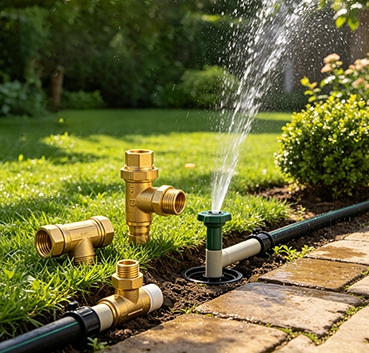
Brass Fittings for Irrigation
How to Choose the Right Brass Pipe Fitting
Selecting the right brass pipe fitting is not complicated, but it does require attention to several key factors. Overlooking any one of them can lead to leaks, system failure, or safety hazards. Here is a practical step-by-step approach.
1. Determine the Pipe Size
This is the starting point. You need to know the nominal pipe size (NPS) or DN (diameter nominal) of the pipe you are connecting. For threaded fittings, the size refers to the nominal inside diameter of the pipe. For compression and push-fit fittings, the outside diameter may be more relevant.
How to measure:
- Use a caliper to check outside diameter and inside diameter
- Compare with standard size charts
- If replacing an existing fitting, bring it with you for reference
2. Check the Thread Type
Thread compatibility is non-negotiable. Threads from different standards may look similar but are not interchangeable. Using the wrong thread type will result in leaks or damaged connections.
| Thread Type | Typical Consideration |
|---|---|
| NPT (National Pipe Thread) | Common in North America |
| BSP (British Standard Pipe) | Common in many international markets |
| BSPP (BSP Parallel) | Parallel thread, requires sealing washer |
| BSPT (BSP Tapered) | Tapered thread, seals by thread interference |
Always verify thread type before ordering. A tape measure and thread gauge can help identify the thread standard.
3. Select the Connection Type
Brass fittings come in several connection configurations:
- Threaded — Male or female threads that screw together
- Compression — Mechanical connection using a compression nut and ferrule
- Hose connection — Barbed or threaded ends for flexible hoses
- Push-to-connect — Push-fit connections for quick installation
- Flared — Flared tube ends for a metal-to-metal seal
The right connection type depends on the pipe material, system pressure, and whether the connection needs to be removable.
4. Consider Pressure and Temperature
Every fitting has a pressure rating and a temperature range. Choose fittings rated for your system’s operating conditions — not just at room temperature, but at the maximum temperature the system will reach.
Typical ratings:
- Residential water: PN10/PN16 (150–230 PSI)
- Industrial brass fittings: Up to 3,000+ PSI for precision-machined fittings
- Standard brass tube fittings: 150–600 PSI depending on size and design
5. Check Fluid Compatibility
Not all brass alloys are suitable for all fluids. Consider what will flow through the system:
- Water
- Air
- Gas
- Oil
- Chemicals
- Refrigerants
For potable water, use lead-free brass certified to NSF/ANSI 61 or equivalent standards. For gas, use fittings specifically certified for gas applications. For aggressive chemicals, consult the fitting manufacturer for compatibility data.
6. Consider Applicable Standards
Different applications and regions require compliance with different standards. Common standards include:
- ASTM (American Society for Testing and Materials)
- ASME (American Society of Mechanical Engineers)
- ISO (International Organization for Standardization)
- EN (European Standards)
- NSF/ANSI 61 (Drinking water)
- WRAS (Water Regulations Advisory Scheme, UK)
Always verify that your fittings meet the standards required for your specific application and jurisdiction.

Brass Fittings for Outdoor Water Systems
Brass Fitting Selection Guide by Application
The following table summarizes the recommended fittings and key selection factors for each major application.
| Application | Recommended Fittings | Key Selection Factors |
|---|---|---|
| Residential Plumbing | Elbow, Tee, Adapter, Coupling | Size, thread, water compatibility |
| Commercial Plumbing | Elbow, Tee, Union, Adapter | Durability, maintenance |
| Water Supply | Elbow, Coupling, Adapter | Pressure, temperature |
| HVAC | Adapter, Elbow, Connector | Temperature, vibration 温度、振动 |
| Gas | Threaded fittings, adapters | Standards, sealing, certification |
| Industrial | Elbow, Tee, Nipple, Adapter | Pressure, media, temperature |
| Compressed Air | Adapter, Connector, Elbow | Pressure, sealing |
| Irrigation | Hose Connector, Adapter, Tee | Outdoor conditions |
Common Mistakes When Selecting Brass Pipe Fittings
Mistake 1: Choosing the Wrong Size
This is the most basic but also the most common error. A fitting that is too large won’t seal properly; one that is too small won’t connect at all. Size mismatches can lead to leaks, reduced flow, and difficult installation.
Mistake 2: Ignoring Thread Type
NPT and BSP threads may look similar, but they are not compatible. Using an NPT fitting with a BSP pipe (or vice versa) will result in a loose connection that leaks. Always verify thread type before purchasing.
Mistake 3: Focusing Only on Price
The cheapest fitting is not always the best value. Low-cost fittings may have poor sealing, inaccurate dimensions, or substandard materials. Over the life of the system, the cost of a leak or failure far exceeds the savings from a cheaper fitting.
Mistake 4: Ignoring Working Conditions
A fitting rated for residential water pressure may fail in an industrial or high-pressure application. Always match the fitting’s pressure and temperature ratings to the system’s actual operating conditions — not just the nominal values.
Mistake 5: Using the Same Fitting for Every Application
This is perhaps the most important lesson: a fitting that works well in residential plumbing may not be the right choice for a gas, HVAC, or industrial application. Each system has its own requirements for pressure, temperature, media compatibility, and standards compliance. Choose accordingly.
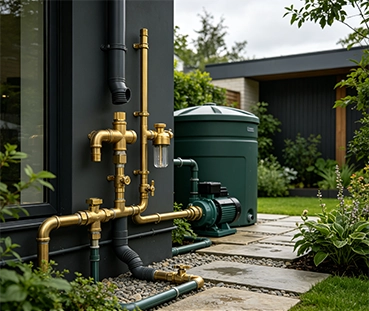
Brass Fittings for Outdoor Water Systems
Conclusion
The best brass pipe fitting is not simply the one that matches the pipe size. It must also match the application, connection method, pressure, temperature, fluid, and applicable standards. A fitting that works in a residential water line may not be suitable for a gas system, an HVAC application, or an industrial process.
Understanding where and how brass fittings are used — and what each application requires — is the key to making the right selection. Whether you need brass elbows, tees, couplings, adapters, hose connectors, or specialized brass fittings, selecting the right configuration improves connection reliability, simplifies installation, and reduces long-term maintenance costs.
Looking for the right brass pipe fittings for your project? Contact Luoyang Datang Energy Tech Co., Ltd to discuss your required size, thread type, connection method, and application. We’ll help you find the right solution for your specific needs.
RELATED POSTS

How to Compare PPR Pipe Fittings Quotes: 7 Details Beyond Unit Price
Choosing the Right HDPE Pipe: DWC Pipe, Corrugated Pipe, Culvert Pipe and Electrical Conduit Explained

Yellow PE Gas Pipe: Color Code That Saves Lives
7 Revolutionary Advantages of PPR Pipeline in Modern Water Supply & Drainage System
Which Pipe Is Best For Water Supply?