LUOYANG DATANG ENERGY TECH CO.,LTD


10 Factors Engineers Should Consider Before Ordering HDPE Pipe
Choosing the right HDPE pipe is rarely as simple as comparing price tags. Engineers who treat procurement as a technical exercise—rather than a purchasing decision—consistently deliver systems that last longer, fail less, and cost less over their full lifecycle. The reality is that HDPE pipe selection sits at the intersection of material science, hydraulics, geotechnical conditions, and supply chain reliability. Get one factor wrong, and the entire infrastructure project pays the price.
This guide distills ten critical factors that every engineer should evaluate before placing an HDPE pipe order. Whether you are specifying pipe for a municipal water network, an agricultural irrigation scheme, or an industrial chemical line, these principles apply.
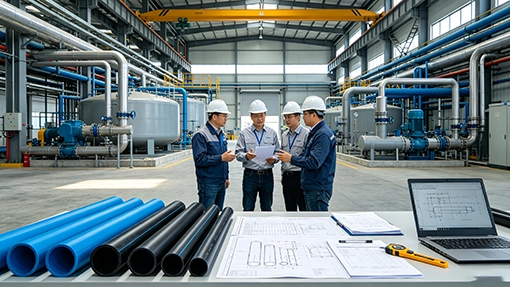
HDPE pipe selection guide for engineering projects
Quick Overview:
Choosing an HDPE pipe system requires a complete evaluation rather than focusing on a single specification.
| Factor | Why It Matters |
| Application Requirements | Determines the suitable pipe type and performance requirements |
| Pipe Size | Affects flow capacity and system efficiency |
| Pressure Rating | Ensures safe operation under working conditions |
| SDR Rating | Determines wall thickness and pressure capability |
| Material Grade | Influences strength, durability, and service life |
| Standards & Certifications | Ensures quality and project compliance |
| Installation Method | Impacts construction efficiency and total cost |
| Pipe Fittings | Ensures complete system reliability |
| Supplier Capability | Affects product quality and project support |
| Total Project Cost | Determines long-term economic value |
1. Understand Your Project Requirements First
Before you even look at a pipe specification sheet, you need to answer a fundamental question: What will this pipe actually do?
Different applications impose completely different demands on HDPE pipe. A municipal water main prioritizes pressure stability and potable water certification. An agricultural irrigation system needs large flow capacity at moderate pressure. A mining slurry line requires exceptional abrasion resistance. An industrial chemical pipeline demands specific chemical compatibility.
Take the time to document your project’s operating conditions before contacting suppliers. This upfront work will save countless hours of back-and-forth later.
Application Reference Table
| Application | Recommended Considerations |
|---|---|
| Municipal Water Supply | Pressure stability, NSF 61 certification, potable water grade |
| Agricultural Irrigation | Large flow capacity, UV resistance, flexibility for surface laying |
| Mining & Slurry | Abrasion resistance, thick wall (low SDR), impact strength |
| Industrial Chemical | Chemical compatibility, temperature rating, specialized liners |
| Gas Distribution | ISO 4437 compliance, leak-tight joints, high safety factor |

HDPE pipes in modern agricultural irrigation and drainage systems
2. Choose the Right HDPE Pipe Size
Pipe size selection is one of the most fundamental engineering decisions in any pipeline project — and one of the most frequently miscalculated.
HDPE pipe is available in diameters ranging from 20 mm to 1600 mm and beyond. The right size depends on three interconnected variables: flow rate, velocity, and pressure drop. Undersize the pipe and you’ll face excessive friction losses and pumping costs. Oversize it and you’re wasting capital on material you don’t need.
Engineers should calculate the expected volumetric flow rate (Q) and determine the internal diameter that will transport this flow at the optimum velocity. Don’t forget to factor in future expansion — a pipeline that barely meets today’s demand will be a bottleneck tomorrow.
Size Selection Parameters
| Parameter | Impact |
|---|---|
| Diameter | Determines flow capacity |
| Wall Thickness | Affects pressure resistance and weight |
| Length | Impacts transportation cost and joint count |
| Flow Velocity | Affects friction loss and pumping cost |

HDPE pipe size selection and dimension specifications
3. Check Pressure Rating and SDR Requirements
This is where many procurement mistakes happen. Engineers often specify pipe by diameter alone, assuming the pressure rating will take care of itself. It won’t.
SDR (Standard Dimension Ratio) is the ratio of pipe outside diameter to wall thickness. The formula is simple:
SDR = Outer Diameter ÷ Wall Thickness
A lower SDR means a thicker wall and a higher pressure rating. For example, SDR 11 has a much thicker wall than SDR 17 and can handle significantly higher pressures.
PN (Nominal Pressure) is the maximum continuous internal pressure the pipe is rated for, at 20°C, over a 50-year service life. PN is expressed in bar (1 bar ≈ 0.1 MPa). PN10 means 10 bar continuous service.
| SDR | Wall Thickness | PN (PE100) | Typical Application |
|---|---|---|---|
| SDR 41 | Thin | PN 4 | Gravity drainage, ventilation |
| SDR 33 | Thin | PN 5 | Low-pressure drainage, farmland irrigation |
| SDR 26 | Medium | PN 6 | Municipal sewage, low-pressure water supply |
| SDR 21 | Thick | PN 8 | General water supply |
| SDR 17 | Thick wall | PN 10 | Municipal water supply, industrial transport |
| SDR 13.6 | Thicker | PN 12.5 | High-pressure water supply, mining |
| SDR 11 | Extra thick | PN 16 | Natural gas pipelines, high-pressure transmission |
| SDR 9 | Extra thick | PN 20 | High-pressure industrial fluids |
The relationship between SDR and PN follows the hoop-stress formula:
PN = (2 × MRS × C) / (SDR − 1)
Where MRS is the Minimum Required Strength of the resin (10 MPa for PE100, 8 MPa for PE80) and C is the design coefficient (1.25 for water).
Related article: [SDR11 vs SDR17: Which One Should You Choose?] — for a deeper dive into SDR selection.

HDPE pipe SDR rating and pressure rating comparison
4. Select the Appropriate HDPE Material Grade
Not all HDPE is created equal. The material grade determines the pipe’s long-term strength, durability, and pressure capability.
The two most common pipe grades are PE80 and PE100. PE80 pipes have a Minimum Required Strength (MRS) of 8 MPa, while PE100 pipes have an MRS of 10 MPa. This means PE100 can withstand higher stress and is generally preferred for larger diameters and higher-pressure applications.
In North America, you’ll also encounter the PE4710 designation. PE4710 is essentially the ASTM equivalent of PE100, with a Hydrostatic Design Basis (HDB) of 1,600 psi at 73°F.
Material Grade Comparison
| Material | MRS | Key Characteristics |
|---|---|---|
| PE80 | 8 MPa | Traditional pressure applications, good durability |
| PE100 | 10 MPa | Higher strength, better stress crack resistance, suitable for large diameters |
| PE4710 | 10 MPa (ISO) / 1600 psi HDB (ASTM) | North American standard, equivalent to PE100 |
PE100 has become the industry standard for most modern water supply and pressure applications. If your supplier offers PE80 for a high-pressure project, ask why.
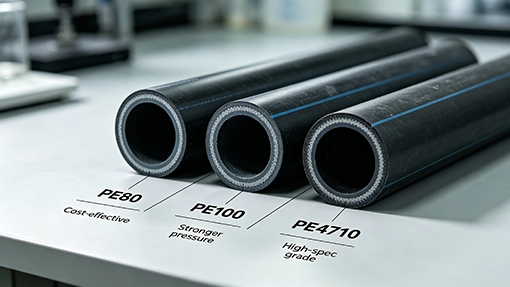
PE80 vs PE100 vs PE4710
5. Consider Pipe Standards and Certifications
Standards exist for a reason. They define dimensional tolerances, material properties, testing protocols, and quality benchmarks that separate reliable pipe from commodity-grade alternatives.
| Standard | Scope | Application |
|---|---|---|
| ISO 4427 | International water supply pipe standard | Global municipal projects |
| ASTM D3035 | North American pressure pipe standard | US/Canada infrastructure |
| ASTM F714 | Large-diameter HDPE pipe specification | Industrial and mining |
| DIN 8074/8075 | German HDPE pipe standards | European engineering projects |
Red flags to watch for: Be wary of suppliers who claim “meets ISO requirements” without providing third-party test reports. Ask for batch-specific MFR (melt flow rate) data, density measurements, and hydrostatic test certificates. A legitimate manufacturer has these documents ready.
6. Evaluate Installation Requirements
Installation method directly impacts project cost, timeline, and long-term reliability. HDPE pipe offers multiple joining options — each with its own advantages and ideal use cases.
Butt fusion is the most common method for large-diameter pipes. The pipe ends are heated and pressed together to form a joint that is as strong as the pipe itself. Butt fusion should follow procedures outlined in ASTM F2620 or PPI TR-33.
Electrofusion uses fittings with built-in electric heating elements. It’s ideal for repairs, confined spaces, and complex areas where butt fusion equipment can’t reach. Electrofusion joining should follow the manufacturer’s recommended procedure.
Installation Methods Comparison
| Method | Suitable For | Advantages |
|---|---|---|
| Butt Fusion | Large diameter pipes, new installations | Strongest joint, cost-effective for long runs |
| Electrofusion | Repairs, complex areas, confined spaces | No heavy equipment needed, reliable in tight spots |
| Mechanical Joints | Temporary connections, above-ground | Easy to assemble/disassemble |
Don’t forget trenching and bedding requirements. Proper bedding provides a firm foundation of uniform density throughout the entire pipe length. Bedding material should conform to ASTM D2321 Class I, II or III.
Related article: [HDPE Pipe Underground Installation Guide] — for detailed installation procedures.
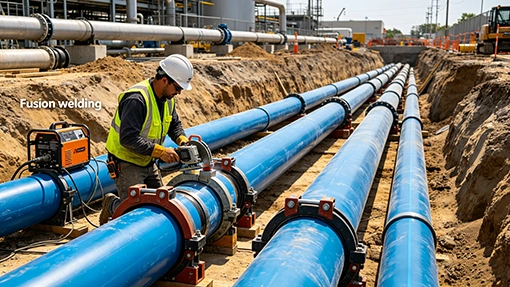
HDPE pipe butt fusion installation process
7. Select Compatible HDPE Pipe Fittings
A pipe system is only as strong as its weakest fitting. Engineers often obsess over pipe specifications while treating fittings as an afterthought. This is a costly error.
Your system needs elbows for direction changes, tees for branches, reducers for diameter transitions, and flanges for equipment connections. Each fitting must match the pipe’s material grade, SDR, and pressure rating. Mixing PE80 fittings with PE100 pipe, or SDR 17 fittings with SDR 11 pipe, creates stress concentration points that invite premature failure.
| Fitting Type | Function | Compatibility Check |
|---|---|---|
| Elbows (90°/45°) | Direction change | Match SDR and PN rating |
| Tees | Branch connections | Verify flow capacity |
| Reducers | Diameter transition | Check pressure drop |
| Flanges | Equipment interface | Confirm bolt pattern and gasket material |
Remember: Pipe system ≠ pipe only. Budget adequate time and resources for fitting specification and procurement.
8. Check Environmental and Chemical Conditions
HDPE is remarkably resistant to corrosion and chemicals, but it’s not invincible. Environmental conditions can significantly impact pipe performance and lifespan.
Temperature is a critical factor. PE100 water-supply pipe is rated for a maximum continuous water temperature of 60°C per ISO 4427. Above that, the pressure rating must be derated. HDPE can operate in temperatures from -50°C to 60°C in many applications.
Chemical resistance is generally excellent. HDPE is safe with pH values from 0–14 and resists over 750 chemicals. However, petroleum products (hydrocarbon fuels) can permeate and cause slight swelling, particularly at elevated temperatures (>40°C).
UV exposure is managed through carbon black content. All quality HDPE pipes contain a minimum 2% carbon black, which provides long-term resistance to UV degradation. For above-ground installations, confirm that your pipe is UV-stabilized.
Environmental Checklist
| Condition | Consideration |
|---|---|
| Chemical Exposure | Compatibility with specific chemicals |
| High Temperature | Pressure derating above 60°C |
| Low Temperature | Impact resistance at -50°C and below |
| UV Exposure | Carbon black content ≥ 2%, UV stabilization |
| Soil Conditions | Abrasion, acidic/alkaline soil |

HDPE Pipe Fittings:Elbows,Tees,Reducers and Flanges
9. Evaluate HDPE Pipe Supplier Capability
This is where procurement transforms from a technical exercise into a risk management decision. Your supplier is not merely a vendor—they are a long-term partner in project success.
| Supplier Factor | Why It Matters | What to Verify |
|---|---|---|
| Manufacturing experience | Mature quality systems | Years in HDPE production, project references |
| Production capacity | On-time delivery | Monthly tonnage output, backlog status |
| Quality control | Consistent product | In-house lab, third-party audits, ISO 9001 |
| Custom capability | Project flexibility | Ability to produce non-standard sizes and colors |
| Technical support | Problem resolution | Engineering team availability, field support |
Due diligence questions: Can the supplier provide mill test reports for every batch? Do they have experience with projects in your region’s climate and regulatory environment? What is their track record on delivery lead times during peak construction seasons?

HDPE pipe manufacturer quality control and production process
10. Compare Total Project Cost, Not Only Pipe Price
The lowest pipe price often produces the highest total cost. Engineers who evaluate procurement through a lifecycle lens consistently make better decisions.
| Cost Factor | Impact on Total Ownership |
|---|---|
| Pipe material price | Initial capital outlay |
| Installation labor | Often 40-60% of total project cost |
| Transportation | Weight and volume drive logistics cost |
| Maintenance | Joint integrity, corrosion, repairs |
| Service life | 50+ years for quality HDPE vs. 20 for alternatives |
The real math: A pipe that costs 15% more upfront but reduces installation time by 20% (lighter weight, longer standard lengths, easier fusion) and extends service life by 30 years delivers a dramatically lower net present cost. Run the numbers over 50 years, not the purchase order.
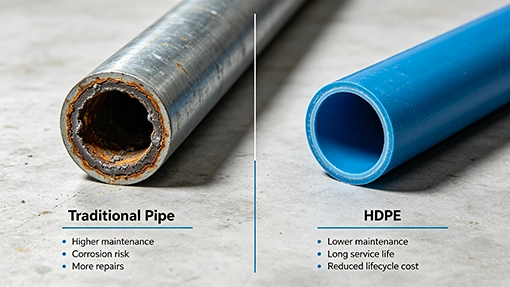
HDPE pipe lifecycle cost and long term value comparison
How to Choose the Right HDPE Pipe
Selecting HDPE pipe is a multi-dimensional optimization problem. There is no single “best” pipe—only the pipe that best balances application requirements, pressure demands, size constraints, material performance, installation realities, supplier reliability, and total lifecycle cost for your specific project.
The ten factors outlined above provide a systematic framework for making that decision. Use them as a checklist during specification development, supplier evaluation, and final procurement approval.
Ready to specify? Start with your application requirements, work through pressure and size calculations, verify material and standard compliance, and finish with supplier due diligence. The extra hours invested upfront will save months of headaches downstream.
Need help selecting the right HDPE pipe for your project? Contact Luoyang Datang Energy Tech Co., Ltd for professional recommendations tailored to your application, pressure requirements, and installation environment.
Related Reading:
RELATED POSTS
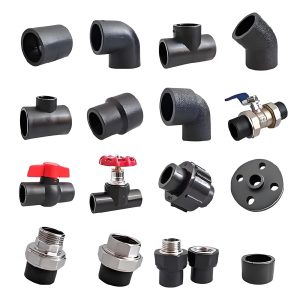
How Can HDPE Pipe Fittings Revolutionize Urban Water Supply Systems?
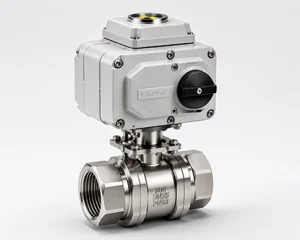
Why Modern Industrial Automation Depends on Multi-Voltage Motorized Ball Valve Systems
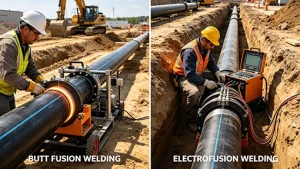
HDPE Pipe Fusion Welding Methods: Butt Fusion vs Electrofusion for Pipeline Installation
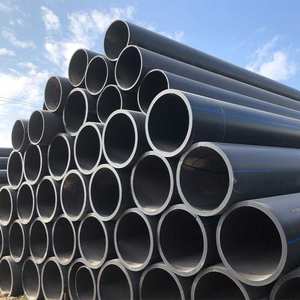
The Ultimate Guide to Underground Piping: Types, Uses & Best Materials PVC, HDPE & PEX
How To Build An Electrical Water Softener That Wraps Around The Supply Pipe
