LUOYANG CAME ENERGY TECH CO., LTD


CPVC PIPES FOR PLUMBING SOLUTION

PRODUCT PARAMETERS
Kufotokozera
Chlorinated Polyvinyl Chloride(Mtengo wa CPVC) Chitoliro
Introduction of CPVC Pipe
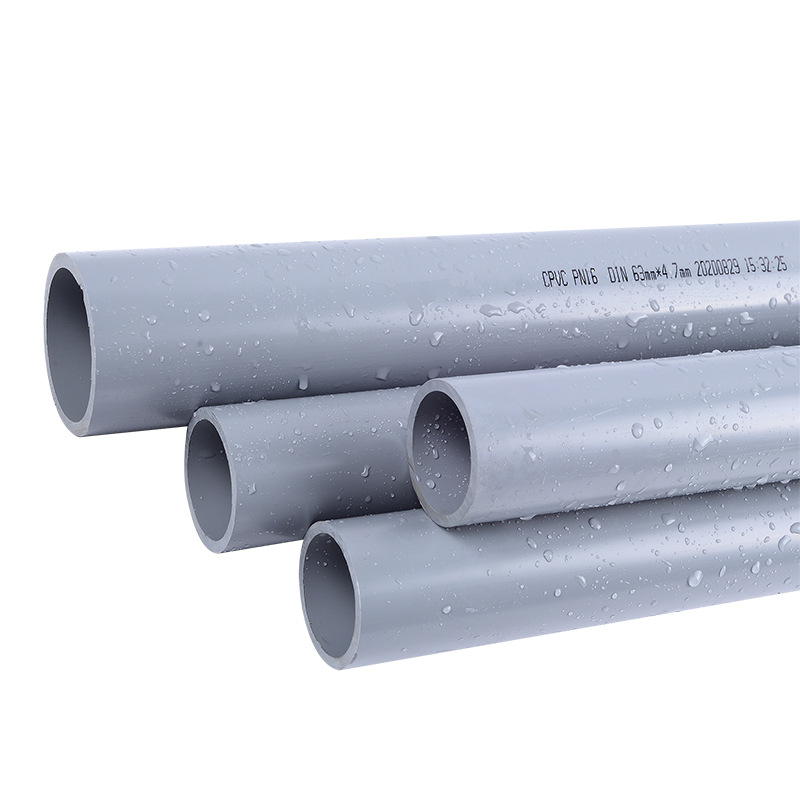
CPVC is produced by adding chlorine to PVC in a water slurry or fluidized bed chlorination process. The chlorination reaction is initiated by ultraviolet light. The chlorinated PVC is compounded with ingredients necessary for the desired properties for further processing. The chlorine added to PVC gives CPVC higher temperature performance and improved fire and corrosion resistance.
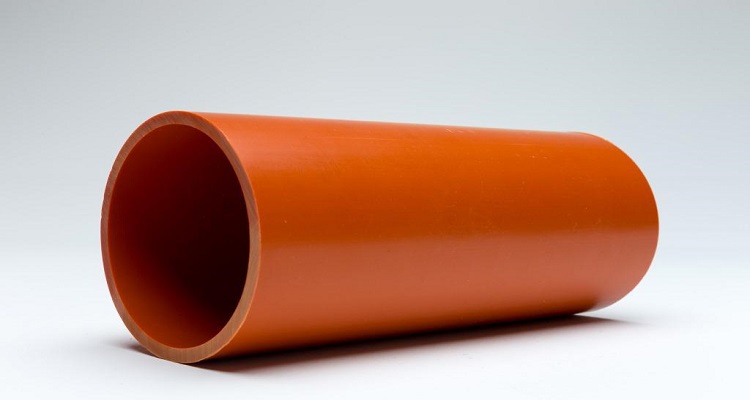
Tsatanetsatane wa CPVC Pipe
The CPVC plumbing pipes are available in sizes from 15mm (1/2″) to 50mm (2″) conforming to IS 15778 in SDR 11 & 13.5 classes. The pipes are with standard hydrostatic pressure ratings of 400 psi at 73ºF (2,750 kPa at 23ºC) ndi 100 psi at 180ºF (690 kPa at 82ºC).
Advantage of CPVC pipe:
- Chitetezo chamadzi amchere komanso kudalirika kwanthawi yayitali
- Kukana dzimbiri, chifuwa chachikulu, madipoziti
- Kukana kwa chlorine ndi chloramine
- Wopepuka, zosavuta kunyamula
- Amapezeka mumitundu yosiyanasiyana
- Phokoso ndi kukana nyundo yamadzi
- Palibe mtengo wotsika, kupewa kuba malo antchito
- Kukhalitsa komanso kulimba mtima kuti mupulumuke pakukhazikitsa malo antchito
- Palibe lawi lomwe limagwiritsidwa ntchito kujowina, zosungunulira za simenti
- Kugwirizana kwapadziko lonse kwa mapaipi / zolumikizira
- Professional anaika maonekedwe
Specifations of CPVC Pipe
Pipe Dimensions
Zindikirani :
1. Dimensions with “+” are not a function of SDR.
2. Fittings are suitable for corresponding pipe pressure rating.Mark except 400mm .
| Nominal Bore | Outside Diameter | SDR 11 | SDR 13.5 | ||||||||
| Wall thickness | Kupanikizika kwa Ntchito | Wall thickness | Kupanikizika kwa Ntchito | ||||||||
| Min | Max | Min | Max | At 27℃ | At 82℃ | Min | Max | At 27℃ | At 82℃ | ||
| (mm) | (inchi) | (mm) | (mm) | (mm) | (mm) | Kg/cm² | Kg/cm² | (mm) | (mm) | Kg/cm² | Kg/cm² |
| 15 | 1/2 | 15.80 | 16 | 1.70 | 2.20 | 28.14 | 6.93 | 1.40 | 1.90 | 22.22 | 5.60 |
| 20 | 3/4 | 22.10 | 23.30 | 2.00 | 2.50 | 28.14 | 6.93 | 1.70 | 2.20 | 22.22 | 5.60 |
| 25 | 1 | 28.50 | 28.70 | 2.60 | 3.10 | 28.14 | 6.93 | 2.10 | 2.60 | 22.22 | 5.60 |
| 32 | 11/4 | 34.80 | 35.00 | 3.20 | 3.70 | 28.14 | 6.93 | 2.60 | 3.10 | 22.22 | 5.60 |
| 40 | 11/2 | 41.20 | 41.40 | 3.80 | 4.30 | 28.14 | 6.93 | 3.10 | 3.60 | 22.22 | 5.60 |
| 50 | 2 | 53.90 | 54.10 | 4.90 | 5.50 | 28.14 | 6.93 | 4.00 | 4.60 | 22.22 | 5.60 |
| Nominal Bore | Outside Dia. | Ndandanda 40 | Ndandanda 80 | |||||||
| Wall thickness | Kupanikizika kwa Ntchito | Wall thickness | Kupanikizika kwa Ntchito | |||||||
| Min | Max | At 27℃ | At 82℃ | Min | Max | At 27℃ | At 82℃ | |||
| (mm) | (inchi) | (mm) | (mm) | (mm) | Kg/cm² | Kg/cm² | (mm) | (mm) | Kg/cm² | Kg/cm² |
| 65 | 21/2 | 73.00(+/-0.18) | 5.16 | 5.77 | 21.10 | 5.30 | 7.01 | 7.85 | 29.57 | 7.43 |
| 80 | 3 | 88.90(+/-0.20) | 5.49 | 6.15 | 18.25 | 4.58 | 7.62 | 8.53 | 26.00 | 6.32 |
| 100 | 4 | 114.30(+/-0.23) | 6.02 | 6.73 | 15.49 | 3.87 | 8.56 | 9.58 | 22.53 | 5.60 |
| 150 | 6 | 168.30(+/-0.28) | 7.11 | 7.79 | 12.64 | 3.16 | 10.97 | 12.29 | 19.68 | 4.89 |
| 200 | 8 | 219.10(+/-0.38) | 8.18 | 9.17 | 11.21 | 2.85 | 12.70 | 14.22 | 17.54 | 4.18 |
| 250 | 10 | 273.10(+/-0.28) | 9.27 | 10.39 | 9.89 | 2.44 | 15.06 | 16.86 | 16.21 | 3.81 |
Mapulogalamu a CPVC Pipe
Hot and cold water plumbing distribution, nyumba ndi malonda
CPVC is wildly used in hot and cold water distribution systems in residential buildings.The pipes can handle temperatures up to 200°F (93°C),making the pipes suitable for hot water convey systems.
Industrial mapaipi system
CPVC tubes are well-suited for industrial piping systems owing to their superior resistance to high temperatures and corrosion. They are ideal for conveying thermal chemicals, process water, and other fluids that may possess acidic, alkaline, or reactive characteristics. Consequently, CPVC tubes are particularly appropriate for applications in chemical processing plants and oil refinery pipeline transportation.
Njira Zozimitsa Moto
Chlorinated polyvinyl chloride (Mtengo wa CPVC) is extensively utilized in both residential and industrial fire protection systems due to its suitability for high-pressure environments. It constitutes a critical component of the network responsible for the delivery of water or flame-retardant agents to extinguish fires.
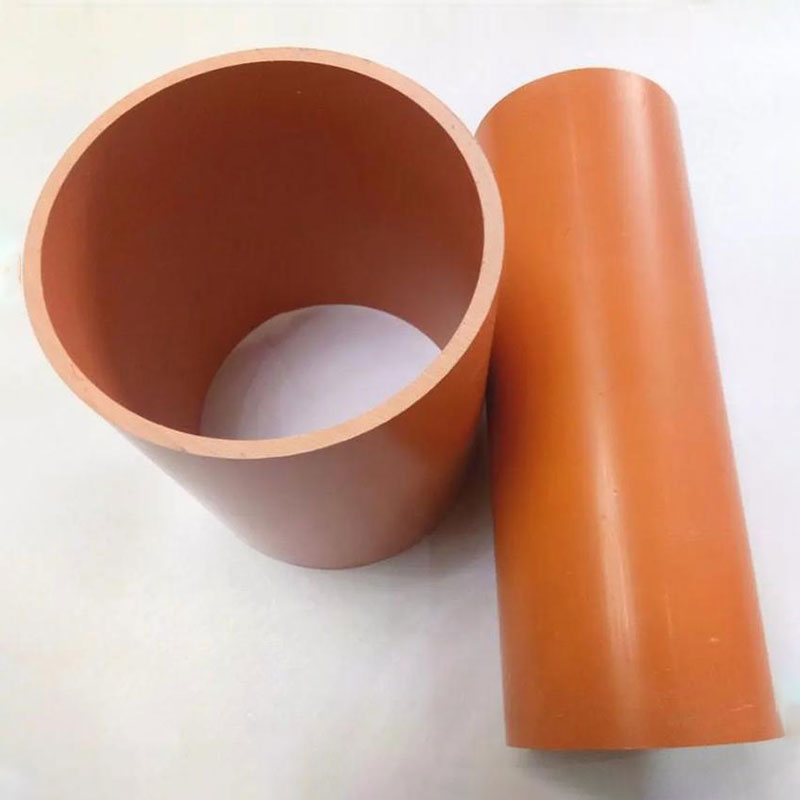
Kubwezeretsanso mapaipi amadzi (chitoliro chofiirira)
CPVC pipes are widely utilized in drainage and waste management systems as well as in industrial applications. Their excellent chemical resistance renders them particularly suitable for conveying chemicals, process water,and other fluids that may be acidic, alkaline, or otherwise reactive.
Kulongedza ndi Kutumiza
Zimatengera malonda ndi qty,tikhoza kupanga coiling,mipukutu,kulongedza katundu,mabokosi kapena mabokosi,ndi zina.
Kutumiza:Panyanja,njanji,ndi ndege kapena ngati pempho la kasitomala.
Mbiri Yakampani
Luoyang Datang Energy Tech Co.Ltd idakhazikitsidwa 2015 ndipo ili ku High-tech Development zone, Luoyang City, chimakwirira malo aakulu okhala ndi zipangizo zamakono. Boma lathu limapereka malo othandizira, kuphatikizapo mayendedwe osavuta komanso mwayi wopeza zofunikira. Kuyambira pachiyambi mu 2015, tadzipereka kuchita bwino mu mapaipi ndi zolumikizira, mosalekeza kuti akwaniritse zofuna za msika.
Ngati mukufuna PPR Mapaipi ndi Zosakaniza,Chonde khalani omasuka kulumikizana nafe(sales@pipesandfittings.net)
Malipiro Terms
T/T,L / C pakuwona,Western Union & Paypal,ndi zina.
FAQ za CPVC Pipe
Q1, Kodi CPVC Pipe ndi chiyani?
Mtengo wa CPVC (chlorinated polyvinyl chloride) ndi chinthu cholimba komanso cholimba chomwe chakhala chikugwiritsidwa ntchito kwambiri popanga mapaipi padziko lonse lapansi kwazaka zopitilira makumi asanu.. CPVC imawonetsa kukana kwamphamvu kwamankhwala, kudalirika, ndi mphamvu yopirira kutentha kwakukulu ndi kupanikizika. Katunduyu amapangitsa kukhala chisankho choyenera kukhalamo, malonda, ndi machitidwe a mapaipi a mafakitale.
Q2,Why CPVC is Ideal for Residential Plumbing Systems?
Chitetezo: CPVC is recognized as a green and eco-friendly material. The use of CPVC tubes in drinking water systems ensures that no harmful or dangerous substances are transferred into the delivered drinking water.
Compressive Resistance: CPVC pipes and fittings are joined by solvent cement. Solvent-based cement is a substance that chemically fuses pipes to fittings at the molecular level, forming the strongest part of the piping system.
Chlorine Resistance: CPVC pipes are not affected by chlorine. Chlorine-containing disinfectants, especially chlorine dioxide, can cause failures in PPR (green pipes), PEX and metal pipes, but not in CPVC pipes.
Antibacterial: Bacterial growth may occur in the water distribution system, yet CPVC helps keep the water pure. Multiple international studies have confirmed that CPVC has consistently outperformed copper and all other plastic piping materials in its ability to resist biofilm formation.
Flame Retardant: CPVC is fire-resistant and does not fuel combustion. Even if a fire breaks out in a residence, CPVC will not contribute to the fire’s spread.
Q3,What’s the Distinction Between CPVC and PVC Pipe?
There are several distinctions exist between CPVC and PVC pipes.
Mapulogalamu:PVC is merely permitted to be utilized in drain, waste, and vent plumbing applications. It is not sanctioned for use as a water supply line, while CPVC is mainly employed in water delivery applications.
Heat Tolerance:PVC begins to melt at 140 madigiri Fahrenheit, yet CPVC can withstand hot water up to 200 madigiri Fahrenheit.
Sizing: PVC and CPVC have dissimilar sizing measurements. PVC will adhere to iron pipe sizing (IPS), whereas CPVC will follow Copper Tube Sizing (CTS).
Q4,How To Tell if a Pipe Is PVC or CPVC
Mutha kusiyanitsa mwachangu pakati pa utoto wa beige wa chitoliro cha CPVC ndi choyera chowala cha PVC. Ngati simukutsimikiza, yang'anani kusindikiza kumbali ya chitoliro.
Q5,Kodi mapaipi a PVC ndi CPVC amakhala nthawi yayitali bwanji??
Aliyense ayenera kukhala kwa nthawi yayitali malinga ngati sakuwonongeka ndi kuzizira kapena kuwala kwa UV.
PEMBANI MFUNDO
ZOKHUDZANA NAZO
Ubwino 100% Water Supply And Drainage Plastic PVC Line Polyethylene Rain Pipe
Professional UPVC Water Pipe Polyvinyl Chloride Drainage Head Water Irrigation mapaipi
PVC ASTM D1785 SCH 40 Pipe Plastic Pipe Fittings PVC Piping UPVC Pipe
Zida Zomangira Zopangira Chigongono Chokhotakhota Chachitsulo Chokhazikika Chokhazikika PVC Chitoliro Chokuta
Ubwino wa PVC Water Garden Hose Pipe PVC hose