LUOYANG DATANG ENERGY TECH CO.,LTD

Durability HDPE Pipes in Mining and Slurry Applications
In demanding industries such as mining and mineral processing, transporting abrasive slurry requires pipe systems with exceptional durability and reliability. Traditional steel pipelines often suffer from corrosion, scaling, and high maintenance costs. This is where HDPE pipes offer a modern, efficient, and long-lasting solution. With proven performance in harsh environments, HDPE pipes provide superior abrasion resistance, flexibility, and lower lifecycle costs, making them the preferred choice for slurry transport.
1. Why Choose HDPE Pipes for Slurry Transport?
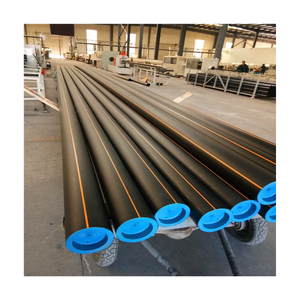
Slurry pipelines face unique challenges due to the highly abrasive nature of transported materials. HDPE pipes are engineered with smooth inner surfaces, which reduce friction losses and minimize wear. Compared to steel or concrete pipelines, HDPE pipes maintain consistent flow rates and extend service life, even under aggressive conditions. Their chemical resistance ensures reliable operation when exposed to a wide range of minerals and processing chemicals.
2. Key Benefits of HDPE Pipes in Mining Applications
2.1 Superior Abrasion Resistance
One of the biggest advantages of HDPE pipes is their high resistance to abrasion. The tough material structure allows HDPE to withstand slurry transport with reduced risk of surface degradation compared to traditional steel pipes, ensuring consistent performance and reliability.
2.2 Flexibility and Easy Installation
Mining sites often require pipelines that adapt to uneven terrains. HDPE pipes are lightweight, flexible, and easy to weld using butt fusion or electrofusion methods. This makes installation faster and more cost-effective, especially in remote or challenging
2.3 Corrosion and Chemical Resistance
Unlike steel, HDPE pipes are resistant to corrosion and scaling caused by acidic or alkaline slurries. This durability reduces maintenance costs and minimizes downtime, giving mining operators a reliable solution that extends the lifecycle of their slurry pipelines.
HDPE vs Steel Pipes for Slurry Transport: Key Differences
If you are comparing HDPE pipe vs steel pipe for a mining slurry pipeline, the decision usually comes down to abrasion, corrosion, installation, and total cost.
| Factor | HDPE Pipes | Steel Pipes |
|---|---|---|
| Abrasion resistance | High; smooth bore reduces wear | Can wear quickly in abrasive slurry |
| Corrosion | Resists acids, alkalis, and scaling | Requires coating or replacement |
| Weight | Lightweight, easier to handle | Heavy, needs more equipment |
| Installation | Butt fusion, electrofusion, flexible routing | Welding, coating, heavier lifting |
| Flow efficiency | Smooth inner surface lowers friction loss | Roughness increases over time |
| Lifecycle cost | Lower maintenance and longer service life | Higher maintenance and downtime |
For many mining slurry transport projects, HDPE pipes are the better long-term choice. Steel still has a place in very high-temperature or special high-pressure duties.

HDPE vs Steel Pipes for Slurry Transport
3. Cost Savings and Long-Term Value
The low maintenance requirements of HDPE pipes result in significant cost savings for mining operations. Their longer service life, reduced downtime, and lower installation costs contribute to overall operational efficiency. Over time, the total cost of ownership of HDPE pipelines is substantially lower compared to metal alternatives.
4. Case Study: Mining Slurry Transport Upgrade
A major mining company replaced traditional steel pipelines with HDPE pipes in their slurry transport system. The result was a 20% improvement in energy efficiency due to reduced friction loss, a 40% increase in service life, and significant reductions in pipeline maintenance. The switch to HDPE pipes helped streamline operations while lowering overall costs.
What to Check Before Choosing HDPE Pipes for Mining
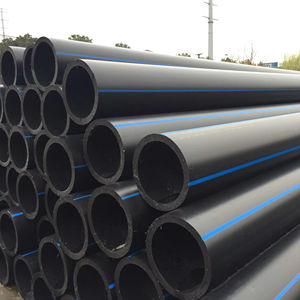
Before ordering HDPE pipes for mining or slurry applications, confirm these points:
- Slurry particle size and shape — sharp, coarse particles are more aggressive.
- Flow velocity — too high increases wear; too low can cause settling.
- Operating pressure and surge pressure — choose the correct SDR or PN rating.
- Temperature — HDPE has working limits; verify the actual slurry temperature.
- Joining method — butt fusion, electrofusion, or mechanical fittings.
- Site terrain — HDPE flexibility can reduce the number of bends and joints.
- Fittings and flanges — make sure HDPE fittings match the pipeline pressure rating.
Conclusion: Future of Slurry Transport with HDPE Pipes
For mining and slurry applications, HDPE pipes provide unmatched durability, efficiency, and cost-effectiveness. Their ability to withstand abrasion, resist chemicals, and deliver long-term performance makes them an ideal choice for industries looking to optimize operations. Investing in HDPE pipes ensures that mining operations remain productive, sustainable, and cost-efficient for years to come.
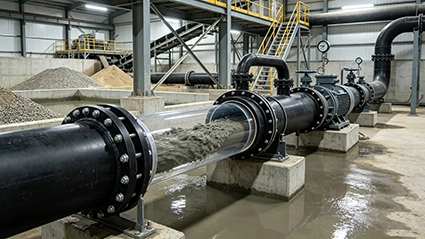
Slurry Transport with HDPE Pipes
FAQs
1. How long do HDPE pipes last in mining slurry applications?
With correct installation and operating conditions, HDPE slurry pipelines often last significantly longer than steel, especially in abrasive and corrosive service. Actual life depends on particle size, flow velocity, pressure, and temperature.
2. Are HDPE pipes better than steel for abrasive slurry?
In many mining slurry lines, yes. HDPE resists abrasion, corrosion, and scaling, and its smooth bore reduces friction loss. Steel may still be preferred for very high temperatures or certain special pressure duties.
3. Can HDPE pipes handle high-pressure slurry transport?
HDPE pipes are available in different pressure ratings. For mining slurry, select the correct SDR or PN rating and check operating pressure, surge pressure, and temperature before installation.
4. What fittings are used with HDPE slurry pipelines?
Common options include HDPE fittings, flange adapters, butt fusion fittings, and electrofusion fittings. Make sure all components match the pipe pressure rating.
Supplier
Luoyang Datang Energy Tech Co., Ltd. is a leading Chinese manufacturer specializing in high-quality plastic pipes and fittings. Equipped with state-of-the-art automated production lines and supported by a team of 200 professionals, we offer an extensive product line comprising over 150 types of plastic pipes and fittings designed for water supply and drainage systems, gas transmission, and floor heating systems. Our main products include PVC Pipes and Fittings, PE (HDPE) Pipes and Fittings, PPR Pipes and Fittings, and PEX Floor Heating Pipes.
Should you have any inquiries regarding PPR pipes,Brass Valves and brass fittings, please do not hesitate to contact us!