LUOYANG DATANG ENERGY TECH CO.,LTD


PVC Pipes Play An Important Role In Plumbing, Drainage & Sewage Treatment.
PVC (polyvinyl chloride) pipes play a vital role in urban infrastructure and are widely used in the fields of water supply, drainage, sewage treatment, as well as irrigation. With the acceleration of the global urbanization process, the construction and maintenance of infrastructure is facing higher requirements. PVC pipe has become an indispensable part of urban construction with its excellent performance, such as corrosion resistance, durability and economy. In this article, we will explore the important role of PVC water supply pipes, PVC drainage pipes, PVC pipes for industrial use, PVC sewage pipes and PVC irrigation pipes.
PVC pipes have been a trusted material in the piping industry for decades. The first American Society for Testing and Materials (ASTM) standard for PVC piping was issued as early as 1960. Today, PVC pipes are manufactured to a wide range of international standards: ASTM D1785 covers Schedule 40, 80, and 120 PVC pipes for pressurized liquid distribution, while AWWA C900 and C905 govern PVC pressure pipes for water and sewer mains from 4 inches through 48 inches in diameter. PVC pipes meeting NSF/ANSI 61 are certified safe for potable water contact, a critical requirement for drinking water infrastructure.
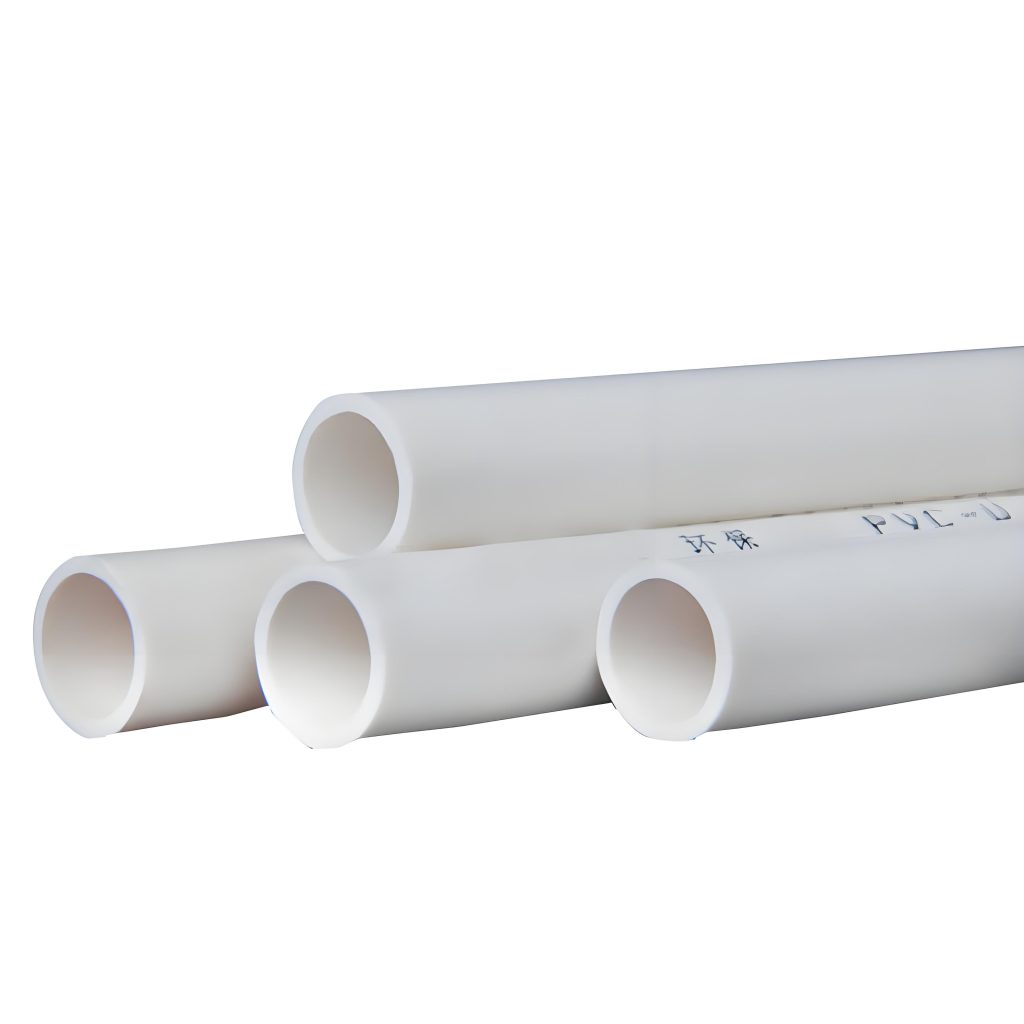
1. PVC plumbing pipes: a reliable water delivery solution
PVC plumbing pipes are as important as ensuring clean water delivery. While traditional metal pipes are prone to corrosion and leakage, PVC water supply pipes, with their high strength and corrosion resistance, provide a stable and reliable solution for urban water supply systems.
The advantage of PVC plumbing pipes is that these pipes have a very low friction coefficient for water flow., which can ensure smooth water flow and reduce energy consumption. This feature not only reduces the waste of water, but also improves the overall efficiency of the water supply system. Especially in large-scale water supply systems, PVC pipes can ensure the stability and continuity of water flow, avoiding maintenance and replacement costs caused by aging, corrosion or blockage of pipes.
In addition, the installation and maintenance costs of PVC plumbing pipes are low, which can significantly reduce the total cost of building and operating a water pipe system. Because the PVC material itself has strong anti-ultraviolet ability, the PVC water supply pipe can be used in the outdoor environment for a long time, which is not easy to be affected by the environment and has extremely high durability.
According to the American Water Works Association’s Manual M23, “PVC and PVCO pipes are resistant to almost all types of corrosion — both chemical and electrochemical — that are experienced in underground piping systems. Because polyvinyl chloride (PVC) is a nonconductor, galvanic and electrochemical effects are nonexistent in PVC piping systems. PVC pipe cannot be damaged by aggressive waters or corrosive soils”. This is why municipalities increasingly specify PVC for water mains that must last 50 years or more. The manual also notes that PVC pipe is “nearly totally resistant to biological attack” and “well suited to applications where abrasive conditions are anticipated”.
PVC Pipe vs Traditional Pipe Materials
| Property | PVC Pipe | Metal Pipe (Steel/Iron) | Concrete Pipe |
|---|---|---|---|
| Corrosion Resistance | Excellent | Poor (rusts over time) | Moderate |
| Weight | Lightweight | Heavy | Very Heavy |
| Installation Cost | Low | High | High |
| Flow Efficiency (C-factor) | 150 (constant) | 120–140 (degrades) | 130–140 |
| Service Life | 50+ years | 30–50 years | 40–60 years |
| Maintenance Need | Low | High | Moderate |

2. PVC drainage pipe: efficient wastewater discharge solution
Drainage pipe systems are crucial in urban life, especially when dealing with domestic sewage and stormwater discharges. PVC drainage pipe because of its light, corrosion resistance and easy installation characteristics, has become the mainstream pipe material in urban drainage system.
PVC drainage pipe has good corrosion resistance, which means that it can effectively resist the erosion of acid and alkali substances, grease and other harmful chemicals in water, to avoid pipeline decay and leakage. In addition, the smooth inner wall of the PVC drain pipe reduces the attachment of dirt, ensures the smooth discharge of waste water, reduces the occurrence of blockage, and extends the service life of the pipeline.
In the drainage pipe system, PVC pipe also has a strong carrying capacity, can withstand higher pressure, to ensure the stability of the drainage system. Whether it is in the city’s sewer, industrial waste water discharge system, or in the stormwater discharge pipe of the building, PVC drain pipe is the ideal choice.
For larger drainage projects, PVC pipes manufactured to AWWA C905 are available in diameters from 14 inches through 48 inches for water transmission and sewer mains. PVC pipe joints for drainage applications are typically manufactured using an integral bell with an elastomeric gasket push-on type joint, with gaskets conforming to ASTM F-477. This gasketed joint design accommodates ground movement and thermal expansion — advantages that rigid metal pipes simply cannot offer. Unlike solvent cement joints which are permanent and best suited for smaller diameter fixed runs, rubber ring joints provide flexibility and are the preferred choice for larger diameter underground drainage runs.
PVC Connection Methods Comparison
| Connection Type | Best For | Advantages | Limitations |
|---|---|---|---|
| Solvent Cement Joint | Small diameter, indoor plumbing | Permanent seal, low cost | Rigid, not suitable for ground movement |
| Rubber Gasket (Push-on) | Large diameter, underground drainage | Flexible, accommodates thermal expansion & ground shift | Requires proper alignment during installation |
| Flanged Joint | Above-ground, equipment connections | Easy disconnection for maintenance | More expensive, bulkier |
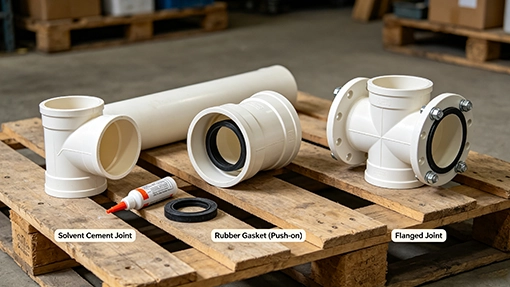
PVC Connection Methods Comparison
3. Industrial PVC pipe: corrosion resistance, high temperature resistance, to meet special needs
Industrial PVC pipes play an important role in many industries, especially in environments that require corrosion resistance, high temperature resistance and high pressure. In the industrial production process, many chemicals and corrosive liquids need to be transported through pipes, and PVC pipes are the ideal choice to meet these needs.
Compared with traditional metal pipes, industrial PVC pipes have better corrosion resistance, which makes it the preferred pipeline material in chemical, pharmaceutical, food processing and other industries. PVC pipe can withstand the erosion of most acids, alkalis and solvents, thus ensuring the stability and safety of the pipeline in the production process. In addition, the high strength of PVC pipes makes it able to withstand large working pressures and is suitable for a variety of high-pressure transportation applications.
When the pipes are in the transportation of chemical liquids or in industrial wastewater treatment systems, industrial PVC pipes can provide long-term stable services, reduce maintenance and replacement costs, and ensure the safety and efficiency of the production environment.
PVC’s chemical resistance is well documented. According to the NRC’s chemical resistance tables, PVC is generally resistant to chemicals up to 60°C (140°F) , including bleach (12.5% active chlorine), potassium hydroxide, sodium hydroxide, kerosene, hydrochloric acid, hydrogen peroxide (90%), sea water, soaps, and sulfuric acid (70%). As a general rule, PVC is very resistant to acids, bases, salts, alcohols, esters, and hydrocarbons, though it is not resistant to polar solvents. Schedule 80 PVC pipes, with their thicker walls, offer even greater durability for demanding industrial applications where higher pressures or more aggressive chemicals are present.
4. PVC sewage pipe: a key part of efficient sewage treatment
In the urban sewage treatment system, PVC sewage pipe has become the key pipeline material for sewage transportation and treatment because of its excellent corrosion resistance and durability. Sewage treatment is an important part of every urban infrastructure, the application of PVC sewage pipe can greatly improve the efficiency of sewage treatment, reduce the maintenance cost of sewage pipe system.
The PVC sewage pipe can effectively prevent the corrosion of the pipeline due to the corrosive substances in the sewage (such as acid, grease, harmful chemicals, etc.), and avoid the problem that the metal pipe is prone to rot and rust. In addition, the inner wall of the PVC sewage pipe is smooth, which reduces the chance of dirt accumulation, makes the sewage flow smoother, and reduces the risk of blockage.
With the increasing demand for urban sewage treatment, the durability and economy of PVC sewage pipes make them an ideal choice. PVC sewage pipes enhance wastewater treatment efficiency and lower overall pipeline construction and maintenance costs.

5. PVC irrigation pipes: a green solution for agricultural development.
PVC irrigation pipes are essential for agriculture, an important industry worldwide. Compared with traditional metal pipes or ceramic pipes, PVC irrigation pipes are widely used in farmland irrigation systems because of their characteristics of light weight, corrosion resistance, easy installation and maintenance.
PVC irrigation pipes can effectively withstand high water pressure and ensure stable water flow in the irrigation process. In addition, PVC material is not easily eroded by chemicals in the water and can be used for a long time under various environmental conditions. The smooth inner wall of the PVC irrigation pipe reduces the friction of the water flow and improves the efficiency of the water flow, thus saving irrigation water and reducing the energy consumption of the irrigation system.
In modern agriculture, PVC irrigation pipe is widely used in drip irrigation, spray irrigation, seepage irrigation and other irrigation systems. Its superior performance not only improves irrigation efficiency, but also promotes the development of water-saving agriculture, contributing to global food production.
Recent innovations in agricultural irrigation include the development of larger diameter PVC pipes — such as the 630mm pipe introduced to the market in 2025. These larger diameters enable more efficient water delivery over longer distances, reducing the number of pump stations required and cutting energy costs for farmers. PVC’s smooth internal surface also means lower pumping energy over the life of the system, and its resistance to chemical fertilizers and soil-borne corrosives ensures decades of reliable service in the field.
6. The future development trend of PVC pipe in urban infrastructure
With the continuous acceleration of urbanization, PVC pipes will play an increasingly important role in the construction of urban infrastructure. In the future, PVC pipes will continue to develop in the direction of higher performance, environmental protection and intelligence. For example, the use of more environmentally friendly production materials, improving the intelligent monitoring function of the pipeline (such as sensors, remote monitoring, etc.), and improving the anti-aging performance of the pipeline are the key trends for the future development of PVC pipes.
At the same time, with the continuous advancement of the concept of sustainable development, PVC pipes will continue to be committed to reducing the impact on the environment. By using recyclable PVC materials and increasing the service life of the pipes, PVC pipes provide a viable solution for the green development of future urban infrastructure.
PVC Pipe Standards & Applications
| Standard | Scope | Diameter Range | Application |
|---|---|---|---|
| ASTM D1785 | Schedule 40/80/120 PVC pipes | 1/2″ – 24″ | Pressurized water, chemicals |
| AWWA C900 | PVC pressure pipe | 4″ – 12″ | Water distribution mains |
| AWWA C905 | PVC pressure pipe (large diameter) | 14″ – 48″ | Water transmission, sewer force mains |
| NSF/ANSI 61 | Drinking water system components | All sizes | Potable water contact |

PVC Pipe in Pressurized water, chemicals
Supplier
Luoyang Datang Energy Tech Co., Ltd. is a professional manufacturer and supplier of pipes and fittings. We offer PPR pipes, PVC pipes, PE pipes, and floor heating pipes and fittings for all types of pipes, with high quality and competitive prices. If you have any inquiries about pipes and fittings, please do not hesitate to contact us. You can click on the product to get in touch with us.
RELATED POSTS
How Can HDPE Pipe Fittings Revolutionize Urban Water Supply Systems?
The Five Major Advantages of PPR Pipes
What Type Of Water Pipe Can Be Used When Attached To A Municipal Water Supply

What Buyers Need to Know Before Ordering Brass Elbow Fittings
Ensuring Industrial Wastewater Compliance: Pipe System Solutions