LUOYANG DATANG ENERGY TECH CO.,LTD


Pipe Clamps, Clevis Hangers or Pipe Brackets? How to Choose the Right Pipe Support
A pipe that moves, vibrates or sags is not just annoying—it puts stress on joints, fittings and the structure itself. Pipe clamps, clevis hangers and pipe brackets all hold pipes in place, but they do it in very different ways. Pick the wrong one and you will be back on site fixing noise, movement or connection damage. This guide breaks down the difference, the selection criteria and the mistakes that cost the most.
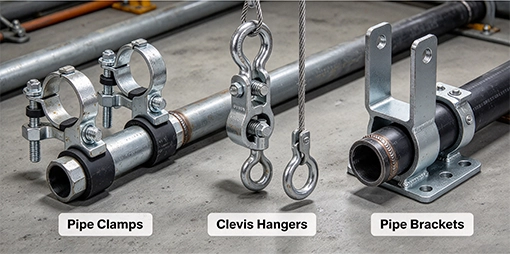
Pipe Clamps vs. Clevis Hangers vs. Pipe Brackets
Pipe Clamps vs. Clevis Hangers vs. Pipe Brackets: What’s the Difference?
Pipe clamps secure a pipe in position against a wall, frame or support structure. They are direct-fixing products—simple, rigid and widely used for pipe fixing and equipment connections.
Clevis hangers suspend horizontal pipes from overhead. They work with threaded rods from a ceiling or top structure, allowing the pipe to hang rather than sit on a bracket. Common in commercial buildings, industrial plants and large piping systems.
Pipe brackets support or hold pipes on a wall or structural surface. Shapes and load paths vary by design, so they suit installations where a specific stand-off distance or mounting structure is needed.
| Product | Main Function | Typical Installation | Common Application |
|---|---|---|---|
| Pipe Clamps | Secure pipes in position | Wall, frame or support | Pipe fixing and equipment connections |
| Clevis Hangers / Clevis | Suspend horizontal pipes | Ceiling or overhead structure | Industrial and commercial piping |
| Pipe Brackets | Support or hold pipes | Wall or structural surface | Wall-mounted pipework |
| Unistrut Clamps | Secure pipes to channel systems | Metal strut channels | Modular pipe support systems |
One more category worth separating: Unistrut clamps. They are not a general-purpose alternative to the three above—they are designed to lock a pipe to a compatible metal strut channel system. More on that below.
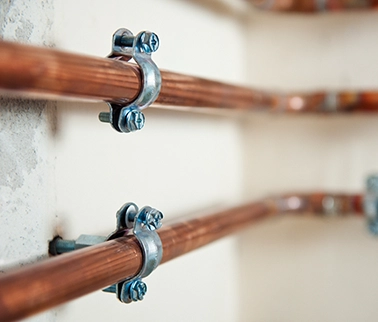
Pipe clamps
How to Choose the Right Tube Clamp for Your Pipe
Tube clamp is often used loosely, but the selection logic is specific. Three checks matter most.
Check the pipe outside diameter. Match the clamp to the actual OD, not the nominal DN. If the pipe is insulated, use the insulated outer diameter—not the bare pipe size.
Consider pipe material and contact surface.
- Steel pipes: check clamp strength and corrosion protection.
- Stainless steel pipes: watch material compatibility and surface protection.
- PVC and plastic pipes: avoid over-clamping, which can deform the pipe.
- Copper pipes: protect the contact surface from abrasion.
Choose between metal and rubber-lined clamps. Metal clamps give firm, stable fixing. Rubber-lined clamps reduce direct metal-to-pipe contact and help cut vibration and noise.
When Should You Use Unistrut Clamps?
Unistrut clamps fix pipes or conduits to a compatible metal strut channel system. They suit modular layouts, multi-pipe runs and installations where future adjustment or replacement is likely.
Unlike a standard pipe clamp mounted directly to a wall, a Unistrut clamp is designed to work with a compatible channel support system. Check the clamp-to-channel dimensional and structural compatibility before ordering—not every strut channel and clamp pairing is interchangeable.
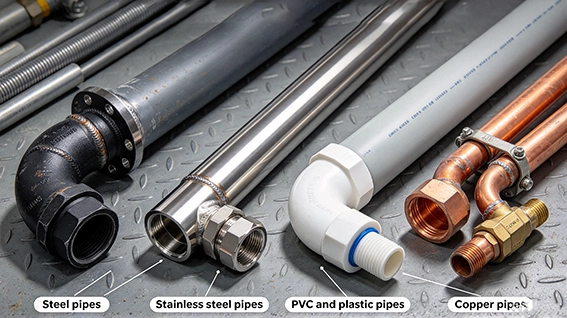
Steel pipes vs Stainless steel pipes vs PVC and plastic pipes vs Copper pipes
5 Factors to Check Before Ordering Pipe Supports
- Pipe outside diameter — confirm actual OD and insulation thickness.
- Pipe material — different materials need different clamping and contact protection.
- Load requirements — include pipe weight, medium, insulation and any added load.
- Installation environment — indoor, outdoor, humid or corrosive conditions affect material and finish selection.
- Movement and vibration — account for thermal expansion and operating vibration.
One detail that often gets missed: a fixed support and a guide support are not the same thing. A piping system may need to allow axial movement at certain points. Do not design every support point as fully locked. Support spacing and load capacity should follow pipe material, size, temperature, load and the relevant engineering standard.
Common Mistakes When Selecting Pipe Clamps and Supports
- Choosing a clamp based only on nominal pipe size.
- Using standard metal clamps where vibration isolation is required.
- Ignoring corrosion resistance outdoors or in humid areas.
- Overtightening clamps on plastic pipes.
- Selecting products without checking load requirements.
- Restricting thermal movement where a sliding support is needed.
Each of these turns a small specification shortcut into a site problem—noise, deformation, cracked fittings or premature wear.
FAQ About Pipe Clamps and Pipe Supports
What is the difference between a pipe clamp and a clevis hanger?
Pipe clamps generally secure pipes to walls or supporting structures; clevis hangers suspend horizontal pipes from overhead structures.
Are tube clamps and pipe clamps the same?
The terms overlap, but tube clamps are often used for smaller-diameter tubing and specific mounting applications.
What are Unistrut clamps used for?
They secure pipes or conduits to compatible metal strut channel systems.
How do I choose the correct pipe clamp size?
Start with the actual outside diameter, then factor in insulation, material, installation conditions and load requirements.
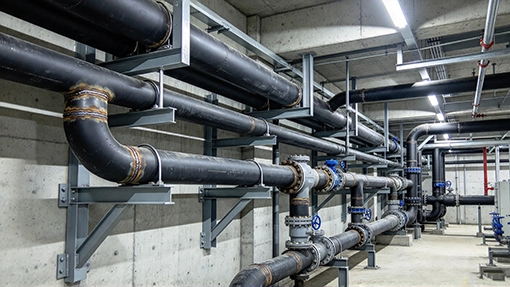
pipe brackets
Looking for pipe clamps, clevis hangers or pipe brackets?
RELATED POSTS
How To Clean Water Supply Pipes At Home
PPR Pipeline Application For Construction and Industrial System

Three Common Brass Hose Connection Parts: Connector, Adapter and Coupling
Why Choose Large Diameter PVC Pipe?
